Event 1
Adrienne leaves Paul and their engagement
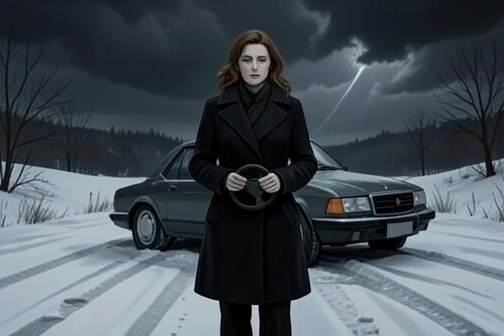
[Adrienne leaves Paul and their engagement](entity:event-recall-event-adrienne-paul-ddc8fb01d819) in the dead of night, turning an inward recognition of a mistaken commitment into a physical break with the life her mother, her studies, and social expectation have arranged for her. The departure begins as an assertion of freedom, but the snowy road quickly makes that freedom precarious: her old Honda fails, the forest closes around her, and the escape becomes a wilderness ordeal rather than a simple journey home.
## Causes and Background
[Adrienne](entity:character-recall-character-adrienne-05958df8fb72)’s doubts concern more than the approaching wedding or the prospect of a honeymoon in Hawaii. She recognizes that shared interests in hiking, camping, bicycling, and reading have not created the intimacy she expects from marriage. Her sexual relationship with [Paul](entity:character-recall-character-paul-6e5f3b48f63d) is especially inadequate: he has treated abstinence until marriage as advisable, while Adrienne has discovered that he is sexually available only about once a month, if that. The mismatch makes the engagement appear less like a chosen partnership than an arrangement sustained by habit and parental expectation.
Paul entered Adrienne’s life in high school, after she used a provocative senior-class prank as a pretext to secure a prom date. They continued dating through college, and her mother reinforced the conventional expectation that two people with similar interests were supposed to marry. Adrienne increasingly rejects that logic. For her, compatibility cannot be reduced to matching books, hobbies, or a timetable imposed by family; desire and mutual responsiveness also matter. The engagement therefore becomes a symbol of a life that looks acceptable from outside while leaving her dissatisfied within it.
The decision also carries a concealed burden. Later, Adrienne recalls that Paul’s fraternity brothers raped her and that Paul, together with her parents, treated the assault as a secret to be contained. Her departure consequently breaks not only from a sexually cold fiancé but from a network that demanded silence after violence. What first appears to be an impulsive refusal of marriage is also an escape from the denial surrounding the earlier assault.
## The Flight Through Snow
Adrienne waits until Paul is asleep, wearing pajamas patterned with colored sailboats, then quietly places her few clothes in an overnight bag. She slips out of the apartment without wedding invitations having been sent, believing that little public damage has yet been done and that Paul may not even notice her absence until Sunday. The smallness of the bag and the secrecy of her movements make the separation intimate and furtive: she does not stage a confrontation; she removes herself from the shared space before he can stop her.
Her old Honda groans when she turns the key. She nevertheless drives east toward home, leaving the apartment and the engagement behind. The full moon gives the escape a momentary emblem of renewal, and Adrienne drives with the music loud, humming and swaying because she feels released from the obligation of marrying Paul. Yet the same night that promises a new life exposes her to danger. She is alone on I-80, traveling through heavy snow near [Lake Tahoe](entity:location-recall-location-lake-tahoe-0c9f9ca14c7e), and the route south toward the lake becomes difficult to identify among forests and darkness.
A journey expected to take two hours from [Sacramento](entity:location-recall-location-0fe1c0701977), [California](entity:location-recall-location-7255928c66a8), stretches to three. The road rises to roughly six thousand feet, the surface is slippery, and Adrienne has neither good tires nor snow tires. Snow fills and slows the windshield wipers while the forest blocks her view of signs and turnoffs. The material conditions of the escape steadily strip away its romantic appearance: the car, the weather, the elevation, and the unlit highway all become active obstacles.
## Crash and Wilderness Ordeal
The car leaves the road, and Adrienne struggles to get out. When the driver’s-side window will not lower far enough, she removes a shoe and strikes it, dislodging it from its gears without fully opening it. She finally climbs over the steering wheel and out through the raised front window onto the hood, then lowers herself to the ground. The damaged vehicle is no longer a transparent means of escape but an obstruction whose broken mechanisms force her to improvise physically.
Once outside, she sees a pool of blood and panics. She cannot find a route back to the highway through the dense forest, and she realizes that she has left her phone behind. When she turns back, the car tumbles and sinks deep into the earth, destroying the immediate possibility of using it or retrieving it. Adrienne responds by trying to impose a plan on the crisis: she follows Indian trails, tells herself that the large moon provides enough light, and hopes that a nearby house or the interstate will offer a way out.
The weather and her clothing make the consequences severe. She is wearing a skirt over exercise pants, a jean jacket over a cotton shirt, and whatever protection layering provides is not enough for the falling temperature. She shivers, loses track of how long she has walked, and fears that she will die in the wilderness. After roughly three hours of exhaustion and hunger, she gathers leaves and pine limbs into a bed beneath a tree, covers herself with leaves, and lies down while insects, large ants, and the distant growling and calling of a wolf keep the night threatening. The choice to leave Paul has therefore shifted from emotional risk to immediate questions of survival.
## Later Reverberations and Pursuit
The escape remains a defining point in Adrienne’s later self-understanding. She eventually regards leaving Paul in the broken-down car as a reckless act, consistent with her stubborn refusal to let men dictate what she should or should not do. At the same time, she recognizes it as the best thing that happened to her because it led to meeting Wilder and agreeing to live and marry into the [Samsa family](entity:character-recall-character-samsa-f981681df2c6). The event thus contains a double reversal: the decision is dangerous because it is made in the middle of the night under hazardous conditions, but it also opens the path to the family and relationships that become central to her life.
The earlier assault continues to surface after Adrienne has left Paul. At the Hilton in Lake Tahoe, she hears one of the men involved and identifies him to Drayton as a rapist. This later recognition clarifies what Paul and her parents had concealed and gives the departure a broader meaning: Adrienne did not merely abandon an unsatisfying engagement; she moved away from a silence that had protected the people around her rather than her.
The pattern of flight and danger recurs in the later pursuit associated with [Bane](entity:character-recall-character-bane-a83632627baa). While returning toward the Samsa compound with [Mena](entity:character-recall-character-mena-7ebb9c08e2d9), Adrienne sees a large white Ford pickup barreling behind them and worries that they are being followed; she distinguishes it from [Lycell](entity:character-recall-character-lycell-d904ab5d4e13)’s newer silver truck and tells Mena not to turn around so their awareness will not be revealed. In another captivity sequence, Adrienne takes food, a coat, and the truck keys after Bane leaves, then attempts to escape through the hotel lobby while fearing that he will detect and punish her. These later escapes echo the first departure from Paul: each begins with a woman making a quiet, bodily decision to leave before an opposing man can prevent her, but each also places her in an exposed environment where freedom depends on secrecy, timing, and endurance.
## Narrative Significance
Adrienne’s departure is the story’s first decisive value shift. Marriage, initially presented as an expected future, becomes a form of confinement; freedom briefly becomes exhilarating, then turns into exposure to cold, isolation, mechanical failure, and possible death. The event joins romantic refusal to survival narrative and makes the road itself a threshold between the socially approved life Adrienne is abandoning and the dangerous, unforeseen life she will enter.
Its importance also lies in the contrast between intention and result. Adrienne leaves because Paul’s abstinence, emotional coldness, and the imposed logic of their engagement have become intolerable, but she cannot control the consequences of choosing escape. The moon suggests a new beginning while the snow erases signs, the Honda fails, and the forest removes ordinary safeguards. By surviving the ordeal and continuing into a life centered on Wilder and the Samsa family, Adrienne’s apparently impulsive decision becomes the origin point of her later agency, attachments, and conflicts.
Event 2
Adrienne's car accident and disappearance
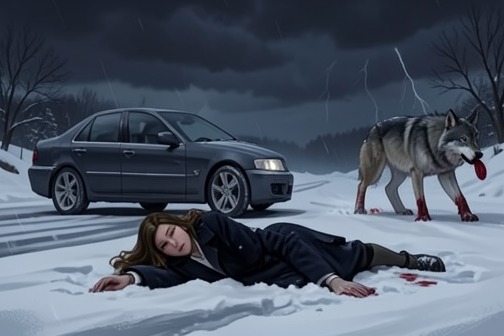
[Adrienne's car accident and disappearance](entity:event-recall-event-adrienne-06705a102807) are the decisive threshold between her former human life and the dangerous world that follows. Driving away from [Paul](entity:character-recall-character-paul-6e5f3b48f63d) at night, she seeks freedom from a marriage obligation and from the cold relationship that has followed her studies, yet the journey turns into a confrontation with snow, wilderness, bodily vulnerability, and the failure of ordinary institutions to find her. The wreck destroys her old gray Honda, removes her from the map of human society, and eventually allows her presumed death to conceal the life she begins with Wilder and the [Samsa family](entity:character-recall-character-samsa-f981681df2c6).
## Causes and Setting
[Adrienne](entity:character-recall-character-adrienne-05958df8fb72) leaves after deciding that she cannot endure another day with Paul. She is traveling east on I-80 from outside [Lake Tahoe](entity:location-recall-location-lake-tahoe-0c9f9ca14c7e), having already spent years absorbed in study and dissatisfied with Paul's emotional and sexual incapacity. The journey is undertaken at night, during heavy snowfall, on a slippery mountain road at an elevation of about six thousand feet. A trip expected to take two hours from [Sacramento](entity:location-recall-location-0fe1c0701977), [California](entity:location-recall-location-7255928c66a8), stretches to three because Adrienne must drive slowly on inadequate tires without snow tires.
The physical conditions make the accident more than a random interruption. Large forests border the road, visibility is poor, and falling snow accumulates on windshield wipers whose blades Adrienne forgot to replace. She is also distracted by repeated calls from Paul, which she refuses to answer while speaking angrily toward her purse as if he were present. The road, the weather, the failing equipment, and the unwanted phone all narrow her attention at the same moment that isolation removes possible help.
## The Crash and Immediate Survival
A large buck crosses the road, followed closely by a wolf. Adrienne turns toward the danger, says, "Oh god," and then loses awareness. Her old gray Honda strikes the deer or something else with enough force to destroy it permanently. The car had carried her through four years of high school, trips to the movies, and rides for friends, as well as four years of college when Paul used it after his Toyota failed. Its destruction therefore marks the loss of a familiar object that Adrienne regards almost as a friend, not merely the loss of transportation.
When she wakes, the Honda is broken and tilted near a ravine, teetering on its right side. Adrienne finds only a slight knee bruise and stiffness, and initially treats her survival as a narrow escape. She cannot open the driver's window far enough, so she uses her shoe to strike it, then climbs headfirst over the steering wheel and out through the front window onto the hood. The escape from the wreck appears to restore her freedom, but it also places her alone in an environment for which she is poorly dressed and unprepared.
The accident becomes irreversible when Adrienne sees a pool of blood and cannot identify a safe route out through the dense forest. She considers returning for her phone, but before she can recover it, the car tumbles and sinks deep into the earth. The disappearance of the vehicle removes the most obvious evidence of where she went and leaves her without communication. Under the large moon, she tries to persuade herself that a nearby house must exist and begins walking along Indian trails, even though she does not know where they lead.
Adrienne's wilderness ordeal unfolds through cold, fatigue, hunger, and mounting fear rather than through one single impact. She shivers in layered but inadequate clothing, including a skirt over exercise pants, a jean jacket, and a cotton shirt. After approximately three hours of stumbling through the forest, she gathers leaves and pine limbs to make a bed beneath a tree. The sounds of insects and a distant wolf keep her alert while large ants interfere with her attempt to sleep. The road accident has thus shifted into a prolonged struggle against exposure and isolation.
## Disappearance and Presumed Death
The human world interprets the accident differently from Adrienne. While she is alive in the forest and later hidden among werewolves, a newspaper headline announces that local resident [Adrienne Ward](entity:character-recall-character-adrienne-ward-1adffe8ce2f3) has disappeared, that she is presumed dead after a month of searching, and that her car has been recovered while her body is missing. The report converts an unresolved absence into a public death and makes the official account sharply ironic: investigators can locate a car buried in snow and mud, but they cannot trace the living woman who has moved beyond the ordinary search area.
Adrienne reads the report while recovering in Wilder's cave. She is weak and woozy, drinks milk, and cannot eat properly, yet she understands that the newspaper has placed her former identity behind a wall of presumed death. She loves Wilder and wants to remain with him, but she also recognizes that his world is not her own and privately plans to leave once she has rested enough. The disappearance therefore produces a divided condition: human society considers her gone, while Adrienne continues to negotiate whether she can or should return.
## From Missing Person to Contested Mate
The accident's consequences are intensified by Adrienne's encounter with Wilder. Wilder tells her that werewolves can recognize when a female is able to conceive and insists that pregnancy makes departure dangerous. He says she is his mate, that she may come and go, but that she cannot take the child if she leaves because the [Ari Kara clan](entity:organization-recall-organization-ari-kara-clan-cc6ab5933c8c) might learn of the heir and send someone to assassinate it. Adrienne experiences this explanation as coercive and describes herself as a captive audience, even as the cold of the cave keeps her physically close to Wilder.
Her disappearance also becomes the foundation for the Samsa family's competing claims. Wilder declares that he is the Alpha male of the pack, that Adrienne is his mate, and that he will marry her. [Lycell](entity:character-recall-character-lycell-d904ab5d4e13) counters that she is carrying his pups and that he should be the one to marry her. Drayton proposes allowing Adrienne to choose whom she prefers, while still treating marriage as necessary for the pack's future. The accident has therefore taken Adrienne from a human engagement she rejected into a different system in which marriage, pregnancy, inheritance, and pack welfare are governed by werewolf customs.
The conflict over her status reveals the gap between human and werewolf law. [Ramsey](entity:character-recall-character-ramsey-a48448732611) protests that Wilder has broken a promise concerning his daughter and argues that returning her at the insistence of a human woman dishonors the established order. Wilder answers that Adrienne is his mate and refuses to let Ramsey dictate terms in his home. Later, Wilder explains that werewolf law has been internalized through generations and that, as head of a pack extending across the Americas to [Russia](entity:location-recall-location-e36341713c23), he must enforce it. The missing woman is thus not simply absent; she becomes the legal and symbolic center of competing jurisdictions.
## Recurring Pattern of Pursuit and Escape
The original disappearance is echoed by later attempts to control Adrienne. When she travels with [Mena](entity:character-recall-character-mena-7ebb9c08e2d9) toward the Samsa compound, she sees an old white Ford pickup barreling behind them and realizes that they may be followed. She warns Mena not to turn around, because revealing their awareness could make the pursuit more dangerous. The scene repeats the original road's structure: a vehicle, a vulnerable journey, an apparently ordinary route, and a threat approaching from behind.
[Bane](entity:character-recall-character-bane-a83632627baa)'s later captivity reverses the first accident's movement. Instead of being lost because a vehicle is destroyed, Adrienne is deliberately restrained in a cave and tied to a crude branch chair. Bane tells her that if a large animal enters, she will be unable to run and must scream for him to hear her; if he cannot return, he imagines the animals eating her while he eats them. His words turn wilderness from an accidental danger into an instrument of confinement. Adrienne's earlier struggle to escape the wreck consequently foreshadows her repeated efforts to escape men who claim authority over her body and movement.
At a hotel, Bane removes the cords from the telephone and tells Adrienne that Wilder can no longer track them and that she will eventually have no choice but to mate with him or with other wild werewolves. When Bane leaves, Adrienne dresses hurriedly, takes food, a coat, and the truck keys, and attempts another escape. Her shaking hands, weakening knees, and fear that Bane will smell and punish her reproduce the physical terror of the first night, but this time she acts deliberately rather than being thrown into danger by a collision.
## Narrative Significance
The event changes the value of freedom without simply resolving it. Adrienne begins the drive believing that leaving Paul will make her free; the crash destroys her car, strands her in the wilderness, and exposes her to forces she does not understand. Yet the same accident becomes the condition of her later life with Wilder and the Samsa family. What looks like a fatal mistake in the human narrative becomes the opening movement of another social and biological order.
The event also establishes the novel's recurring contrast between human morality and werewolf law. Adrienne does not fully understand the werewolves' need to hunt, their customs, or their inherited rules, even after embracing their world. Wilder, by contrast, understands himself as both man and wolf and frames the struggle with Bane as a legal and existential imperative: Bane has kidnapped an Alpha's mate, so Wilder must hunt the pursuer, with the alternatives reduced to killing or being killed. The car accident is therefore not only a survival episode. It is the moment when Adrienne is removed from the protections and explanations of human society and placed inside a hidden order where disappearance, possession, protection, pregnancy, and violence acquire new meanings.
Event 3
Adrienne discovers Wilder's cave
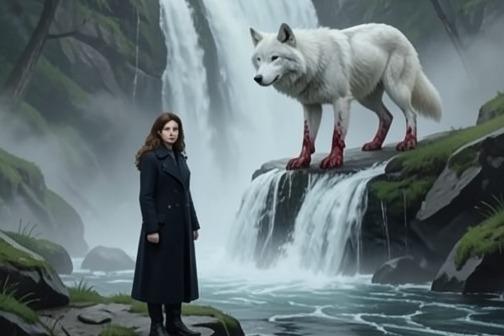
[Adrienne discovers Wilder's cave](entity:event-recall-event-adrienne-wilder-baa6f566d0a3) at the turning point of her wilderness ordeal, when hunger, cold, exhaustion, and the threat of predatory animals have reduced survival to a sequence of immediate choices. The cave is not merely shelter: it is the threshold through which [Adrienne](entity:character-recall-character-adrienne-05958df8fb72) enters Wilder's hidden world, first encountering him as a wounded white wolf and then, through acts of care, becoming connected to the werewolf whose mate-claim, family conflicts, and legal obligations will shape the larger story.
## The Search for Shelter
After seeing a large white wolf cross her path with blood oozing from its paws, Adrienne fears that she may be followed by a pack. She continues toward water despite the danger of snakes, wolves, and mountain lions, then hides behind a boulder for half the day before making a dash to the lake. At the water's edge she drinks from a small stream, raises her eyes, and sees the same magnificent white wolf standing at the top of a distant waterfall. His chilling howl confirms both his presence and the unease that has accompanied her through the forest.
The waterfall recalls Adrienne's earlier hikes with [Paul](entity:character-recall-character-paul-6e5f3b48f63d), during which she learned that waterfalls could conceal cave entrances. She therefore approaches the falls not because the place seems safe, but because exposure to the cold night has become more dangerous than entering an unknown cavern. She considers the possible hazards of a cave, including bears with cubs and bats, yet decides that a hidden shelter offers her the only realistic chance of surviving the night. Taking up a stick and declaring that she will not go easily if forced to fight, she reaches the waterfall and finds that it does indeed cloak a cave.
## The Cave and the Injured Wolf
Adrienne enters cautiously, expecting that the cave might belong to a bear. Instead, she discovers the embers of a fire and recognizes that a man has occupied the space. The cave is arranged like a dwelling rather than a temporary animal den: it contains separate rooms, bedrooms, a more elaborate main chamber furnished with skins, pelts, handmade chairs and tables, a dressing table, an LCD lamp, books, a cedar chest filled with men's clothing, a kitchen area, and a meeting or dining room with a large table and eight chairs. A black bear rug lies before the failing fire, and exhaustion finally overcomes her there.
When Adrienne wakes, the fire has gone dark and the cave is cold and damp. Hoarse breathing close to her face reveals that she is not alone. Reaching out, she touches warm fur with a living heartbeat and jumps up with her stick in hand. The animal beside her is the large white wolf she saw at the waterfall. He is more than six feet from head to toe, with enormous shoulders, paws, hind legs, and jaws; blood seeps from a severe shoulder wound, an injured hind leg, and cuts on his front paws. His condition explains why he has not attacked her, but his size and forty-two sharp teeth make his helplessness no guarantee of safety.
Adrienne identifies him as male and as a [lone wolf](entity:expression-recall-expression-lone-wolf-5cb72a552671). His blue eyes, compared with the fresh water of a lake, and his almost human-looking face complicate her fear: she sees not only a predator but a suffering creature. She strokes his blood-soaked fur and rubs his stomach, and the wolf answers with a soft moan. When he tries to lift his head, it falls back immediately, making his dependence unmistakable. The encounter reverses the expected danger of the wilderness. Adrienne has entered the wolf's shelter, yet the wounded wolf is the one who now requires rescue.
## Adrienne’s Improvised Care
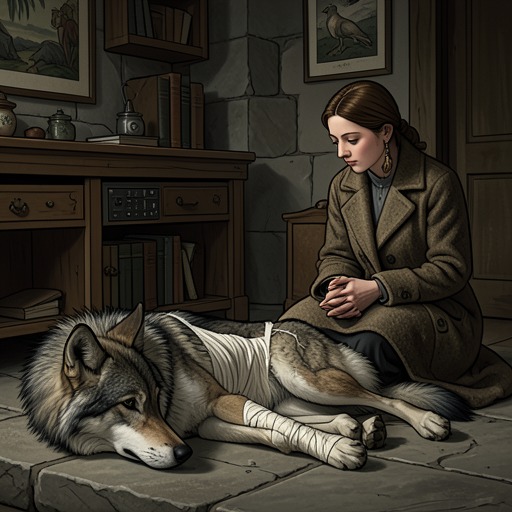
Rather than abandon the injured animal, Adrienne turns the cave into an emergency treatment space. She repeatedly carries water from the waterfall and pours it into the wolf’s mouth until his tongue responds and his chest begins to rise and fall more steadily. Daylight reveals cups, plates, spoons, matches, and a large first-aid kit, along with bottles of antibiotics, pain pills, and iodine. She fears that the men who use the cave may return to track and kill him, and she decides that she will prevent that if she can. By lighting a fire, she restores warmth to the chamber and watches his body relax, though he remains unable to open his eyes. Her care is practical rather than sentimental: she searches for medicine, assesses his wounds, and treats him despite knowing that a recovering wolf might still turn on her.
She then discovers that survival requires more than water and warmth. The wolf is too weak to eat ordinary pieces of meat, and he rejects duck, so Adrienne brings venison from the smokehouse and feeds him carefully. When he accepts only a small piece, she cuts the meat into tiny portions, lights the fire in an iron stove, fills a kettle with water, and cooks a soup. She pries open his jaws and ladles the mixture into his mouth, treating nourishment as another form of emergency medicine. The process is awkward and exasperating—she calls him an ungrateful, temperamental wolf and warns him that he will die if he refuses food—but her irritation never becomes abandonment. The snow outside has intensified, forcing her to spend another night in the cave, and the injured animal’s recovery binds her increasingly to the shelter she had entered only to escape the wilderness.
When the wolf’s wounds continue to demand attention, Adrienne uses iodine and bandages from the first-aid kit. Pouring the antiseptic onto the injured areas makes him moan and flinch, but he becomes responsive enough to open his eyes briefly, as though he understands her and feels safe in her presence. The moment establishes the first reciprocal sign in their relationship: Adrienne supplies water, heat, medicine, and food, while the wolf’s weakened acknowledgment confirms that her efforts have reached him. His apparent dependence also conceals the danger of the encounter. She knows that the animal could become her predator once restored, yet she continues nursing him because leaving him to die would violate the compassion that has displaced her original fear.
## From Shelter to Threshold
The cave’s domestic details gradually change the meaning of Adrienne’s discovery. What first appears to be a refuge from weather is revealed as a concealed human habitation, complete with provisions, rooms, furniture, clothing, books, and medical supplies. The presence of a wedding dress beneath jeans and a red lumberjack shirt, together with the carefully organized living quarters, suggests that the cave contains a history and an owner rather than serving as an accidental shelter. Adrienne does not yet understand that history, but the objects prepare the later revelation that the white wolf is Wilder and that the apparently isolated wilderness is connected to a structured werewolf society.
The scene therefore functions as a threshold rather than a pause in the survival plot. Adrienne enters the cave as a starving, displaced human woman who believes she is choosing between exposure and unknown animal danger. Inside, she becomes a caregiver to Wilder before she knows his name, species, or rank. That order matters: her first bond with him is formed through bodily vulnerability and improvised treatment, not through an explanation of werewolf law or an assertion of Alpha authority. The later claim that she is his mate and cannot take a future pup away from him transforms the earlier act of rescue into the beginning of a binding relationship, while also exposing the conflict between her human understanding of captivity and Wilder’s werewolf laws.
## Consequences for the Larger Plot
The cave discovery also foreshadows the story’s recurring struggle over who has the authority to define a body’s condition and fate. Adrienne’s earlier human medical history includes a doctor’s declaration that she could never have children after the assault involving Paul’s fraternity brothers, while the werewolves possess their own bodily knowledge about conception and mating. Wilder later tells her that werewolves can recognize when a female is ready to conceive and that pregnancy makes departure dangerous because an enemy clan might target his heir. The cave scene begins this collision between human medical certainty, werewolf reproductive knowledge, and Adrienne’s own uncertain voice by placing her in the role of healer before she becomes the subject of werewolf claims about fertility and possession.
Its pattern of care is repeated throughout the narrative. Adrienne later depends on medical intervention when an ambulance is called because her pulse is dangerously low; [Robert](entity:character-recall-character-robert-dcc9e88f1178) treats [Devin](entity:character-recall-character-devin-703dbf4d2cb0)’s severe bear wounds with a tourniquet, antibiotics, and a tetanus injection; and [Mena](entity:character-recall-character-mena-7ebb9c08e2d9)’s pregnancy becomes possible after Robert administers an experimental drug despite her presumed sterility. Against those later scenes, Adrienne’s treatment of Wilder appears as the story’s first improvised medical encounter, conducted with water from the falls, fire, iodine, bandages, and cooked venison. The cave thus introduces a durable exchange between injury and attachment: wounded bodies require care, care creates obligation, and obligation becomes entangled with family, reproduction, law, and the competing claims of human and werewolf society.
The discovery ultimately changes the direction of [Adrienne’s wilderness ordeal](entity:action-recall-action-adrienne-s-wilderness-d64eb2e5876e). She had been trying to reach water, avoid being hunted, and survive one day at a time; after entering the cave, she must also protect a wounded white wolf from those who might track him and kill him. The shelter that saves her from the snow becomes the place where she encounters Wilder’s hidden life, and her decision to keep him alive becomes the first decisive act leading toward his mate-claim, the shared [Samsa family](entity:character-recall-character-samsa-f981681df2c6) arrangement, and the later conflict with rivals who treat an Alpha’s mate as a prize governed by competing laws.
## Consequences for the Larger Plot
The cave discovery also foreshadows the story’s recurring struggle over who has the authority to define a body’s condition and fate. Adrienne’s earlier human medical history includes a doctor’s declaration that she could never have children after the assault involving Paul’s fraternity brothers, while the werewolves possess their own bodily knowledge about conception and mating. Wilder later tells her that werewolves can recognize when a female is ready to conceive and that pregnancy makes departure dangerous because an enemy clan might target his heir. The cave scene begins this collision between human medical certainty, werewolf reproductive knowledge, and Adrienne’s own uncertain voice by placing her in the role of healer before she becomes the subject of werewolf claims about fertility and possession.
Its pattern of care is repeated throughout the narrative. Adrienne later depends on medical intervention when an ambulance is called because her pulse is dangerously low; Robert treats Devin’s severe bear wounds with a tourniquet, antibiotics, and a tetanus injection; and Mena’s pregnancy becomes possible after Robert administers an experimental drug despite her presumed sterility. Against those later scenes, Adrienne’s treatment of Wilder appears as the story’s first improvised medical encounter, conducted with water from the falls, fire, iodine, bandages, and cooked venison. The cave thus introduces a durable exchange between injury and attachment: wounded bodies require care, care creates obligation, and obligation becomes entangled with family, reproduction, law, and the competing claims of human and werewolf society.
The discovery ultimately changes the direction of Adrienne’s wilderness ordeal. She had been trying to reach water, avoid being hunted, and survive one day at a time; after entering the cave, she must also protect a wounded white wolf from those who might track him and kill him. The shelter that saves her from the snow becomes the place where she encounters Wilder’s hidden life, and her decision to keep him alive becomes the first decisive act leading toward his mate-claim, the shared Samsa family arrangement, and the later conflict with rivals who treat an Alpha’s mate as a prize governed by competing laws.
Event 4
Wilder reveals his werewolf identity to Adrienne
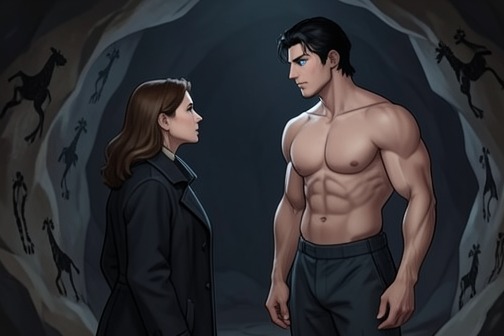
[Wilder reveals his werewolf identity to Adrienne](entity:event-recall-event-wilder-adrienne-8d11fdf81dc0) when the injured animal she has been nursing disappears from its sleeping place and addresses her in a gentle human voice. Until that moment, she has been trying to understand the creature as an unusually beautiful wolf, even comparing its cobalt eyes and dark lashes with her experience of dogs. His revelation changes the meaning of the cave, his body, and her captivity: the apparent animal is a powerful man, the man is also a wolf, and the stranger who rescued her is already interpreting her presence through the customs of his hidden pack.
## The Human Form Behind the Wolf
The disclosure begins with Wilder asking [Adrienne](entity:character-recall-character-adrienne-05958df8fb72) where she is going. She turns and sees a naked man more than six feet tall, with a broad chest, straight black hair, and blue eyes that resemble azure fire. His physical appearance unsettles her because it contradicts the identity she had assigned to the creature. Wilder insists that the cave is his home and asks whether she has ever seen a naked man before, answering her fear with a mixture of calmness, provocation, and authority.
The conversation initially makes the revelation sound like a threat concealed beneath ordinary speech. When Adrienne asks why he should help her, Wilder says that he is only half human and that the other half will soon need her. He then makes the disclosure explicit: he tells her that he is a werewolf. Adrienne rejects the claim with disbelief and laughter, but Wilder does not retreat into ambiguity. He states that he will claim her whether she wants him to or not, presenting the supernatural fact of his identity together with the coercive mate-claiming system that he believes follows from it.
## Transformation Witnessed in the Cave
The human confession is preceded and confirmed by a visible bodily transformation. Seeing Adrienne shivering, Wilder changes into a wolf and lies beside her so that his thick fur can protect her from frostbite. When she wakes, she sees the large white wolf and screams. His body begins to change, but the process is unstable: he attempts to move toward human form, resists the change, and falls back into the wolf shape as instinct takes control.
Adrienne’s scream has a different effect on Wilder from the howls of the females in his pack. Instead of driving him away, it awakens an impulse to protect her, although he cannot identify whom he is protecting her from. He changes again, completes the transition into human form, and covers her mouth to keep her from calling other wolves to the cave. The scene makes the transformation both a secret exposed and a danger contained. Wilder must prevent the sound from revealing the cave’s location, while Adrienne must revise her understanding of the being standing before her.
## Reproduction, Matehood, and Restricted Freedom
The revelation is inseparable from Wilder’s explanation of werewolf reproduction. Before identifying himself, he tells Adrienne that he will soon have to mate and that, because the snow has isolated the region, she is the only female nearby. This statement presents her not first as a traveler with an independent future but as the available human female within a reproductive emergency. His claim that he has little choice in the matter collides with Adrienne’s insistence that self-control should be possible.
After they mate, Wilder tells Adrienne that werewolves can recognize when a female is able to conceive. He says that she is, or will be, pregnant with his pup and therefore his mate. He denies that she is captive, claiming that she may come and go, but immediately limits that freedom by saying that she cannot leave with the child because the [Ari Kara clan](entity:organization-recall-organization-ari-kara-clan-cc6ab5933c8c) might discover the pregnancy and send an assassin after his heir. The contradiction is central to the event: Wilder describes movement as permitted while treating pregnancy, lineage, and danger as reasons to control the consequences of Adrienne’s departure.
The disclosure also exposes the difference between human and werewolf definitions of consent. Adrienne accuses Wilder of having concealed essential information before mating with her, while he rejects her description of the encounter as ravishment and explains it through mutual bodily need. His account does not erase the coercive language of claiming, but it establishes the ideological framework through which he interprets desire, conception, and obligation. Later, the same framework appears in the [Samsa brothers](entity:character-recall-character-samsa-brothers-9327f0c7f4ea)’ discussion of marriage, reproduction, and pack welfare.
## From Secret Identity to Family and Law
Wilder’s identity becomes politically consequential once Adrienne reaches the Samsa brothers’ ranch. He is not merely an isolated shapeshifter: he and his brothers control territory across Nevada, [Oregon](entity:location-recall-location-7505992ba56d), Washington, and Wyoming, as well as a small pack in [Alaska](entity:location-recall-location-b2c21cbab16e). His position as Alpha gives his private relationship with Adrienne consequences for inheritance, alliance, and pack security. When Adrienne demands an apology, insists on being addressed by her name, and says that she wants marriage, Wilder accepts that her choice must shape the arrangement. She names Wilder, [Lycell](entity:character-recall-character-lycell-d904ab5d4e13), and Drayton as the men she wants to marry, turning the original claim into a shared domestic and political structure.
The brothers nevertheless debate who has the authority to define the relationship. Wilder declares that he is the Alpha male and that Adrienne is his mate; Lycell argues that her pregnancy should give him a claim, while Drayton proposes letting Adrienne decide whom she prefers to marry. The conflict shows that Wilder’s revelation has not produced a single stable rule. His identity opens access to werewolf law, but that law is contested between Alpha authority, reproductive claims, brotherly unity, and Adrienne’s expressed wishes.
The conflict extends beyond the family. [Ramsey](entity:character-recall-character-ramsey-a48448732611), [Mena](entity:character-recall-character-mena-7ebb9c08e2d9)’s father, protests that a promise concerning his daughter was broken and objects to a human female dictating werewolf laws. Wilder responds that Ramsey has no right to dictate within his home and defends Adrienne against disrespect. His defense is significant because the same society that treats females as subordinate and values them for producing pups contains competing forms of protection and authority. Mena recognizes this contrast: under her father’s rules, werefemales live to serve male pack leaders and are married according to paternal decisions, whereas Adrienne’s refusal and insistence on marriage demonstrate a more independent model of female agency.
## Long-Term Consequences of the Revelation
The cave disclosure remains the foundation for later conflicts because it makes Adrienne the mate of an Alpha and the bearer of a possible heir. Wilder repeatedly treats her protection as a legal and hereditary obligation. When [Bane](entity:character-recall-character-bane-a83632627baa) abducts her, Wilder understands the act not simply as the seizure of a woman but as the kidnapping of an Alpha’s mate, an offense punishable under werewolf law. He describes himself as both man and wolf, capable of reason yet driven by the single purpose of hunting the pursuer, while Bane’s corresponding fixation becomes the desire to mate with Adrienne.
Adrienne never completely accepts the werewolves’ laws even after she embraces parts of their family life. She does not understand their need to hunt, their inherited rules, or the way those rules bind matehood to protection, pregnancy, and punishment. Wilder, by contrast, has absorbed the law since childhood and later stands at the head of a pack extending from the Americas to [Russia](entity:location-recall-location-e36341713c23), responsible for enforcing it. The event therefore functions as more than a supernatural confession. It is the first translation between two systems of personhood: Adrienne’s human language of autonomy, marriage, and personal injury, and Wilder’s werewolf language of transformation, mating, heirs, Alpha authority, and pack survival.
Wilder’s disclosure also changes the narrative’s treatment of the human-animal boundary. The wolf is not merely an animal that Adrienne rescues, and the man is not simply a disguised human lover. Wilder is a hybrid identity whose human tenderness, animal instinct, physical transformation, and social authority operate together. The cave becomes the place where Adrienne first sees that the categories she relies on are inadequate, even as the revelation exposes how dangerous it is for Wilder and his society to define her through those categories. The event’s decisive consequence is thus double: Adrienne enters the hidden world of the werewolves, and Wilder’s private secret becomes the basis for an enduring struggle over her body, her choices, her children, and the laws that claim to protect them.
Event 5
Wilder rescues Adrienne from a bear
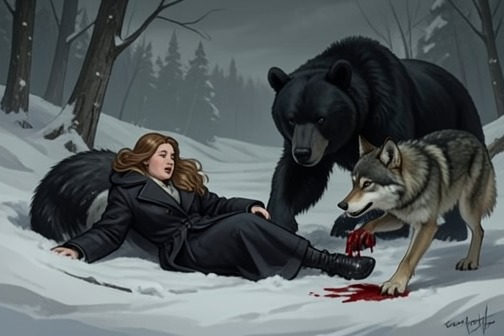
[Wilder rescues Adrienne from a bear](entity:event-recall-event-wilder-adrienne-336a6d7a1f1b) at the moment when her wilderness ordeal reaches its most immediate and apparently fatal crisis. [Adrienne](entity:character-recall-character-adrienne-05958df8fb72), exhausted, starving, and nearly frozen, has already seen a large white wolf with blood oozing from its paws. When she encounters a black bear and its cub at the edge of the forest, she understands that the animal may regard her as food. The wolf’s cry then comes from a hill, and the same white wolf races toward her as the bear surges forward. Too weak to escape either predator, Adrienne falls into the snow expecting a violent death; the rescue begins not as a human intervention but as a confrontation between competing animals over a vulnerable body.
## Wilder’s Intervention and the Bear Fight
Wilder reaches Adrienne before the bear can finish its attack and places himself between the human woman and the threatened animal. In wolf form he is an imposing, five-foot-tall figure on all fours, with raised lips exposing large canine teeth and hair standing along his back. His posture is meant to deter the female bear, but the bear is hungry and intent on reaching the river to hunt fish; because Adrienne is available, it treats her as potential food rather than abandoning the encounter. Wilder understands the danger of a bear preparing for hibernation and accepts the fight as a necessary risk. When the bear lunges, it tears into the arm he has already wounded, yet Wilder answers by biting and ripping the bear’s leg. The injury forces the bear to retreat into the forest, turning the clearing from a site of likely death into the first unmistakable demonstration that the white wolf is protecting Adrienne rather than hunting her.
## The Rescue and Return to Shelter
The victory leaves Wilder bleeding from his legs and moving with difficulty, but he does not leave Adrienne exposed in the snow. He lifts her unconscious body in his jaws and carries her toward the cave as he has carried wolf pups while playing with the young animals in his packs. The gesture gives the rescue a distinctly pack-centered meaning: Adrienne is treated as someone vulnerable under his protection, while Wilder’s Alpha status is expressed through care as well as physical dominance. Once inside, he struggles to build a fire with his injured arm, removes her wet animal skins and black leggings, and places her on the bear rug while she shivers from the cold. He then forces himself through the difficult transformation back into human form and lies beside her, holding her in his arms to restore her warmth. The rescue therefore continues beyond the fight itself, becoming a sustained act of shelter, bodily care, and exposure of the dangerous labor required for Wilder to move between wolf and human forms.
## The Rescue’s Immediate Meaning
The episode changes Adrienne’s understanding of the white wolf before she can consciously understand Wilder’s identity. Earlier, she had seen him as another predator: his bloodied paws, sudden cry, and speed across the snow made her fear that he would reach her throat before the bear did. At the moment of crisis, however, the wolf’s violence is directed away from her. Wilder’s intervention distinguishes predation from protection through action rather than explanation. He risks an already wounded body, confronts an animal defending its territory, and then carries Adrienne as he would a wolf pup. The rescue thus establishes a pattern that will govern their relationship: Wilder’s care is inseparable from the instincts, hierarchy, and physical power of his wolf nature, while Adrienne’s safety becomes bound to a creature she initially believes may kill her.
## Broader Consequences and Narrative Significance
The bear rescue becomes the decisive threshold between Adrienne’s solitary struggle for survival and her entanglement with Wilder’s hidden social and biological world. His actions in the clearing are immediately protective, but the protection is not detached or temporary. Wilder explains that he has long wanted a family and has found no compatible female werewolf, while most werefemales are sterile; because he and his brothers are inseparable Alpha triplets, the woman he chooses must accept all three brothers and bear their pups. Their pact further provides that the surviving brother would take her as his wife if Wilder died. The rescue therefore carries consequences far beyond saving Adrienne from the bear: it places her within a preexisting system of shared mating, succession, fertility, territory, and pack continuity before she has been given the knowledge needed to consent to that system.
That imbalance becomes explicit when Wilder later tells Adrienne that a werewolf can know when a female is ready to conceive. He insists that she may leave physically, but that pregnancy makes departure dangerous and prevents her from taking the child, since the [Ari Kara clan](entity:organization-recall-organization-ari-kara-clan-cc6ab5933c8c) could discover the pregnancy and attempt to assassinate his heir. His language rejects the idea that she is captive prey, yet the conditions he describes restrict her freedom through pregnancy, danger, lineage, and werewolf law. The rescue thus contains a contradiction that the later plot repeatedly reopens: Wilder’s willingness to risk his life for Adrienne is genuine, but his protection is joined to possession and authority. The bear’s attack ends in her safety; it also begins the struggle over who has the power to define that safety and the obligations attached to it.
Adrienne’s later relationships expose how unstable that first bond remains. Drayton tells her that he wants her and loves her while she is carrying Wilder’s pups, and Adrienne experiences the competing claims of two werewolves as overwhelming. When the brothers debate marriage, Wilder asserts that he is the Alpha male and that Adrienne is his mate, while [Lycell](entity:character-recall-character-lycell-d904ab5d4e13) argues that his own pregnancy claim should give him priority. Wilder’s rescue consequently becomes the first act in a continuing contest among protection, mate status, brotherly agreement, and Adrienne’s choice. [Ramsey](entity:character-recall-character-ramsey-a48448732611)’s later accusation that the [Samsa brothers](entity:character-recall-character-samsa-brothers-9327f0c7f4ea) have allowed a human woman to dictate their laws confirms that Adrienne’s presence challenges established werewolf authority, even as Wilder defends her against Ramsey’s disrespect.
The event also establishes a recurring pattern in the novel’s treatment of danger and care. Adrienne is repeatedly endangered by animals and by rival werewolves, while rescue is performed through bodies that remain capable of violence: Wilder fights the bear with teeth, carries her like a pup, and later works through injury and cold to keep her alive. Other crises echo the same structure. A doctor must send an ambulance when Adrienne’s pulse is dangerously low, [Robert](entity:character-recall-character-robert-dcc9e88f1178) treats [Devin](entity:character-recall-character-devin-703dbf4d2cb0)’s severe puncture wounds after a bear attack, and Lycell is later struck down by a black bear while his attention is consumed by thoughts of Adrienne. These repetitions prevent the original rescue from becoming an isolated romantic gesture. They place human vulnerability, animal territory, medical care, and pack responsibility within one continuous ecology of danger.
Most importantly, the rescue changes the meaning of the white wolf in Adrienne’s story. Before Wilder intervenes, the wolf is indistinguishable from the threats surrounding her: she has seen blood on his paws, heard his cry, and feared that he would kill her at the throat. After he fights the bear, carries her to shelter, and returns to human form beside her, the same creature becomes protector, potential mate, and gateway to an unfamiliar civilization. Wilder later relies on the wolf form for endurance and camouflage while tracking [Bane](entity:character-recall-character-bane-a83632627baa) and Adrienne through snowy river country, shifting because it allows him to travel faster, resist the cold, and hunt fresh meat. The transformation first witnessed through rescue therefore becomes a durable emblem of his dual identity. It is both the source of the power that saves Adrienne and the source of the instincts and laws that make her freedom increasingly contested.
Event 6
Adrienne becomes Wilder's mate
[Adrienne becomes Wilder's mate](entity:event-recall-event-adrienne-wilder-5d5853bd06c1) at the point where an improvised wilderness refuge turns into the first site of their shared future. The encounter is decisive because it joins physical attraction to the werewolf concepts of imprinting, conception, inheritance, and pack survival. It does not create a simple romance: Wilder understands the union through Alpha authority and biological destiny, while [Adrienne](entity:character-recall-character-adrienne-05958df8fb72) repeatedly insists on her name, her freedom, and her right to decide what the relationship means.
## The Cave Encounter
Wilder approaches Adrienne while she is sleeping, driven by an overwhelming desire that he experiences as both human longing and animal compulsion. His body and behavior reveal the boundary he is struggling to control: when his eyes change and his pupils narrow, the narrative describes the man giving way to the wolf within him. Adrienne awakens and responds to the attraction, but Wilder remains conscious of the physical disparity between them. He keeps his weight from crushing her, worries that his size could hurt her, and adjusts himself as she meets him. Their encounter is therefore presented through a tension between instinctive force and deliberate restraint.
The union also marks a transformation in Adrienne's understanding of Wilder. Before this moment, his statements about mating sound to her like the speech of a man who has lived too long in isolation. When he explains that snow has left her as the only available female nearby, she questions whether he has any self-control and objects to being treated as a biological necessity. Wilder finally ends the ambiguity by revealing that he is a werewolf. The disclosure changes the meaning of his hunger, his strength, and his earlier claims about the need to mate, even though it does not remove Adrienne's alarm at the implications.
## Imprinting and the Mate Claim
After the encounter, Wilder tells Adrienne that he wants her as his mate and explains that he has imprinted on her. In his account, imprinting makes the bond possessive and apparently conditional: she is his until he no longer wants her. Adrienne rejects that formulation immediately. With shaking legs and her hands on her hips, she says that she will leave him once the snow recedes and refuses to accept the possibility that he may discard her while she has no reciprocal power to leave him.
Wilder's customary model of mating intensifies the conflict. He explains that his [Werefemales](entity:creature-recall-creature-werefemales-a5aa76ad9250) recognize when it is time to conceive, and that as the Alpha male he has first choice among females in his packs. Adrienne answers with sarcasm, refusing to bend over on command or allow him to ravish her whenever he chooses. Her language interrupts the pack's script of female availability. The event thus establishes the relationship's recurring contradiction: Wilder treats mating as an inherited werewolf institution governed by hierarchy and instinct, while Adrienne demands that intimacy involve recognition of her individual identity and consent.
## Pregnancy and Pack Continuity
Wilder immediately interprets the mating as conception. He tells Adrienne that she is carrying his were-child and that, after his child is born, she will carry the pups of his brothers so that they can establish a large family and pack. He claims that werewolves know when a female is ready to conceive, a form of bodily knowledge that conflicts with Adrienne's human understanding of pregnancy. She accuses him of tricking her and protests that she is not going to have a baby, or a pup, for him.
His warning about the child introduces a political danger alongside the intimate one. Wilder says that Adrienne cannot leave while pregnant because it would be dangerous, and that she could not take the child with her. He fears that the [Ari Kara clan](entity:organization-recall-organization-ari-kara-clan-cc6ab5933c8c) might discover the pregnancy and send someone to assassinate the child because the pup would be his heir. The mate bond therefore becomes a mechanism of inheritance and a source of vulnerability: Adrienne's body carries not only Wilder's offspring but also the succession claim that threatens rival powers.
Wilder's expectations arise from a wider fertility crisis. He has wanted a family but has not found a compatible Werefemale; most Werefemales are sterile, and he believes the female he chooses must bear the pups of all three brothers. The triplets are all Alpha wolves, remain inseparable, and jointly control the territory inherited from their father. Their pact requires them to remain together rather than drive one another out, and Wilder's brothers have agreed to accept and mate with the female he selects because they trust his judgment as head Alpha. If Wilder dies, the next brother in line is expected to take and marry her. Adrienne is consequently drawn into a family structure in which mating is also succession, alliance, and collective reproduction.
## Competing Models of Female Agency
The consequences of the cave encounter extend beyond Wilder’s immediate claim. At the Samsa ranch, Drayton presents a more restrained version of the same werewolf system, telling Adrienne that she may remain until the child is born and warning that her scent intensifies [Lycell](entity:character-recall-character-lycell-d904ab5d4e13)’s desire. The warning still places her body within a reproductive order, but it also acknowledges that the brothers should not mate with her unless she wants them to. Lycell exposes the darker alternative when he threatens to take her by force, impregnate her, and send her back to human society with a pup whom her people would not accept. His intimidation makes clear that Wilder’s claim is not the only danger surrounding Adrienne; the brothers’ differing attitudes determine whether the shared-mate arrangement appears as negotiation, coercion, or both. Adrienne’s earlier infertility diagnosis, following the assault by [Paul](entity:character-recall-character-paul-6e5f3b48f63d)’s fraternity brothers and the doctor’s declaration that she could never have children, further complicates the werewolves’ certainty that she will reproduce. The human medical verdict and Wilder’s instinctive conviction represent rival authorities over the same body, while Adrienne’s own objections remain the measure against which both systems are tested.
## From Captive Reproductive Body to Negotiated Family Member
The mate bond continues to be contested as Adrienne moves from [Wilder’s cave](entity:location-recall-location-wilder-s-cave-86ef6b83a4c9) into the [Samsa family](entity:character-recall-character-samsa-f981681df2c6)’s wider household. Drayton’s conduct offers a partial revision of Wilder’s assumptions: he tells her that she may remain until the child is born and explicitly acknowledges that the brothers should not mate with her unless she wants them to. Yet even this more courteous position remains organized around pregnancy, scent, and reproductive availability. Drayton warns that her smell is intensely exciting to Lycell, whose previous experience with a female makes him especially reactive to a human woman. Lycell then strips away the appearance of shared domesticity by threatening to take Adrienne by force, send her back to human society, and leave her carrying a pup whom humans would not accept. His threat reveals how unstable the boundary is between a family arrangement presented as collective care and a system in which her body can be treated as pack property.
## Reproductive Politics and Conflicting Authorities
Adrienne’s history makes Wilder’s certainty about conception even more disruptive. After the assault by Paul’s fraternity brothers, she was taken to a hospital, where a doctor told her parents and Paul that she would never have children. Paul responded by treating the assault as an “incident” that should never be discussed again, while promising to marry her that June. The earlier medical judgment had therefore confined Adrienne within a human narrative of damage, secrecy, and presumed infertility. Wilder’s werewolf knowledge overturns that diagnosis, but it does not automatically restore her autonomy: his confidence that a female’s body reveals when it is ready to conceive replaces one authoritative interpretation with another. The event’s significance lies in this collision between medical classification, werewolf instinct, and Adrienne’s own refusal to let either system define her entirely.
## From Captive Reproductive Body to Negotiated Family Member
The mate bond remains contested as Adrienne moves from Wilder’s cave into the Samsa family’s wider household. Drayton offers a partial revision of Wilder’s assumptions when he tells her that she may stay until the child is born and acknowledges that the brothers should not mate with her unless she wants them to. Even this more courteous position remains organized around pregnancy, scent, and reproductive availability: Drayton warns that Adrienne’s smell is intensely exciting to Lycell, whose desire is especially volatile around a human female. Lycell then exposes the coercive possibility beneath the family arrangement, threatening to take Adrienne by force, send her back to human society, and leave her carrying a pup whom humans would not accept. His threat makes the boundary between collective care and bodily possession unmistakably unstable.
## Reproductive Politics and Conflicting Authorities
Adrienne’s history makes Wilder’s certainty about conception especially disruptive. After the assault by Paul’s fraternity brothers, she was taken to a hospital, where a doctor told her parents and Paul that she would never have children. Paul responded by treating the assault as an “incident” that should never be discussed again, while promising to marry her that June. The medical judgment confined Adrienne within a human narrative of damage, secrecy, and presumed infertility. Wilder’s werewolf knowledge overturns that diagnosis, but it does not automatically restore her autonomy: his confidence that a female’s body reveals when it is ready to conceive replaces one authoritative interpretation with another. The event’s significance lies in this collision between medical classification, werewolf instinct, and Adrienne’s refusal to let either system define her entirely.
## Marriage, Choice, and the Rewriting of the Bond
The mate bond eventually becomes more negotiable, though never free of the hierarchy that created it. When Wilder begs Adrienne’s forgiveness, she refuses to accept the generic label of “female” and insists that her name is [Adrienne Ward](entity:character-recall-character-adrienne-ward-1adffe8ce2f3). She also demands marriage, not only to Wilder but to Lycell and Drayton. Her demand transforms the original claim from a unilateral Alpha declaration into a condition she actively reshapes. The relationship is no longer defined solely by Wilder’s imprint, his expectation of pregnancy, or the brothers’ reproductive pact; Adrienne uses the language of marriage to require public recognition, personal naming, and a place in the entire Samsa family structure.
That demand also distinguishes her from the werewolf females whose conduct Wilder describes as automatic submission to Alpha choice. Adrienne does not accept a role in which a female’s value is measured only by availability or fertility. [Mena](entity:character-recall-character-mena-7ebb9c08e2d9)’s later reflection supplies a contrasting social framework: Werefemales are expected to serve male pack authority, and their worth depends on bearing pups, whereas human women are portrayed as independent and capable of refusing commands. Adrienne’s refusal when Drayton orders that he will accompany her makes this contrast visible in action. Her defiance helps expose that the mate bond is not merely a private attraction but a struggle over whether a human woman entering werewolf society must reproduce its gender order or can alter it from within.
## Marriage, Choice, and the Rewriting of the Bond
The mate bond eventually becomes more negotiable, though never free of the hierarchy that created it. When Wilder begs Adrienne’s forgiveness, she refuses to accept the generic label of “female” and insists that her name is Adrienne Ward. She also demands marriage, not only to Wilder but to Lycell and Drayton. Her demand transforms the original claim from a unilateral Alpha declaration into a condition she actively reshapes. The relationship is no longer defined solely by Wilder’s imprint, his expectation of pregnancy, or the brothers’ reproductive pact; Adrienne uses the language of marriage to require public recognition, personal naming, and a place in the entire Samsa family structure.
Event 7
Adrienne flees to Samsa Brothers' Ranch
[Adrienne flees to Samsa Brothers' Ranch](entity:event-recall-event-adrienne-samsa-483e5ebc87ae) at the first major threshold of her life with Wilder: carrying food and water, grieving the bond she is abandoning, and moving from one werewolf-controlled space into another. The journey is decisive because it does not return her to ordinary human life. Instead, it delivers her to the [Samsa family](entity:character-recall-character-samsa-f981681df2c6), where her arrival is immediately interpreted through werewolf ideas of mating, inheritance, marriage, and pack continuity.
## Causes and Preparation
[Adrienne](entity:character-recall-character-adrienne-05958df8fb72)’s escape begins as a deliberate response to the incompatible demands of Wilder’s world. Wilder tells her that she is his mate and that, because she is pregnant or will be pregnant with his pup, leaving is dangerous; he also insists that she cannot take the child with her because the [Ari Kara clan](entity:organization-recall-organization-ari-kara-clan-cc6ab5933c8c) might discover the pregnancy and assassinate his heir. Adrienne experiences this explanation as an overwhelming revelation arriving after sexual intimacy rather than before it. Although she wants a child with Wilder, she doubts that a human woman can live permanently in a cave or raise a half-human, half-wolf child within werewolf society. Her uncertainty about pregnancy, combined with her resistance to being drawn into Wilder’s plan that she mate with his brothers, turns affection into a reason for flight rather than surrender.
She prepares pragmatically while Wilder is away. From a cabinet she takes pieces of smoked bear, despite hating the meat, because it can sustain her on the trek. She also searches out animal pouches for water and hides a soft bag beneath a makeshift kitchen cabinet. Because she expects berries to provide the sugar and energy needed for the journey, she waits for Wilder to return with fruit; exhaustion and her refusal to eat the bear meat leave her weak, and she lies in the bedroom wondering whether the doctors could have been wrong about her ability to conceive. The preparation therefore combines bodily vulnerability with stubborn agency: Adrienne is not simply swept away, but neither is she escaping from a position of safety.
## The Flight from Wilder’s Cave
When Wilder falls asleep after making love to her and releasing himself into her body, Adrienne bathes in cold water, puts on the skins and new boots he fashioned for her, gathers berries into the cloth bag, and hurries toward the cave mouth. She hesitates before leaving. Longing and remorse pull her back toward Wilder, while the conviction that she is human and cannot spend her life underground compels her into the open air. That hesitation gives the departure its emotional shape: the escape is not proof that her attachment has vanished, but an attempt to preserve a self that Wilder’s domestic and reproductive expectations threaten to absorb.
She travels north toward the mountain range, eating berries a handful at a time and drinking water as she walks. The outdoors briefly restores her sense of physical freedom, and she welcomes the absence of bears, wolves, and [Werewolves](entity:creature-recall-creature-werewolves-8de514e497c0). The illusion of uncomplicated escape ends when she hears Wilder’s howl. She recognizes it immediately and understands that he has awakened to find her gone. His fragmented, painful call continues until she covers her ears; tears gather in her eyes because she believes she has hurt him irreparably and that he thinks she is taking his son from him. Another wolf call then answers from the valley, a sound she does not recognize, adding a new threat to the already unstable journey.
## Arrival at Samsa Brothers’ Ranch
Adrienne quickens her pace and eventually finds the sign for Samsa Brothers’ Ranch, which warns visitors about large dogs and wolves. The warning has no power to deter her because reaching safety matters more than understanding the property. She climbs the fence and lands on her feet, drawing on her earlier gymnastics and the physical strength she has gained during a month of sexual intimacy with Wilder. The ranch soon appears as an enormous working estate, with a house large enough for five families and a swimming pool beside it. Its scale contrasts sharply with the cramped cave she has rejected, yet the ranch is also a space organized around animals, labor, and pack life rather than ordinary human independence.
She hides behind a shrub and watches two men leave a stable, bridle horses, and saddle them. Three large German Shepherds then surround her, barking and baring their teeth. The men abandon the horses and approach the disturbance. Adrienne identifies herself as lost and asks for help reaching her parents, explaining that they live in a small town outside [Lake Tahoe](entity:location-recall-location-lake-tahoe-0c9f9ca14c7e) and that she was in an accident. Her account is incomplete because she suppresses the supernatural circumstances that brought her there, but it is enough to secure an invitation inside. Exhausted from the journey, she accepts the offer of food and rest.
## [Lycell](entity:character-recall-character-lycell-d904ab5d4e13)’s Reception and the New Household
The younger-looking man introduces himself as Lycell without expression or sincerity. Adrienne notices his amber eyes and seductive features, raises her hand to greet him, and collapses from exhaustion into his arms. Lycell carries her upstairs and places her in the master bedroom while the taller man, Drayton, asks what should be done with her. The scene turns hospitality into custody almost immediately: Adrienne has entered the ranch seeking assistance, but her weakness places her body under the brothers’ control.
Lycell answers that they must wait for Wilder, who will arrive soon, because Adrienne is Wilder’s female and Wilder must decide whether she is the right choice for the brothers. The brothers then begin preparing the house for a female, ordering chores and a feast while anticipating that there will soon be a wedding. Adrienne’s individual account of being lost is thus displaced by a collective interpretation of her arrival. The ranch does not function as a neutral refuge; it is the threshold of the Samsa family’s shared-mate arrangement and its expectation that her future will serve pack continuity.
## Consequences and Significance
The flight produces a geographical escape but not legal or social freedom. In [Wilder’s cave](entity:location-recall-location-wilder-s-cave-86ef6b83a4c9), Adrienne had been told that pregnancy, matehood, inheritance, and the danger posed by the Ari Kara clan limited her choices. At the ranch, those same questions are broadened into a family and pack decision. Wilder later declares that he is the Alpha male, that Adrienne is his mate, and that he will marry her, while Lycell argues that his own pregnancy claim should matter. [Ramsey](entity:character-recall-character-ramsey-a48448732611), [Mena](entity:character-recall-character-mena-7ebb9c08e2d9)’s father, objects that a human female has been allowed to dictate werewolf laws after a promise concerning his daughter was broken. These later disputes reveal that Adrienne’s arrival has destabilized established customs rather than removing her from them.
The event also exposes the conflict between competing normative systems. Adrienne understands neither the werewolves’ need to hunt nor the full force of their inherited laws, even as she struggles to apply human ideas of autonomy and morality to a society governed by mating, Alpha authority, protection, and reproductive obligation. Wilder’s later pursuit of [Bane](entity:character-recall-character-bane-a83632627baa) rests on the same werewolf law: Bane has kidnapped an Alpha’s mate and must be punished. Adrienne’s attempt to leave therefore becomes part of a wider struggle over who may define her status and what protections or restrictions follow from it. The ranch is the first visible sign that her escape from one werewolf household has led into a larger social order whose welcome is inseparable from possession, marriage, and pack power.
Event 8
The Samsa werewolf family plans a shared marriage and reproduction
[The Samsa werewolf family plans a shared marriage and reproduction](entity:event-recall-event-samsa-535135c12144) as a survival strategy that joins family unity, reproductive scarcity, and territorial politics. Wilder’s choice of [Adrienne](entity:character-recall-character-adrienne-05958df8fb72) as a fertile human mate is not treated by the brothers as a private romance: because Wilder, [Lycell](entity:character-recall-character-lycell-d904ab5d4e13), and Drayton are inseparable triplet Alphas and most werefemales are sterile, Adrienne is expected to become the common mother of the family’s pups. The plan preserves the brothers’ unity, but it also places Adrienne’s body, consent, marriage, and future children at the center of a conflict between werewolf custom and human ideas of autonomy.
## Reproductive Crisis and the Triplet Pact
Wilder’s plan begins with a demographic crisis. He wants a family but has never found a compatible werefemale: the woman would have to accept all three brothers, and she would have to be fertile. The text presents sterility among werefemales as a consequence of inbreeding, making a fertile human woman appear to Wilder as the only practical means of replenishing the clan. Because the brothers are triplet Alphas who control their inherited territory equally, none of them is willing to destroy, expel, or permanently separate the others for the sake of an individual mate.
The brothers have therefore transformed fraternity into a reproductive institution. They agree that whoever Wilder selects will be accepted by the other two, because Wilder is the head Alpha and they trust his judgment. Their pact also contains a succession rule: if Wilder dies, the next brother in line will take Adrienne and marry her. The arrangement is intended to ensure that the mate and her children remain within the family even after a change in leadership, binding reproduction to inheritance and political continuity rather than leaving either to personal choice alone.
Wilder’s earlier policy shows that the arrangement is also meant to avoid open violence against humans. He establishes a council to address the clan’s lack of breeding and refuses to capture human females, fearing that kidnapping would expose the werewolves and provoke their destruction. Instead, he tries to attract women through money and opportunities to meet the handsome [Samsa brothers](entity:character-recall-character-samsa-brothers-9327f0c7f4ea). Some women join other pack members, but Wilder waits for the woman he considers right. Adrienne becomes the fulfillment of that search and the test of whether the family can preserve its population without abandoning its secrecy.
## Adrienne as the Shared Mate
Wilder tells Adrienne that the snow has left her as the only female nearby and connects her presence to his imminent need to mate. When he reveals that he is a werewolf, the revelation exposes the animal and social logic behind his behavior. After he considers Adrienne his mate and believes she is pregnant, he tells her that she may come and go, but that she cannot leave while pregnant because carrying his pup would make departure dangerous. He further claims that the [Ari Kara clan](entity:organization-recall-organization-ari-kara-clan-cc6ab5933c8c) might assassinate the child if it learned that the heir existed. His language presents protection as both care and restriction: he denies that she is captive while imposing conditions on her movement and on whether she may take the child.
The family’s expectation is made explicit when Drayton explains that Adrienne is not carrying merely any child but Wilder’s pups. He identifies Wilder as the Alpha [lone wolf](entity:expression-recall-expression-lone-wolf-5cb72a552671) who rejected both human females and werefemales despite having access to many women, and says that the brothers had expected the woman Wilder brought home to become the mother of all their pups. Drayton also tells her that Wilder has consented to the brothers mating with her, although he later admits that they would not do so unless she wanted it. The gap between the family’s assumed entitlement and its belated acknowledgment of consent defines the moral pressure surrounding the arrangement.
Adrienne begins to calculate the practical consequences in human terms. She considers whether she could be married to three men or wolves, insists that there would need to be a wedding ceremony before she consummated a marriage with the other brothers, and worries about how the children would identify their fathers and how inheritance would work. She asks whether the firstborn would inherit everything or whether the children would inherit equally. These questions translate an unfamiliar werewolf custom into the language of marriage, parentage, and property, making clear that reproduction without a recognized social structure is unacceptable to her.
Her position changes gradually rather than through simple submission. At first she regards the proposed union as impossible and insists that she cannot be pregnant. Later she publicly reveals her pregnancy while leaving with Drayton to buy something for Wilder’s babies. When Drayton asks whether she is being rude to another woman who desires the brothers, Adrienne answers that she expects respect because she may wed all three brothers and have their pups. Drayton reads her jealousy as evidence that there may be hope for the family. Eventually Adrienne demands that Wilder apologize, use her name rather than calling her merely a female, and marry her. She chooses to marry Wilder, Lycell, and Drayton, explaining that Lycell changed her mind, while also demanding that [Mena](entity:character-recall-character-mena-7ebb9c08e2d9) be sent away.
## Authority, Consent, and Family Law
The proposed marriage creates a struggle over who has the right to define Adrienne’s status. Wilder asserts that he is the Alpha male and that Adrienne is his mate, so he will marry her. Lycell counters that Adrienne is carrying his pups and argues that this should give him a claim. Drayton proposes that Adrienne decide whom she wants to marry, but he also says that the husband she chooses will determine the next steps for the good of the pack. The brothers thus recognize her decision unevenly: her choice is acknowledged, yet it remains enclosed by Alpha authority and collective reproductive need.
The family’s customs also collide with Adrienne’s explicit resistance. Lycell threatens that, unlike Wilder, he has not imprinted on her and could take her, defile her, and send her back to human society with a pup that humans would not accept. He then invokes Wilder’s instruction that she remain until the child is born. Adrienne’s pregnancy becomes the grounds for surveillance and control, while Lycell’s threat reveals how easily the language of shared mating can become sexual coercion. The planned marriage is therefore not simply a harmonious family arrangement; it is an institution contested by the woman whose fertility makes it possible.
The wider werewolf community treats the arrangement as a matter of law and honor. [Ramsey](entity:character-recall-character-ramsey-a48448732611), Mena’s father, accuses Wilder of breaking a promise to marry Mena to one of the Samsa brothers and of dishonoring his daughter by returning her at Adrienne’s insistence. He objects that a human female is being allowed to dictate werewolf law. Wilder responds that Ramsey has entered his home and spoken disrespectfully about his mate, emphasizing that Adrienne was not defiled even though he claims he could have done what he wanted to her. The confrontation shows competing legal orders: Ramsey invokes pack promises and communal marriage expectations, whereas Wilder invokes Alpha jurisdiction and the protection of his chosen mate.
The threat of war eventually turns marriage into diplomacy. Wilder tells Drayton that he must mate with Mena, not because he loves her but because the arrangement is necessary to keep the werewolves from war; the [Samsa family](entity:character-recall-character-samsa-f981681df2c6) is not strong enough to confront the Alaskan and [Oregon](entity:location-recall-location-7505992ba56d) packs. In this context, Adrienne’s marriage and Mena’s proposed marriage perform different political functions. Adrienne consolidates the Samsa brothers’ reproductive household, while Drayton’s union with Mena is intended to stabilize relations between rival or allied groups. Both demonstrate that intimate bonds are used as instruments of pack governance.
## Reproduction, Inheritance, and Political Continuity
The family’s interest in Adrienne is inseparable from the number and future status of her children. Drayton tells her that a human may have three or four pups at a time and urges her to eat for two, three, or four. The statement treats pregnancy as a collective resource, and the plural possibility of the pups magnifies the stakes of their parentage. Adrienne’s own concern about inheritance anticipates a future in which the children could distribute authority, territory, and family identity among several fathers.
The reproductive plan also depends on the brothers’ refusal to separate. Wilder recognizes that if he cannot share Adrienne with his brothers, the pack is doomed. His possessiveness is therefore both personal and structural. He wants Adrienne exclusively, yet the survival of the clan requires that she be available to the other brothers. The tension between his desire to possess one mate and his obligation to preserve the triplet pact gives the arrangement its central contradiction: the Alpha’s private instinct threatens the collective system that makes his leadership viable.
Later decisions confirm that the family treats marriage as a means of managing population and alliance. Wilder sanctions the marriage between Mena and [Robert](entity:character-recall-character-robert-dcc9e88f1178), allowing it to proceed when Drayton and Adrienne marry, and welcomes Robert to remain as the family doctor. He also links the couple’s safety to his attempt to reach Oregon with his sons and stop an uprising. Marriage, medical care, children, and pack conflict consequently become parts of one administrative structure. The family is not merely expanding through reproduction; it is building a network of kinship and service capable of holding together a threatened werewolf society.
## Consequences and Narrative Significance
The plan reorganizes the boundary between human and werewolf family life. Adrienne begins as a human outsider who does not understand werewolf hunting, law, or the expectation that young werewolves will eventually leave to find mates. She later embraces parts of the werewolves’ laws without fully understanding them. Wilder explains that [Hunter](entity:character-recall-character-hunter-4082dbfba065) and [Devin](entity:character-recall-character-devin-703dbf4d2cb0) will eventually go out and find mates because that is their way and their law, revealing that the Samsa household is designed to reproduce not only children but also the customs that will govern their departure and future pairings.
At the same time, the arrangement exposes the coercive force of those customs. Adrienne is told that she may leave but cannot take a pregnancy or child with her; her fertility is treated as indispensable to the clan; and threats from Lycell and [Bane](entity:character-recall-character-bane-a83632627baa) demonstrate the danger surrounding a woman whose body has become a political asset. Even Bane’s captivity of Adrienne is framed through food, animals, and bodily vulnerability: he binds her hands, ankles, and waist to a crude chair, tells her that she cannot escape a large animal, and promises that her body may become part of a meal. His violence is an extreme distortion of the same possessive logic that makes the Samsa family regard Adrienne as the necessary mother of its future.
The consequences extend beyond the household into inter-pack law. Wilder understands that Bane has kidnapped an Alpha’s mate and taken another wolf’s woman, an offense that requires punishment under werewolf law. He therefore casts the coming pursuit as a hunt in which he must kill or be killed. The shared-marriage plan helps explain why Adrienne’s abduction is treated not only as a personal assault but also as an attack on family succession, Alpha authority, and the reproductive future of the pack.
The event is significant because it makes marriage the novel’s clearest meeting point between desire, law, population management, and violence. The Samsa brothers’ unity protects them from the reproductive consequences of their infertility crisis, but it also turns Adrienne’s consent into the decisive unresolved question. Her eventual demand to marry all three brothers gives her a recognized voice within the arrangement, yet the surrounding threats, restrictions, and political calculations prevent the union from becoming a simple resolution. The family’s future depends on shared reproduction; the narrative’s tension comes from whether that future can be built without erasing the woman who is expected to produce it.
Event 9
Lycell hosts a werewolf dating party
[Lycell hosts a werewolf dating party](entity:event-recall-event-lycell-3cb619ef749f) at the Samsa ranch, presenting it as entertainment while using it to bring human women and visiting werewolves into the same social space. The gathering is meant to attract potential human wives for wealthy Alpha males, but its timing and unregulated guests make it dangerous: [Adrienne Ward](entity:character-recall-character-adrienne-ward-1adffe8ce2f3) is pregnant with Wilder’s pup, rival Alphas resent Wilder’s control, and unfamiliar werewolves may lose control if alcohol triggers transformation. The party therefore becomes more than a celebration of [Lycell](entity:character-recall-character-lycell-d904ab5d4e13); it exposes the political, sexual, and reproductive systems underlying Samsa society.
## Causes and Social Purpose
Lycell’s immediate reason for arranging the party is personal frustration. He is captivated by [Adrienne](entity:character-recall-character-adrienne-05958df8fb72) but has no accepted way to approach her. He admits that he is accustomed to human women submitting to his sexual demands without requiring courtesy, questions, or emotional effort. Adrienne’s resistance unsettles him: she frustrates and angers him precisely because she does not fit the role he expects women to perform. Instead of learning to address her as an individual, he turns toward a familiar environment of sexual availability, inviting women to distract him from his fixation.
The party also belongs to a broader Samsa strategy of human-werewolf integration and reproduction. The [Samsa family](entity:character-recall-character-samsa-f981681df2c6) protects the surrounding area, supports local businesses with its money, and helps create employment, while some townspeople know the family’s identity. Other human women are brought to the ranch by friends who hope they will marry Alpha werewolves. The event thus functions as a matchmaking institution: human women are displayed within a wealthy werewolf household, and marriage offers them extraordinary material security. Drayton explains that the family inherited billions from its father and that a woman who married the brothers, together with her pups, could become wealthy beyond her expectations.
## Preparation and Rising Danger
The party is announced to Adrienne after Drayton observes that her morning sickness has ended. The cooks have gone into town to purchase extra food, and Lycell expects a large gathering that night. Drayton, however, makes clear that Lycell invited a visiting pack from [Oregon](entity:location-recall-location-7505992ba56d) without Wilder’s approval. The arrival of those guests is especially reckless because the event coincides with the beginning of the new moon, when a house filled with human women and unfamiliar werewolves may become volatile.
Drayton identifies the specific danger: an intoxicated guest might transform into a wolf. The risk is not merely embarrassment or a breach of etiquette. A transformed werewolf among human women could cause injury, expose the family’s secret, or provoke a conflict that Lycell cannot contain. Drayton warns that Wilder will not approve, and he refuses to be associated with Lycell’s reckless parties because his priority is caring for Adrienne. Lycell acknowledges that he needs Drayton nearby, but Drayton’s refusal leaves the organizer responsible for the consequences of his own decision.
The danger is heightened by Adrienne’s pregnancy. Drayton tells her that she cannot attend because the party will be wild, with drinking and women seeking rich husbands. More seriously, visiting Alpha males may harm her if they see or smell that she is pregnant. The threat comes from the political resentment surrounding Wilder: not every neighboring Alpha accepts his authority, and Adrienne’s pregnancy identifies her as Wilder’s mate and the bearer of his heir. Her body becomes a visible sign of succession, making a matchmaking party a potential arena for rivalry.
## The Gathering at the Ranch
When Drayton and Adrienne return from town, twenty cars follow them and park in front of the house, while additional vehicles fill the grass in rows. The sounds of shouting, laughter, screaming, and horses being ridden around the track convey a gathering that has escaped the scale of a private family celebration. Lycell is seen laughing with the young woman from the makeup counter, an image that links the public social event to the recruitment of human women who are aware, or partly aware, of the Samsa family’s status.
The party’s atmosphere contrasts sharply with the careful secrecy required by werewolf coexistence. The family can maintain influence in the surrounding human community because it provides protection and economic support, but the ranch gathering brings many outsiders into close contact with werewolves, wealth, alcohol, sexuality, and the physical signs of transformation. The event therefore concentrates the conditions under which secrecy could fail. The guests’ sheer number also makes individual control difficult, particularly when Lycell has not consulted Wilder and Drayton cannot remain to supervise him.
Lycell’s conduct further unsettles the boundary between courtship and coercion. His earlier threat toward Adrienne shows that he understands sexual access as something a powerful werewolf can seize, while Drayton’s warning that the party will not make Adrienne like Lycell exposes the gap between Lycell’s assumptions and her insistence on recognition and consent. His attempt to surround himself with women who are expected to seek Alpha husbands does not resolve his attraction to Adrienne; it dramatizes his inability to treat desire as separate from dominance.
## Conflict with Adrienne’s Choices
The party contributes to Adrienne’s demand that the brothers address her as a person rather than as a generic female. When Wilder later begs for her forgiveness, she requires him to use her name, Adrienne Ward, and declares that she wants marriage to Wilder, Lycell, and Drayton. Her demand transforms the question of mating from an arrangement imposed by Alpha custom into a choice articulated by the human woman at its center.
That choice also exposes the limits of the brothers’ competing claims. Wilder asserts that he is the Alpha male and that Adrienne is his mate, while Lycell argues that because she is carrying his pups, he should be the one to determine her future. The party has already revealed the logic behind those claims: women are treated as potential wives, mothers, and reproductive resources within a system organized by Alpha power. Adrienne’s insistence on marriage to all three brothers does not simply accept that system; it redirects it through her own stated preference.
The contrast with [Mena](entity:character-recall-character-mena-7ebb9c08e2d9) clarifies the event’s gender politics. Werefemale life is described as dependent on male Alpha authority, with a woman’s value tied to bearing pups and her marriage commonly arranged by her father. Adrienne’s refusal to let Drayton decide where she will go demonstrates a different model of female agency. Mena, meanwhile, has moved from being promised to powerful Alphas toward a marriage with [Robert](entity:character-recall-character-robert-dcc9e88f1178) based on love, and she recognizes that human women can act independently. The party’s matchmaking purpose thus sits uneasily beside the novel’s repeated insistence that women can resist, choose, and redefine the bonds that govern them.
## Consequences and Narrative Significance
Lycell’s party makes the Samsa family’s hidden social order visible. It combines enormous wealth, human economic dependence, Alpha hierarchy, arranged reproductive expectations, and the danger of werewolf transformation in one crowded setting. What Lycell imagines as private amusement becomes an unauthorized political gathering involving Oregon werewolves, human marriage prospects, and a pregnant woman whose existence threatens rival packs.
Its deeper consequence is to sharpen the conflict between werewolf law and Adrienne’s human understanding of autonomy. Wilder insists that a mate and her unborn pup fall under werewolf obligations, while Adrienne repeatedly resists being treated as captive property. Later, Wilder explains that werewolf law has been internalized across generations and that he must enforce it as head of a pack extending across the Americas to [Russia](entity:location-recall-location-e36341713c23). The party anticipates this larger legal struggle: the same customs that promise protection for a pregnant mate can also be used to restrict her movement, define her reproductive role, and justify competing claims over her.
The event also foreshadows the later rivalry over Adrienne. [Bane](entity:character-recall-character-bane-a83632627baa)’s abduction of an Alpha’s mate is treated by Wilder as a violation requiring punishment, and Bane’s fixation on mating with Adrienne turns the conflict into a contest between two single-minded hunters. Against that background, Lycell’s gathering appears as an earlier, less overt version of the same struggle: female bodies are placed at the center of pack alliances, while male werewolves debate access, authority, inheritance, and protection. The party’s decisive significance lies in this contradiction. It is designed to create marriages and replenish werewolf society, yet it exposes how quickly courtship can become danger when desire, hierarchy, and reproduction are governed by competing laws.
Event 10
A black werewolf kidnaps Adrienne
[A black werewolf kidnaps Adrienne](entity:event-recall-event-adrienne-15f413cde6be) while she is carrying pups believed to belong to the [Samsa brothers](entity:character-recall-character-samsa-brothers-9327f0c7f4ea), transforming a private struggle over a mate into a calculated attack on the [Samsa clan](entity:organization-recall-organization-samsa-clan-538a72e537ac)’s succession and territory. The event is decisive because [Adrienne](entity:character-recall-character-adrienne-05958df8fb72) is treated simultaneously as a person, a pregnant body, a mate claimed under werewolf custom, and bait in a campaign to destroy an entire Alpha line.
## Circumstances of the Abduction
Adrienne’s vulnerability has been built through isolation and exposure. Earlier, she had driven alone from [Sacramento](entity:location-recall-location-0fe1c0701977), [California](entity:location-recall-location-7255928c66a8) toward [Lake Tahoe](entity:location-recall-location-lake-tahoe-0c9f9ca14c7e) on the snow-covered I-80, where a two-hour journey became three hours at an elevation of six thousand feet. Her tires were poor, she had no snow tires, and the falling snow made the forest road increasingly dangerous. After her car was pulled from the road and vanished into the earth, she wandered through the forest, spent the night beneath a tree, and endured cold, hunger, exhaustion, and the sound of a distant wolf. The wilderness removes the ordinary protections of human society before the black werewolf enters the story as a rival power.
By the time the kidnapping occurs, Adrienne is already enclosed within a far more complicated structure of werewolf claims. Wilder has identified her as his mate and insists that she cannot leave while pregnant because carrying the child makes departure dangerous. He also says that the [Ari Kara clan](entity:organization-recall-organization-ari-kara-clan-cc6ab5933c8c) might assassinate the child if it learns that the pup would be his heir. The language of protection therefore carries a simultaneous restriction: Adrienne may not be formally imprisoned, but her pregnancy is used to limit where she can go and whether she can take the child with her. The black werewolf exploits precisely this collision between claimed protection and actual vulnerability.
## The Intruder and the Threat
The black werewolf first appears in Adrienne’s room while she is surrounded by howling, screaming, and police sirens. He sits in a large leather wingback chair, dressed as a man, watching her in silence. His apparent calm does not lessen the danger; his black eyes and measured voice make the room feel occupied by a threat that has entered without permission. He knows that Adrienne is carrying one of an Alpha’s pups and demands to know which brother fathered them.
Adrienne understands that identifying Wilder would place the pregnancy in greater danger. Because Drayton has warned her not to reveal that the pups are Wilder’s, she answers that they belong to [Lycell](entity:character-recall-character-lycell-d904ab5d4e13). The lie temporarily redirects the intruder’s judgment, but it does not make her safe. He says that he would have torn out her heart if she had given another name and declares that he may still kill her after mating with her and making her his. His knowledge of the brothers is also strategic: he dismisses Drayton as uninterested in females, describes Wilder as a [lone wolf](entity:expression-recall-expression-lone-wolf-5cb72a552671) who never remains anywhere long enough to mate, and regards Lycell as the brother most associated with human and female partners.
The interruption of the encounter reveals the black werewolf’s ability to move between human and wolf forms and to evade immediate capture. When someone pounds on the door and announces that the police have arrived, he changes, leaves his torn clothes on the floor, and escapes through the window before Adrienne can turn. Drayton reaches the room with the police, while Lycell arrives anxiously and asks whether Adrienne is safe. The torn clothing and sudden absence make the attack appear at first like an interrupted confrontation, but the danger has not ended: the intruder has already identified Adrienne, tested the brothers’ defenses, and learned that she is carrying valuable pups.
## Capture and Political Bait
The kidnapping becomes explicit when a huge werewolf releases Adrienne onto the hard earth, where newly formed snow softens her fall. After transforming into human form, he dresses from a pack carried across his shoulders and tells her that he does not care who she is. He knows that Wilder will come for her, while Lycell is too occupied with human females to notice what happens to her. He also detects Lycell’s scent on her, treating that scent as evidence of the rival claim surrounding her body.
Adrienne’s physical condition reveals the stakes of the abduction. She rocks while holding her stomach and fights the pain caused by the kicking inside her. She realizes that she is carrying more than one pup. The captor explains that she has Wilder’s pack inside her and that, without those pups, Wilder will soon be nothing. His objective is not merely to possess Adrienne or punish a rival; he intends to use her pregnancy to draw Wilder into a fight at a disadvantage. In his calculation, Wilder will fight for the pups he cannot risk losing, even if the confrontation places Wilder’s own life and authority in jeopardy.
The black werewolf then states the larger plan. He intends to kill the Samsa brothers one by one, take control of their lands and wealth, and leave no heirs or Alphas from the clan. He promises to kill Adrienne before their eyes, making her death part of the psychological and political assault. The kidnapping thus converts a pregnant woman into the visible instrument of a succession war: her body contains the future heirs, her captivity summons the Alpha, and her threatened death is meant to break the family while the rival claims its territory.
## Competing Laws and Claims
The abduction exposes a conflict between several systems of authority rather than a simple private crime. Wilder’s position is grounded in the werewolf rules that define Adrienne as his mate for life and make protection of her and the pups a legal and dynastic obligation. He identifies himself as the Alpha male of the Samsa pack and asserts that he will marry her, while Adrienne insists that her own decision matters: she demands marriage to Wilder, Lycell, and Drayton rather than accepting a single male’s unilateral claim. Her insistence turns the question of possession into a negotiated family arrangement, even though the surrounding werewolf customs repeatedly describe women through mating, pregnancy, and service to male pack authority. [Mena](entity:character-recall-character-mena-7ebb9c08e2d9)’s experience clarifies the contrast. [Werefemales](entity:creature-recall-creature-werefemales-a5aa76ad9250) have traditionally been expected to obey their fathers, marry the males selected for them, and prove their value through bearing pups, whereas Adrienne openly refuses Drayton’s command to take her and Mena recognizes that human independence has altered her own status as [Robert](entity:character-recall-character-robert-dcc9e88f1178)’s wife.
The black werewolf’s conduct violates the protections that the Samsa order claims to provide, but he presents his violence as part of a rival law of conquest. He ties Adrienne’s hands, ankles, and waist to a crude chair in the cave, leaves her ungagged only so that her screams can serve as an alarm, and tells her that if he fails to return, wild animals will consume her before he can use her himself. The threat makes captivity depend on both restraint and exposure: she is physically immobilized, yet placed within a landscape where hunger and predators become extensions of his power. His declared plan to eliminate the Samsa heirs places him outside the family’s rules while still exploiting their central principles. Wilder therefore understands the kidnapping as an offense requiring punishment under werewolf law, and the final pursuit becomes a contest between the Alpha who must hunt the abductor and the rival whose single purpose is to mate with Adrienne. The narrative’s governing tension lies in this collision of human consent, [Samsa family](entity:character-recall-character-samsa-f981681df2c6) authority, werewolf custom, and territorial ambition: each order claims to define what Adrienne’s body means, while the abduction makes the consequences of those competing definitions immediate and lethal.
## Pursuit and Consequences
The first attempted intrusion is interrupted by the arrival of police, but the later capture proves that the interruption has not secured Adrienne. Lycell discovers the aftermath of a struggle when he and Drayton find the bedroom empty, the covers scattered, lamps overturned, an open window, and blood on the sheets. By scent, Lycell determines that the blood belongs to a werewolf rather than Adrienne. He immediately transforms into a large brown werewolf and leaps through the window to search for her before Wilder returns, turning the abduction into an emergency that exposes both the limits of the brothers’ protection and the captor’s ability to penetrate their guarded space. The physical traces make the kidnapping legible as a violent removal rather than a voluntary departure, while Lycell’s rapid response establishes that the missing woman’s safety is inseparable from the brothers’ honor, succession, and internal rivalry.
The consequences continue beyond the immediate rescue attempt because the kidnapping changes the meaning of every relationship surrounding Adrienne. Wilder’s duty is no longer only to protect a mate within the Samsa household; it becomes an obligation to pursue an enemy who has taken an Alpha’s mate, threatened unborn heirs, and challenged the authority of the clan. The werewolf laws that Adrienne only partly understands are presented as inherited rules governing hunting, mating, protection, punishment, and succession. Wilder has been taught them since childhood by his father, and as head of a pack extending from the Americas to [Russia](entity:location-recall-location-e36341713c23), he is expected to enforce them. His pursuit of the abductor therefore follows the logic of a reciprocal hunt: the captor must be hunted because he has made himself the pursuer, and the conflict can end only through submission or death.
The kidnapping also intensifies the danger of [Bane](entity:character-recall-character-bane-a83632627baa)’s fixation on Adrienne. His threats are not limited to ransom or territorial leverage; he wants to mate with her, replace Wilder, and destroy the Samsa line by removing its brothers and heirs. Adrienne’s pregnancy makes her both politically valuable and physically vulnerable, while her human status leaves her caught between human expectations of consent and werewolf customs that treat mating and reproduction as matters of pack survival. The event consequently exposes the coercive underside of protection: Wilder’s insistence that a pregnant mate cannot simply leave, the rival’s claim that possession can be established through force, and the brothers’ efforts to recover her all place authority over her body at the center of the conflict. Yet Adrienne repeatedly asserts a competing form of agency, refusing Drayton’s command, naming herself rather than accepting the generic label of female, and choosing a marriage arrangement involving Wilder, Lycell, and Drayton. The abduction makes those acts of choice precarious, but it does not erase them.
In narrative terms, the black werewolf’s attack widens a domestic dispute into an inter-pack war. A room entered in secrecy, a window broken during escape, blood left on the sheets, a pregnant captive dropped into snow, and a crude chair used as a restraint all mark successive breaches of safety. Each breach forces the Samsa brothers to translate private attachment into collective action. Adrienne is not merely the object of a rival’s desire: she is the bearer of the pups, the prospective wife whose choice unsettles established gender rules, and the living proof that the Samsa succession can be attacked through one vulnerable person. The event’s decisive consequence is therefore structural. It converts Adrienne’s captivity into the test of Wilder’s authority, the brothers’ unity, the enforceability of werewolf law, and the possibility that human consent can survive inside a social order organized around mating, inheritance, and Alpha power.
Event 11
Lycell kills the hostile black werewolf and rescues Adrienne
[Lycell kills the hostile black werewolf and rescues Adrienne](entity:event-recall-event-lycell-adrienne-be2a39f4e26b) in a forest clearing, an event that changes her immediate condition from captive prey to protected member of the [Samsa family](entity:character-recall-character-samsa-f981681df2c6). The confrontation is also a direct assertion of pack loyalty: [Lycell](entity:character-recall-character-lycell-d904ab5d4e13) does not treat [Adrienne](entity:character-recall-character-adrienne-05958df8fb72) as an expendable human vessel, but as his brother Wilder’s mate and the bearer of Wilder’s pups. His intervention therefore joins rescue, kinship, territorial authority, and the violent enforcement of werewolf priorities in a single decisive scene.
## Captivity and the Threat Against Adrienne
The event begins with Adrienne held by a hostile black werewolf whose body and intentions make the danger unmistakable. The werewolf transforms before her, his face becoming a large wolf’s head as black fur spreads across his body until he stands on all fours. His raised lips reveal enormous canines, and the narration presents him as larger and stronger than either Wilder or Drayton. He has already accused Adrienne of deception and regards her as something he can possess. His proposed bargain makes that logic explicit: he offers to let the others take the pup if he is allowed to keep the human female, reducing Adrienne to a reproductive vessel and treating the unborn child as a prize to be divided.
The black werewolf’s attempted negotiation also reveals the conflict beneath the physical struggle. He claims that his quarrel is with Wilder, not Lycell, and argues that Adrienne is no concern of Lycell’s. Yet the appeal to exchange her for the pup fails because Lycell recognizes that the attack on Adrienne cannot be separated from the attack on his brother. The captive woman’s body, her pregnancy, and Wilder’s claim are all being contested at once; the scene refuses to separate personal protection from pack allegiance.
## Lycell’s Intervention and the Fight
The confrontation changes when Lycell enters the clearing in brown-wolf form. The two wolves face one another with raised fur and red, raging eyes, neither yielding ground while Adrienne remains motionless nearby. The black werewolf moves toward her, but Lycell attacks first, leaping onto his back and driving his teeth into the back of his neck. The impact throws Lycell into the fire beside Adrienne; he absorbs the flames, shakes the fire from his fur, and rises despite the pain and the smell of singed hair. His recovery turns the encounter from a threatened rescue into a contest between matched predators, and his Alpha howl answers the black werewolf’s attempt to intimidate him with an unmistakable declaration that Lycell is his equal.
## The Killing and Immediate Rescue
The black werewolf rejects Lycell’s warning and lunges toward Adrienne, turning the dispute into an immediate attempt to kill or reclaim her. Lycell intercepts him in midair, catching the attacker with his canines and sinking them into the werewolf’s hind leg. The black wolf twists violently, and the crack of breaking bone intensifies Lycell’s rage. Lycell then attacks the wounded werewolf’s throat, biting through the jugular and breaking his neck. The hostile wolf’s body collapses onto Adrienne, briefly knocking the breath from her and leaving her unconscious beneath the remains of the danger from which Lycell has just freed her.
## Rescue, Aftermath, and Narrative Significance
Lycell’s victory does not end with the hostile werewolf’s death; it immediately becomes an act of physical care. When Adrienne regains consciousness, the dead wolf’s body is gone from her, and she finds herself being carried through the forest in the arms of a naked Lycell. His speed and urgency replace the violence of the clearing with a determined flight toward safety. Adrienne asks why he is carrying her, why she is wet, and why she is in pain, and Lycell answers that she is having her pups. The explanation reclassifies the entire encounter: the rescue has occurred at the moment of childbirth, when Adrienne is especially vulnerable and when the unborn children make her captivity a threat to the Samsa family’s future. Lycell takes her to the cave because it is the safest nearby refuge and closer than the ranch, turning the cave from a place associated with earlier confinement into an emergency shelter for birth and protection. The event therefore produces a sharp value reversal—from captivity and imminent death to survival, family protection, and movement toward a guarded refuge—while also demonstrating that Lycell’s loyalty is enacted through both lethal force and immediate responsibility for Adrienne’s body and Wilder’s pups.
Event 12
Adrienne gives birth to twin werewolf pups in the cave
[Adrienne gives birth to twin werewolf pups in the cave](entity:event-recall-event-adrienne-1c9156182dcd) at the point where pregnancy, danger, and family formation converge. The event confirms the physical consequences of her relationship with Wilder, makes the children central to the [Samsa brothers](entity:character-recall-character-samsa-brothers-9327f0c7f4ea)' future, and changes [Lycell](entity:character-recall-character-lycell-d904ab5d4e13) through the shock of having to deliver and protect them without preparation or medical assistance.
## Setting and Immediate Circumstances
Lycell is beside [Adrienne](entity:character-recall-character-adrienne-05958df8fb72) in the cave while Wilder is absent. He tells her that the babies will arrive soon and intends to leave her there until the ordeal is over, offering the limited reassurance he can manage. His statement presents birth as something females simply undergo, but Adrienne's fear exposes how little either of them understands about the immediate practical demands of the delivery. The cave, already associated with cold, isolation, and dependence on Wilder's preparations, becomes an improvised maternity room rather than a temporary refuge.
The crisis begins when Lycell embraces Adrienne and she suddenly screams. At first he assumes that he has offended her and moves away, but she explains that the baby, or pup, is coming. Lycell immediately panics and asks her what to do. Adrienne's pain intensifies in her back, and her teasing observation that he will be equally helpless when he has a litter of his own pups makes him confront the possibility that the children might also become his. The birth therefore begins not only as a physical emergency but as a change in Lycell's understanding of his place beside Adrienne and the unborn children.
## The Delivery and the Twins
Adrienne directs Lycell to find string and scissors or a sharp knife. He rushes toward the kitchen, retrieves string and a sharp knife, and then stands uncertainly, unable to reconcile the danger before him with his identity as something other than human. He recognizes that he is behaving like a man whose wife is in labor and briefly blames Wilder for leaving him to face the consequences. When a loud cry breaks the silence, he returns to Adrienne and takes part in the improvised delivery.
Adrienne is then shown holding two infants. Their human appearance initially makes it difficult to see that they will later turn into werewolves, but the children are identified as male pups. The twins are not merely proof that Wilder's prediction was correct; they make the reproductive future of the [Samsa family](entity:character-recall-character-samsa-f981681df2c6) tangible. Their arrival gives physical form to the inheritance, succession, and shared-mate disputes that have surrounded Adrienne since Wilder first explained that she would be carrying his heir and could not safely take the child away.
The material details of the birth emphasize both vulnerability and foresight. Lycell asks for help cutting the cords and says that the infants must be kept warm and clean. He fetches water, clean clothing, and blankets, while Wilder's chest supplies clothes for Adrienne and the babies, along with milk bottles. Lycell does not know what the bottles are, and Adrienne identifies them as feeding equipment. Wilder's decision to leave these supplies in the cave reveals that he had no serious doubt that Adrienne was pregnant and had expected more than one baby. His absence is therefore not evidence of indifference alone: the prepared chest shows that he had planned for the birth even though he was not present when it occurred.
## Lycell as Reluctant Caregiver
The delivery reverses Lycell's earlier posture toward Adrienne. Before the birth, he threatens to take and defile her, to send her back to humans with a pup, and to tell Wilder that she had escaped. His threat treats pregnancy as a weapon of humiliation and control, and it makes clear that Adrienne knows she could not physically repel him. During the delivery, however, the same Lycell kneels before the sight of her holding the twins, hurries for blankets and water, and takes the pups from her so that they can be cared for.
His panic is important because it is not presented as practiced werewolf knowledge. He needs Adrienne to tell him what to do; he does not know how to deliver the baby; and he discovers that fear can make him act with the concern of a human husband. The newborns convert abstract desire into responsibility. Lycell's excitement at the prospect of having pups with Adrienne remains possessive and sexual, but it is joined by tenderness, a softened heart, and a broadened smile. His fear of losing Adrienne has already driven him to fight for her, and the birth clarifies that his attachment includes a feared future in which both she and the children could be lost.
Lycell's reaction also foreshadows his later relationship with the twins. He is no longer simply Wilder's rival or the brother who resents Wilder's claim. The cave forces him to protect the consequences of that claim, and the experience makes him imagine himself as a possible father. His thought that Adrienne might have his pups changes the emotional geometry of the family before any formal marriage arrangement is settled.
## Consequences for Adrienne and the Samsa Family
The birth intensifies the conflict over Adrienne's status. Wilder has called her his mate and Alpha authority gives him a claim to marry her, while Lycell argues that she is carrying his pups and therefore should belong with him. Drayton later proposes that Adrienne should decide whom she wants to marry, and Adrienne demands marriage to Wilder, Lycell, and Drayton. The twins are thus born into a dispute that is simultaneously emotional, reproductive, and political. They strengthen Wilder's claim as the father of Adrienne's first children, but they also become part of the wider shared-family arrangement that Adrienne chooses for herself.
The event also contrasts two systems for defining pregnancy. Adrienne remembers that a human doctor had declared after her assault that she could never have children, and [Paul](entity:character-recall-character-paul-6e5f3b48f63d) had urged her never to speak of the matter while promising to marry her. The cave birth overturns that diagnosis in the most concrete possible way: she produces two children despite the human medical judgment of infertility. Later, [Mena](entity:character-recall-character-mena-7ebb9c08e2d9) likewise becomes pregnant after [Robert](entity:character-recall-character-robert-dcc9e88f1178) gives her an experimental drug intended to restore fertility. Together, these pregnancies establish reproduction as a force that unsettles both human medical categories and werewolf assumptions about female sterility.
The birth does not remove medical danger from the story. Later, when Adrienne's condition becomes critical, Wilder carries her wrapped in a blanket to an ambulance; a doctor observes that her pulse is low and insists that she should already be in the hospital. The contrast between the cave delivery and the later emergency care shows the limits of the brothers' improvised protection. The cave can shelter Adrienne and the twins, and Wilder can stock it with bottles and clothing, but it cannot replace professional treatment when pregnancy and childbirth threaten her life.
## Narrative Significance
The twin birth is a threshold event: Adrienne enters the cave as a pregnant human woman under a werewolf's protection and emerges as the mother of two male children whose future is tied to werewolf identity, inheritance, and pack continuity. The infants' transformation into werewolves is deferred, allowing the scene to hold two identities at once: vulnerable human-looking babies and future members of the werewolf world. That delay mirrors Adrienne's own unstable position between human society and the Samsa family.
The event also gives care a more complicated meaning. Wilder's supplies represent planning and paternal expectation; Adrienne's instructions represent bodily knowledge under pressure; Lycell's frantic labor represents untrained but genuine responsibility. None of these forms of care is sufficient by itself, yet together they allow the twins to survive the isolated delivery. The scene's decisive consequence is therefore not only that two pups are born. It is that the brothers' competing claims are attached to living children, making family, desire, protection, and authority impossible to separate.
Event 13
Adrienne suffers sexual assault during college

[Adrienne suffers sexual assault during college](entity:event-recall-event-adrienne-89d5c656e9de), and the event becomes the hidden wound behind her disappearance, her rejection of [Paul](entity:character-recall-character-paul-6e5f3b48f63d), and her contested responses to werewolf ideas of mating, marriage, and female consent. The assault is not presented as an isolated memory: it is followed by institutional silence, a medical diagnosis that she may never bear children, and a long struggle to reclaim authority over her body and future.
## The Assault and Its Immediate Context
The assault occurred after Paul’s fraternity brothers came to the couple’s apartment drunk while Paul had passed out in a spare bedroom. Two or perhaps three men entered [Adrienne](entity:character-recall-character-adrienne-05958df8fb72)’s bedroom. Adrienne could not remember their names or faces, but she never forgot their voices. The memory is deliberately incomplete: the incident itself becomes a blur, while the voices remain sharply fixed, suggesting how trauma survives through fragments rather than a complete, orderly account.
Paul’s response deepened the violence. Earlier, when a group of fraternity boys threatened Adrienne, he asked whether she had done anything to make them attack her and suggested that she might have dressed suggestively. After the assault, he called the event an “incident,” urged her never to discuss it, and treated silence as the price of preserving his reputation and their planned marriage. Adrienne’s parents also wanted the matter kept quiet because the men’s families were rich and powerful. The people who should have defended her therefore helped convert the assault into a secret controlled by others.
## Medical Consequences and Suppressed Testimony
Adrienne went to the hospital after the assault. A doctor told her parents and Paul that she could never have children, and the diagnosis became another defining consequence of the attack. Paul responded by insisting that they should never speak of what had happened and by promising to marry her that June. Marriage was thus offered not as an acknowledgment of her injury or a restoration of her choice, but as a way to seal the matter away.
The medical disclosure also affected how Adrienne understood herself. Her infertility was initially treated as a permanent bodily fact, while her own account of the assault remained unspoken and fragmented. Later, the werewolves’ emphasis on fertility, pregnancy, and the production of pups places that diagnosis under renewed pressure. Wilder tells her that werewolves can recognize when a female is able to conceive; Drayton warns that [Lycell](entity:character-recall-character-lycell-d904ab5d4e13) is particularly affected by the scent of a human female; and the [Samsa brothers](entity:character-recall-character-samsa-brothers-9327f0c7f4ea) interpret Adrienne’s reproductive capacity as central to the future of their clan. These later demands do not erase the college trauma. Instead, they repeat its underlying conflict in a new form: other people repeatedly define Adrienne through her body while she tries to retain the right to define what happens to it.
## Flight, Memory, and the Break with Paul
Adrienne never forgot the faces of the men who threatened her, even though she did not report them. Paul’s membership in the fraternity and his pleas that she remain silent helped explain why she left in the middle of the night and put distance between herself and the apartment, the engagement, and the memories attached to both. Her departure was therefore more than an escape from an unsatisfactory fiancé. It was an attempt to leave behind a social structure that had protected powerful men and blamed her for the danger she faced.
Her flight leads to the wilderness and to Wilder, whose strength and physical protection initially contrast with Paul’s victim-blaming. [Wilder rescues Adrienne from a bear](entity:event-recall-event-wilder-adrienne-336a6d7a1f1b) and makes her feel safe, yet he also speaks as though mating is unavoidable because she is the only nearby female. He later tells her that she is his mate and that, because she is or will be pregnant, she cannot take the child if she leaves. The contrast is central to Adrienne’s experience: protection can coexist with possession, and a powerful male’s claim of care does not automatically establish consent.
## Repeated Conflicts over Consent and Identity
Adrienne’s history informs her resistance to being reduced to a generic “female.” When Wilder seeks her forgiveness, she demands an apology and insists that her name is [Adrienne Ward](entity:character-recall-character-adrienne-ward-1adffe8ce2f3); she also states that she wants to be married to Wilder, Lycell, and Drayton. This demand is not simple submission to the Samsa arrangement. It is an effort to transform an imposed biological and pack-based relationship into one expressed through her own naming and marital choice.
The brothers do not respond uniformly. Wilder declares that he is the Alpha male and that Adrienne is his mate, while Lycell threatens to take her, defile her, and send her home with a pup humans would not accept. Drayton speaks more diplomatically about allowing Adrienne to decide whom she wants to marry, but even that discussion remains tied to the pack’s reproductive interests. When Adrienne later crosses her arms and refuses Drayton’s command that he will take her, [Mena](entity:character-recall-character-mena-7ebb9c08e2d9) is astonished by the independence of human females. Adrienne’s refusal therefore challenges not only individual men but also a werewolf social order in which female worth depends on obedience and childbirth.
[Bane](entity:character-recall-character-bane-a83632627baa)’s captivity makes the issue still more explicit. He binds Adrienne’s hands, ankles, and waist to a crude branch chair, tells her that she will be helpless if an animal enters the cave, and frames his control through threats of being eaten. His conduct differs in circumstance from the college assault, but both situations place Adrienne’s body under male control while denying her meaningful freedom. The narrative consequently links past and present through the recurring struggle over whether danger, desire, protection, or clan survival can be used to override a woman’s will.
## Narrative Significance and Continuing Effects
The assault remains a decisive background to Adrienne’s later relationships because it makes trust inseparable from accountability. Paul’s failure to protect her, his suggestion that she caused the earlier attack, and his demand for silence establish the standard against which she measures Wilder and the other werewolves. Wilder can appear safer because he protects her from physical danger, but his mating claims and restrictions on leaving reproduce the logic of possession in another vocabulary. Adrienne’s continuing insistence on her name, her marriage terms, and her right to refuse becomes the clearest evidence that the earlier trauma has not destroyed her agency.
The event also exposes competing systems of authority. Human family influence, fraternity power, medical judgment, werewolf mating custom, Alpha law, and captivity all attempt to decide what Adrienne’s body means and who may control it. She is alternately treated as a victim whose testimony should be suppressed, a patient defined by infertility, a potential mother essential to a declining clan, a mate claimed by an Alpha, and a prisoner whose movement can be physically prevented. Her college assault is therefore the origin point of a broader narrative about bodily autonomy: the past explains why she flees, but her later refusals show that survival is not the same as silence and that being protected does not mean consenting to be possessed.
Event 14
The deaths of the Samsa werewolf parents
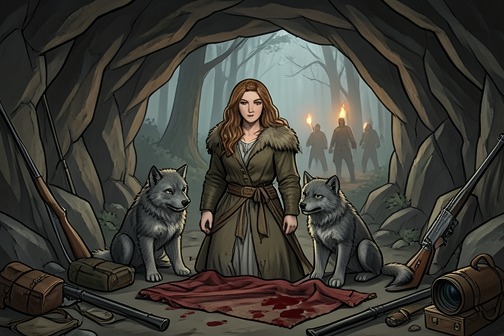
[The deaths of the Samsa werewolf parents](entity:event-recall-event-samsa-99233f82020d) are the formative catastrophe behind the [Samsa family](entity:character-recall-character-samsa-f981681df2c6)’s later unity, territorial authority, and conflict with human and werewolf law. They do not occur as an isolated tragedy: the parents’ fate grows out of persecution, secrecy, and the difficulty of preserving a werewolf lineage in a human-dominated society. The loss explains why Wilder, [Lycell](entity:character-recall-character-lycell-d904ab5d4e13), and Drayton inherit both a territory and an obligation to remain inseparable.
## Persecution and Family Background
Wilder, Lycell, and Drayton were born as triplets into a werewolf pack during a period when humans hunted wolves out of fear and because wolves competed with them for deer and elk. To conceal the existence of werewolves, packs were kept small and dispersed throughout the United States. Their father, the Alpha male, sent the family away to a rendezvous cave after their human mother gave birth to the triplets. There, the parents kept the pups safe, brought them food, and later taught them to hunt. The cave therefore belongs both to the family’s protected childhood and to the broader survival strategy forced upon werewolves by human violence.
The family’s history is marked by a contradiction that the deaths make permanent. The father was a respected member of human society and was asked to run for governor of Nevada, yet he could not abandon his nature as a hunter. A human eventually killed him. His public respectability could not overcome the fear and hostility attached to his hidden identity, and his death demonstrates the danger of allowing werewolf life to become visible within human political society.
## The Parents’ Deaths
After learning that her husband had been killed, the boys’ human mother no longer wanted to live without him. She went into the wilderness and remained exposed to the elements until she died during the worst snowfall of the year. Her death follows the father’s in both chronology and emotional logic: the human kills the father, while grief and the winter wilderness take the mother. Together, the deaths remove the parental generation and leave the triplets to carry the family’s territory, customs, and reproductive future.
The event is recalled as part of Wilder’s history while he lies wounded and protects [Adrienne Ward](entity:character-recall-character-adrienne-ward-1adffe8ce2f3). His parents’ deaths consequently illuminate his present conduct. He is not merely an Alpha defending a territory; he is the surviving elder of a family formed under concealment and loss. His father’s teachings remain internalized in him, including the werewolf law that has been passed down through generations. That inherited law later makes [Bane](entity:character-recall-character-bane-a83632627baa)’s kidnapping of [Adrienne](entity:character-recall-character-adrienne-05958df8fb72), Wilder’s mate, an offense demanding punishment.
## Fraternal Succession and Reproduction
The parents’ absence leaves Wilder, the eldest triplet, as the head Alpha, with Lycell and Drayton beside him. The brothers control the territory inherited from their father equally and swear not to destroy, exclude, or drive one another away. Their pact converts bereavement into political structure: instead of allowing succession to divide the family, they preserve the threefold unit created by their birth.
Their reproductive policy is also shaped by the family’s precarious survival. Most werewolf females are sterile, and Wilder believes that a strong pack requires one fertile female who can bear the brothers’ pups. The brothers therefore agree to accept whichever female Wilder chooses and to mate with her. If Wilder dies, the next brother in line will take her and marry her, preserving both the mate relationship and the succession. This rule is presented as family custom, but it is also a response to the demographic crisis intensified by the parents’ generation being destroyed.
Wilder later establishes a council to address the lack of breeding among the clans. He refuses to capture human females because kidnapping would expose the werewolves to human retaliation and possible destruction. Instead, he tries to attract women through money and public meetings. Adrienne’s arrival transforms that policy: Wilder identifies her as a fertile human mate, while the brothers’ old pact requires her to be considered within the shared familial arrangement.
## Later Political Consequences
The parents’ deaths continue to govern decisions long after the original loss. Wilder treats the law taught by his father as binding on the pack extending across the Americas to [Russia](entity:location-recall-location-e36341713c23), and he understands leadership as the enforcement of that inherited order. When [Ramsey](entity:character-recall-character-ramsey-a48448732611) accuses the [Samsa brothers](entity:character-recall-character-samsa-brothers-9327f0c7f4ea) of allowing a human woman to dictate their laws, the dispute exposes the tension between older pack expectations and Adrienne’s authority to influence her own marriage. Wilder nevertheless insists that Adrienne is his mate and later supports her wish to marry Wilder, Lycell, and Drayton.
The same inherited order produces a political marriage when Wilder tells Drayton that he must mate with [Mena](entity:character-recall-character-mena-7ebb9c08e2d9) to prevent war. Drayton objects that he does not love her, but Wilder answers that the matter concerns the survival of the werewolves and the threat posed by the Alaskan and [Oregon](entity:location-recall-location-7505992ba56d) packs. Later, Wilder sanctions the marriage between Mena and [Robert](entity:character-recall-character-robert-dcc9e88f1178) and connects it to the marriages of Drayton and Adrienne. Family formation, alliance, and political stability thus become inseparable consequences of the original parental deaths.
## Narrative Significance
The deaths of the Samsa werewolf parents function as the buried origin of the book’s central struggle between human society and werewolf law. The father’s killing shows the cost of human fear; the mother’s death shows how intimate grief can become another form of exposure to the wilderness. Their absence also explains the brothers’ fierce solidarity, their refusal to permit outsiders to fracture the territory, and their determination to restore a declining population without repeating the violence of abduction.
The tragedy gives the Samsa family’s later claims to authority a double meaning. Wilder presents himself as an Alpha first and a man second, yet his leadership is inseparable from the human mother who gave birth to the triplets and from the human society that destroyed his father. His family’s law therefore emerges from both species and remains in tension with both. The parents’ deaths are the point at which private mourning becomes inheritance, and inheritance becomes the legal, reproductive, and political order of the Samsa family.
Event 15
Adrienne marries Drayton
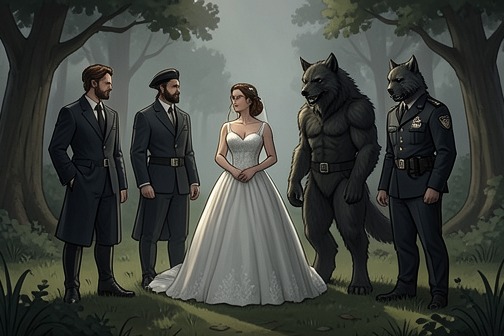
[Adrienne marries Drayton](entity:event-recall-event-adrienne-drayton-51b03d8e9f12) at a crucial point in the novel’s struggle over love, legitimacy, and possession. The union gives her a legal husband and a publicly recognized relationship, yet it does not erase Wilder’s claim that he mated with her first or [Lycell](entity:character-recall-character-lycell-d904ab5d4e13)’s belief that [Adrienne](entity:character-recall-character-adrienne-05958df8fb72)’s pregnancy gives him a right to her. Instead, the marriage becomes a pressure point where Adrienne’s trauma, the [Samsa brothers](entity:character-recall-character-samsa-brothers-9327f0c7f4ea)’ shared-mate arrangement, and competing human and werewolf systems of law collide.
## Causes and Circumstances
Adrienne’s decision to marry Drayton follows a history in which other people repeatedly tried to determine her future. After [Paul](entity:character-recall-character-paul-6e5f3b48f63d)’s friends raped her, Paul and her parents suppressed the investigation, arranged a marriage, and accepted a childless future for her in order to protect the attackers’ reputations. Adrienne later returns to her parents’ home with Drayton, still angered that they treated her violation as something to conceal rather than a crime to pursue. Her marriage to Drayton therefore carries a meaning beyond romance: it is part of her effort to construct a family and a life on her own terms.
The marriage also develops within the Samsa brothers’ attempt to organize their relationship with Adrienne. Drayton argues that Adrienne should decide whom she wants to marry and that a human woman would value marriage, but he simultaneously imagines the husband as the person who will determine what follows for the pack. Wilder rejects that diplomatic framing and declares that he is the Alpha male, that Adrienne is his mate, and that he will marry her. Lycell then objects that Adrienne is carrying his pups and says that he should be the one to marry her. The scene establishes that Adrienne’s marriage is not an isolated private choice: it is contested by three brothers whose claims are shaped by rank, reproduction, and prior sexual bonds.
## The Marriage and Its Immediate Meaning
Drayton becomes Adrienne’s legal husband, and Adrienne later invokes that status when Wilder approaches her during the marriage. She tells Wilder that she wants him but that it is Drayton’s time, that Wilder asked for the arrangement, and that Drayton is her legal husband. Her words place a boundary around the marriage and show that she understands legal recognition as carrying an ethical obligation, even within a household governed by werewolf customs.
The honeymoon is quickly interrupted. As Adrienne and Drayton travel, she jokes that it was a honeymoon until the [big bad wolf](entity:expression-recall-expression-big-bad-wolf-841bf23c0f42) arrived with bad news. The lightness of the remark masks the instability of the union: Drayton’s marriage cannot isolate the couple from Wilder, pack obligations, or the dangers surrounding Adrienne’s pregnancy. Adrienne also worries that she may not yet be pregnant by Drayton, showing that the marriage is linked not only to affection but to the [Samsa family](entity:character-recall-character-samsa-f981681df2c6)’s reproductive expectations.
## Conflict with Wilder’s Mate Claim
Wilder treats his earlier mating with Adrienne as legally and morally superior to her marriage. He insists that being her mate supersedes her status as Drayton’s wife and emphasizes that he impregnated her first. He also explains that he chose to share his mate, presenting Drayton’s marriage as something permitted by Wilder rather than as a bond independent of his authority.
Adrienne refuses that logic when Wilder pressures her. She demands that he respect her right to say no and compares coercion with the men who raped her. The comparison transforms the marital dispute into a confrontation over bodily autonomy: Wilder may understand himself as her true mate and claim authority through werewolf law, but Adrienne insists that neither mating nor marriage cancels her consent. Wilder reacts with disbelief and anger, while still declaring that she is the mother of his pups, his true mate, and the person he loves beyond life. The exchange reveals the marriage’s central contradiction: it gives Adrienne a legal relationship with Drayton, but it cannot by itself protect her from another system that treats mating as a continuing entitlement.
## Werewolf Law and Family Consequences
The marriage is interpreted differently by the people around Adrienne. [Ramsey](entity:character-recall-character-ramsey-a48448732611), [Mena](entity:character-recall-character-mena-7ebb9c08e2d9)’s father, accuses Wilder of breaking a promise and dishonoring his daughter after Ramsey expected her to marry one of the Samsa brothers. He also objects that Wilder has returned her at the insistence of a human female, asking when the Samsa brothers began allowing a human to dictate their laws. Wilder answers that Adrienne is his mate and rejects Ramsey’s attempt to regulate the relationship from outside.
Later, Wilder describes werewolf law as an inherited order taught to him by his father and internalized across generations. He is now the head of a pack extending from the Americas to [Russia](entity:location-recall-location-e36341713c23) and regards himself as responsible for enforcing that law. In this framework, [Bane](entity:character-recall-character-bane-a83632627baa)’s kidnapping of an Alpha’s mate is not merely a personal crime but an offense demanding punishment. Adrienne accepts parts of werewolf custom without fully understanding its rules, especially its demands concerning hunting, mating, and protection. Her marriage to Drayton consequently stands at the boundary between a human legal institution and a werewolf order in which mate claims, pack authority, and reproductive rights carry independent force.
The marriage also becomes part of the family’s rapidly changing domestic structure. When Adrienne returns home, she expects to see [Hunter](entity:character-recall-character-hunter-4082dbfba065) and [Devin](entity:character-recall-character-devin-703dbf4d2cb0) as children but instead finds two tall, muscular, blond teenagers with blue eyes. They identify themselves as her sons, revealing the werewolves’ accelerated growth and reminding her that motherhood and family life proceed according to rules she is still learning. Drayton’s marriage places her inside that family, but the family itself remains governed by customs that continually challenge ordinary human expectations of marriage, parenthood, and time.
## Narrative Significance
Adrienne marries Drayton through a romance structure that moves from attraction to formal commitment and then immediately tests the meaning of that commitment. The legal marriage promises stability, yet Wilder’s return turns it into a site of jealousy, authority, and threatened coercion. Drayton’s willingness to leave when he sees Wilder and Adrienne together further demonstrates how the brothers’ shared arrangement complicates the ordinary exclusivity associated with marriage.
The event is also inseparable from Adrienne’s earlier sexual trauma. A year after the assault, she recognizes one attacker by his voice at a hotel and tells Drayton what happened; she later explains to Wilder and Lycell that the attackers were Paul’s friends and that the assault was the reason she believed she could not have children. Her marriage to Drayton therefore occurs after a long period in which men and parents controlled the public meaning of her body. Its promise of family and belonging is real, but the later confrontation with Wilder shows that recognition without consent remains inadequate. The marriage changes Adrienne’s social position, yet the novel keeps asking whether any legal or supernatural bond can be legitimate unless her right to refuse is honored.
Event 16
Hunter and Devin's rapid growth
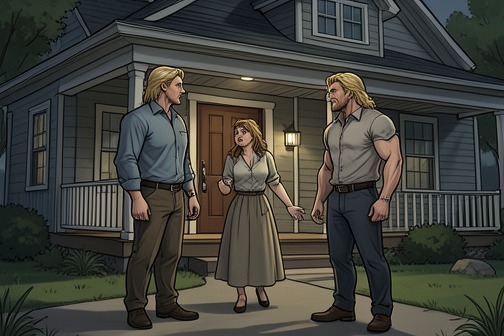
[Hunter and Devin's rapid growth](entity:event-recall-event-hunter-devin-c6b546405c88) is a disruptive werewolf-family event that turns an ordinary homecoming into a revelation about time, parenthood, and bodily development. When [Adrienne](entity:character-recall-character-adrienne-05958df8fb72) returns to the ranch home she shares with her sons and the Samsa triplets, she expects to find [Hunter](entity:character-recall-character-hunter-4082dbfba065) and [Devin](entity:character-recall-character-devin-703dbf4d2cb0) still no more than toddlers. Instead, she encounters two tall, gangly, strongly muscled blond teenagers with blue eyes who identify themselves as her sons. Their accelerated maturation makes the werewolf life cycle visible in a single domestic scene and forces Adrienne to confront how briefly a human mother may experience her sons as children.
## The Homecoming and Recognition
Adrienne arrives at the large ranch house after leaving the confined space of the limo, relieved to see her children again. She calls for Hunter and Devin as she enters, but the figures who appear from the foyer are strangers to her: two tall, blond, blue-eyed teenagers whose bodies are already strong and muscular. Her confusion is immediate and concrete. She asks who they are and where Hunter and Devin have gone because the boys before her do not match her memory of her sons.
The recognition is supplied by the boys themselves. Speaking together, they tell Adrienne that they are Hunter and Devin and call her their mother, asking her to ask their father for confirmation. Their amused manner makes the scene more bewildering, as though the transformation were a joke that everyone except Adrienne understands. The event therefore reverses the expected emotional order of a reunion: the children recognize the mother before the mother can recognize the children.
## Werewolf Biology Revealed
Wilder confirms that the teenagers are Adrienne's sons and reminds her that he had previously explained how quickly werewolf children grow. He emphasizes that they are werewolves, making their sudden physical change a biological consequence of their identity rather than an illusion or replacement. Adrienne remembers that Wilder had warned her that a mother has only a short time with werewolf sons before they mature, but the remembered warning does not soften the shock of seeing it happen.
The growth also introduces the possibility that Hunter and Devin may already possess abilities beyond ordinary human children. When Adrienne asks whether they can shift so early, Drayton explains that the [Samsa brothers](entity:character-recall-character-samsa-brothers-9327f0c7f4ea) themselves began shifting at a very young age and that some werewolves develop earlier than others. The question changes the event from a startling change in appearance into evidence of an entire developmental system: physical maturity and wolf abilities may arrive far sooner for werewolf children than for humans.
## Children Left Behind and Children Grown Up
The contrast becomes sharper when Adrienne asks about her other babies, apparently fearing that they too may no longer be infants. [Lycell](entity:character-recall-character-lycell-d904ab5d4e13) comes down the staircase carrying one son wrapped in a small blue blanket and reassures her that the others are still babies. He names the sleepless infant Damon and hands him to Adrienne, while the newly grown Hunter and Devin surround their mother in a hug.
The household thus contains several stages of werewolf childhood at once. Hunter and Devin's teenage bodies stand beside Damon and the sleeping infants, making rapid growth visible through juxtaposition rather than explanation alone. Adrienne can hold one child as a baby while embracing sons who have already crossed into adolescence. The result is both reunion and loss: her family has expanded, but a part of her expected maternal experience has passed before she could witness it gradually.
## Family, Movement, and Social Control
The brothers discuss whether the older boys should travel on all fours for exercise and experience, since they could move faster that way. Drayton counters that nothing nearby is faster than a horse except a werewolf, while warning that the boys should not run through town and attract attention. Their conversation connects rapid growth to practical training, public secrecy, and the need to regulate young werewolves' strength. The boys are not merely growing taller; they are approaching the mobility and visibility of adult members of the hidden werewolf society.
The family setting also frames Adrienne's response as an assertion of human independence. Elsewhere in the same period, when Drayton orders that he will take her because the human is considered a threat to the [Oregon](entity:location-recall-location-7505992ba56d) and [Alaska](entity:location-recall-location-b2c21cbab16e) packs, Adrienne refuses him directly, crossing her arms in defiance. [Mena](entity:character-recall-character-mena-7ebb9c08e2d9) observes this resistance as evidence of the difference between human women and werefemales, whose lives are governed by male pack authority and whose worth is tied to bearing pups. Adrienne's refusal and her insistence on naming herself, choosing her marriage, and remaining an active mother place her in tension with systems that define females through obedience and reproduction.
## Narrative Significance
Hunter and Devin's growth is significant because it makes the werewolf family's future both promising and unsettling. Earlier, the werewolf need to mate is described as urgent because snow leaves only one available female, while the Samsa household later treats Adrienne's body, consent, and fertility as matters of family survival. Against that pressure, the boys' development demonstrates the reward imagined by the werewolf reproductive order: children who mature rapidly and can replenish the pack. Yet the same process threatens ordinary human ideas of childhood, memory, and maternal time.
The event also deepens the contrast between Adrienne's human expectations and the [Samsa family](entity:character-recall-character-samsa-f981681df2c6)'s werewolf customs. She expects continuity—toddlers remaining toddlers, babies remaining babies, and reunions confirming memory. The household instead gives her acceleration, uneven development, and children whose identities are confirmed through their bodies and inherited abilities. Hunter and Devin's transformation therefore does not simply mark a growth spurt. It reveals the cost of belonging to a human-werewolf family: love remains continuous, but the forms through which childhood can be held and remembered are not.
Event 17
Mena regains fertility and becomes pregnant through an experimental serum
[Mena regains fertility and becomes pregnant through an experimental serum](entity:event-recall-event-mena-f3a39e41c878), an event that overturns the earlier belief that her sterility was permanent. Her pregnancy gives her a biological future with [Robert](entity:character-recall-character-robert-dcc9e88f1178) while also disrupting the reproductive calculations that had treated her as an infertile werefemale and positioned her for a political marriage to Drayton Samsa.
## Causes and Background
[Mena](entity:character-recall-character-mena-7ebb9c08e2d9)’s infertility had been understood as an established bodily condition rather than a temporary medical problem. The surrounding werewolf society measures female value through the ability to bear pups, and Mena had previously lived under rules that required werefemale obedience, service to male Alphas, and marriage arranged by her father. Her father had intended to marry her to Drayton Samsa, a more powerful Alpha, while the [Samsa clan](entity:organization-recall-organization-samsa-clan-538a72e537ac)’s wider concern was the decline of breeding among werewolves.
That reproductive crisis shapes the contrast between Mena’s situation and [Adrienne Ward](entity:character-recall-character-adrienne-ward-1adffe8ce2f3)’s. Wilder’s clan is dwindling because inbreeding has left its female werewolves barren, while Wilder has refused to kidnap human females for breeding, fearing that such a policy would expose the clan to human hunters. [Adrienne](entity:character-recall-character-adrienne-05958df8fb72)’s fertility therefore becomes a resource that Wilder’s council and family attempt to govern, including the proposal that her pups should be given to Mena and Drayton because Mena cannot have pups. Mena’s later pregnancy makes that arrangement obsolete and exposes how quickly medical possibility can unsettle a social order built around scarcity.
## What Happens
Mena tells Adrienne that she and Robert are going to have a baby, possibly four or five pups. Her happiness is expressed through the physical gesture of holding her stomach, while Adrienne reacts with astonishment because she still believes Mena to be sterile. The news is especially important because Mena and Robert have only recently returned, and Wilder does not yet know what has happened.
Mena explains that Robert had been giving her an experimental drug he had been developing, and that the treatment has resulted in her pregnancy. The serum is thus presented not as a general cure already available to the werewolf population, but as Robert’s experimental medical work applied within their intimate relationship. Its effect reverses the diagnosis that had defined Mena’s place in the family and gives the couple a shared biological bond that had previously been denied to them.
The event also stands in sharp contrast to Adrienne’s earlier medical trauma. After Adrienne’s assault during college, a doctor told her parents and [Paul](entity:character-recall-character-paul-6e5f3b48f63d) that she could never have children. That diagnosis was followed by Paul’s demand that the incident never be discussed, making reproductive loss part of Adrienne’s enforced silence. In the werewolf household, by contrast, pregnancy is repeatedly treated as a matter of clan survival, yet Mena’s serum-assisted conception allows her own marriage and desire to generate the future rather than merely serving a plan imposed by an Alpha.
## Consequences and Aftermath
Mena’s pregnancy changes the meaning of her relationship with Robert. Robert is a human doctor whom Wilder recognizes as kind and attentive, particularly in the care he gives [Devin](entity:character-recall-character-devin-703dbf4d2cb0), and Wilder eventually sanctions Robert’s marriage to Mena. Wilder states that when Drayton Samsa and Adrienne marry, Robert and Mena may marry as well, while also inviting Robert to remain as the family doctor. Mena’s pregnancy strengthens that domestic and political alliance by making the couple prospective parents rather than a temporary or irregular pairing.
The pregnancy also removes the justification for transferring Adrienne’s pups to Mena and Drayton. Wilder had admitted that Mena was sterile and had planned for Adrienne to give her children to them, a proposal Adrienne rejected as an unacceptable separation of mother and offspring. Once Mena conceives through Robert’s experimental treatment, Mena no longer occupies the role of substitute mother created by Wilder’s reproductive strategy. Her body becomes a source of children in its own right, and the family’s future is no longer dependent on assigning Adrienne’s pups to an infertile political couple.
## Gender, Autonomy, and Pack Politics
Mena’s story exposes the difference between the old werefemale order and the possibilities opened by her relationship with Robert. She recalls that werefemales were expected to serve males, that their lives depended on the goodness of the Alpha governing their commune, and that their worth rested on giving birth to pups. She had previously obeyed her father and married the man he selected. With Robert, however, she becomes a valued wife whose pregnancy arises from a relationship she chose rather than from her father’s arrangement with Drayton Samsa.
The contrast becomes explicit when Drayton insists that he will take Adrienne into danger and Adrienne refuses him, crossing her arms in defiance. Mena watches in amazement because human women are independent and free in ways that conflict with the rules under which she was raised. Her own transformation is not simply medical: the serum’s success coincides with a change in her social position, from a sterile werefemale assigned to an Alpha marriage to a pregnant partner in a relationship recognized by Robert, Adrienne, and eventually Wilder.
## Narrative Significance
Mena’s restored fertility turns the experimental serum into a hinge between medicine and governance. The treatment offers care and possibility, but the surrounding plot has shown how fertility can also become a mechanism for controlling women, assigning mates, determining the ownership of pups, and preserving a threatened clan. Mena’s pregnancy therefore does more than add another expected birth. It contests the assumption that infertility permanently determines a woman’s value and redirects reproduction from an imposed alliance toward the mutual family formed by Mena and Robert.
At the level of the larger werewolf population crisis, the event provides a possible alternative to kidnapping human women or forcing Adrienne into a single-female breeding strategy. It does not erase the coercive customs represented by Wilder’s initial plans, [Lycell](entity:character-recall-character-lycell-d904ab5d4e13)’s threats, or the clan’s fixation on pregnancy, but it demonstrates that the reproductive future of the packs may depend on experimentation and partnership rather than abduction. Mena’s cheerful announcement consequently carries political weight: a woman once defined by sterility becomes evidence that the limits governing the [Samsa family](entity:character-recall-character-samsa-f981681df2c6) and its allied packs may be changed.
Event 18
Oregon and Alaska werewolf packs merge and threaten the Samsa family
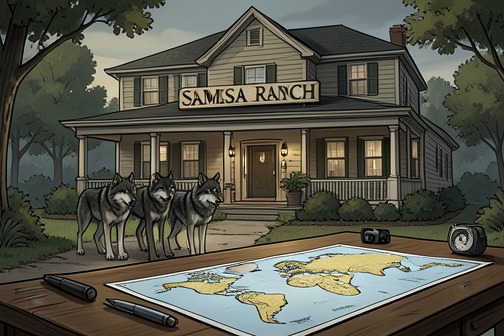
The merger of the [Oregon](entity:location-recall-location-7505992ba56d) and [Alaska](entity:location-recall-location-b2c21cbab16e) werewolf packs is the strategic crisis that transforms the [Samsa family](entity:character-recall-character-samsa-f981681df2c6)’s private breeding arrangement into an inter-pack struggle for survival. Because [Adrienne Ward](entity:character-recall-character-adrienne-ward-1adffe8ce2f3) has become the shared mate of Wilder, [Lycell](entity:character-recall-character-lycell-d904ab5d4e13), and Drayton and may produce a large fighting population, rival packs see the Samsa family’s future children not as a family matter but as the foundation of continental dominance. The threat therefore joins territorial politics, reproductive scarcity, competing legal systems, and the question of who may control [Adrienne](entity:character-recall-character-adrienne-05958df8fb72)’s body and allegiance.
## Causes and Political Background
The crisis begins with the announcement that the Alaska pack and the Oregon pack are merging. [Mena](entity:character-recall-character-mena-7ebb9c08e2d9) explains that Wilder’s position as head Alpha has been threatened and that every member of the Samsa family, including [Hunter Samsa](entity:character-recall-character-hunter-samsa-56f97ad48942) and [Devin Samsa](entity:character-recall-character-devin-samsa-e991ef60f6a5), is exposed to the danger. The merger is especially serious because the Samsa pack does not yet possess enough young werewolves to withstand the older fighting wolves controlled by Mena’s father. Once her father learns that Mena and [Robert](entity:character-recall-character-robert-dcc9e88f1178) have deceived him and that Wilder has given them refuge, his objective becomes the destruction of the Samsa family and its offspring.
The hostile alliance grows out of the same fertility crisis that shaped Wilder’s household. Wilder had wanted a family but could not find a compatible female werewolf: most werefemales were sterile, while his triplet brotherhood required a fertile woman who could bear the brothers’ pups. Wilder and his brothers had sworn to remain together, sharing equally in the territory inherited from their father, and they agreed that the woman Wilder selected would be accepted by all three. The arrangement made Adrienne’s fertility a collective resource, but it also made her pregnancy a visible measure of the Samsa family’s future strength.
Wilder had previously refused to kidnap human women, fearing that such abductions would expose the werewolves to human hunters and bring about the destruction of his clan. Instead, he established a council to consider the problem of declining births and tried to attract women with money. Adrienne’s arrival creates the possibility that the Samsa family can repopulate its fighting force without abandoning secrecy, yet that possibility also gives rival packs a reason to eliminate her before the children can be born and raised.
## The Reproductive Stakes of the Merger
The danger becomes concrete when a beta werewolf reports that [Bane](entity:character-recall-character-bane-a83632627baa)’s Oregon pack has heard that the [Samsa brothers](entity:character-recall-character-samsa-brothers-9327f0c7f4ea) have impregnated a human female. The report identifies Adrienne as a threat for two reasons: she is human, and she is still young and fertile. If Drayton can impregnate her soon, the Samsa pack could eventually reach as many as twenty fighting males, ensuring the brothers’ dominance over North America and Europe for years. The beta states directly that the human is a threat to both the Oregon and Alaska packs.
Adrienne’s status is thus interpreted through competing systems. Wilder insists that she is his mate and that, as the pack’s Alpha male, he will marry her. Adrienne later chooses marriage to Wilder, Lycell, and Drayton, turning a coercive reproductive arrangement into a formally recognized shared union on her own stated terms. Yet the rival packs do not treat that choice as decisive. Their concern is the children’s future military value, and their response reveals how quickly a woman can be reduced to the reproductive boundary between one pack’s survival and another’s extinction.
Wilder’s earlier explanation of the mate bond also establishes the inheritance stakes. He tells Adrienne that she may come and go, but that she cannot take the child if she leaves because the child would be endangered and would be his heir. In the same framework, the merger threatens not merely a household but a succession order: Adrienne’s pups could extend Wilder’s authority beyond the existing brothers and secure the Samsa family’s dominance across multiple territories.
## Immediate Threats and Defensive Measures
The reported merger changes everyday safety. Wilder warns Adrienne that one of the brothers should accompany her whenever she goes out because outsiders may discover the Samsa family’s wealth and because hostile werewolf packs angered by the loss of their Alpha may harm her. The threat is not abstract surveillance; the Oregon pack may attempt to kill her specifically because she is human, fertile, and capable of producing the young fighters the Samsa pack lacks.
Adrienne resists the protective arrangement when Drayton orders that he accompany her. Her defiance contrasts with Mena’s earlier life under her father’s rules and the laws governing werewolf females. The dispute shows that protection can also function as control: Wilder frames constant supervision as necessary security, while Adrienne continues to claim the independence associated with human womanhood. The alliance therefore creates danger outside the household while intensifying arguments about authority inside it.
The wider conflict also places the Samsa family’s human connections under pressure. Wilder must consider Robert and Mena’s marriage, [Devin](entity:character-recall-character-devin-703dbf4d2cb0)’s ability to travel, and the possibility that refuge granted to the couple will provoke retaliation. He sanctions their marriage and offers Robert the opportunity to remain as the family doctor, but links their safety to his ability to reach Oregon with his sons and stop the uprising. Political alliance, medical care, marriage, and military movement become interdependent responses to the merged packs.
## Law, Captivity, and Pack Order
The merger is sharpened by incompatible ideas of law. When [Ramsey](entity:character-recall-character-ramsey-a48448732611), Mena’s father, accuses Wilder of breaking a promise to marry Mena to one of the brothers, he objects that the Samsa brothers have allowed a human woman to dictate werewolf laws. Wilder rejects Ramsey’s authority and defends Adrienne’s dignity, warning that she was not defiled even though he could have done what he wanted to her. The exchange reveals a conflict between patriarchal pack custom and Wilder’s attempt to preserve his own Alpha jurisdiction while recognizing Adrienne’s position as his mate.
The same legal tension surrounds Bane’s later treatment of Adrienne. Bane ties her hands, ankles, and waist to a crude chair in a cave, telling her that she cannot escape if a large animal arrives and that he will hear her scream. His threat places her between predation by wild animals and captivity by a werewolf. Wilder’s response is governed by the inherited laws of the werewolves: Bane has kidnapped an Alpha’s mate, taken another male’s woman, and must be punished. The narrative makes the merger part of a larger legal order in which abduction, mate claims, inheritance, and retaliation carry different meanings for humans and werewolves.
Wilder has been taught these laws since childhood and now leads a pack extending from the Americas to [Russia](entity:location-recall-location-e36341713c23). Although Adrienne accepts elements of werewolf life, she does not fully understand either their need to hunt or the rules internalized across generations. The merger exposes the cost of that incompletely translated legal system. Wilder sees himself as both man and wolf, capable of reason but driven toward a single purpose when his mate and pack are threatened; Bane’s pursuit of Adrienne mirrors that single-mindedness, turning the political crisis into a personal hunt.
## Consequences and Narrative Significance
The Oregon–Alaska alliance converts the Samsa family’s fertility plan into a potential war. Wilder must defend his Alpha status, protect Adrienne, preserve the lives of [Hunter](entity:character-recall-character-hunter-4082dbfba065) and Devin, manage the safety of Mena and Robert, and prevent the hostile packs from exploiting the family’s shortage of young fighters. Drayton’s proposed mating with Mena is presented as a political necessity for preventing war, not as a matter of love, showing how the merged packs force marriage itself into the machinery of diplomacy.
The event also explains why Adrienne’s pregnancy carries consequences far beyond romance. Her children may become the fighting core of a renewed Samsa pack, while her death could halt that future and weaken the brothers’ position. The rival packs’ interest in killing her makes fertility a battlefield and motherhood a political act, even when Adrienne insists on being addressed by her name and chooses the form of marriage she wants.
By the end of the conflict’s setup, Wilder is cast as the hunter responsible for hunting the pursuer. He must find a way to stop Bane, whose desire to mate with Adrienne has become as single-purpose as Wilder’s duty to protect her. The merged packs therefore function as both an external military threat and a test of the Samsa family’s internal principles: whether brotherly unity can survive rival claims, whether human consent can coexist with werewolf law, and whether a family built around shared mating can become a political order strong enough to survive its enemies.
Event 19
Lycell kills Bane's brother
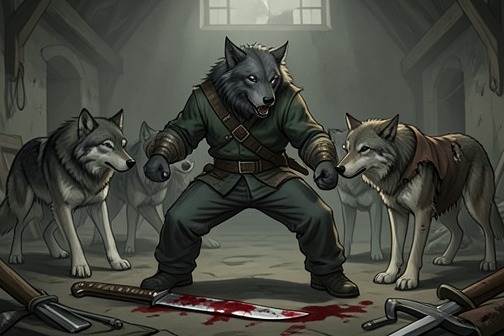
[Lycell kills Bane's brother](entity:event-recall-event-lycell-bane-089e24fb22d9) during a violent incursion into Samsa territory, and the act becomes the decisive origin of [Bane](entity:character-recall-character-bane-a83632627baa)’s revenge against the [Samsa family](entity:character-recall-character-samsa-f981681df2c6). What begins as a struggle over territory therefore develops into a succession crisis, a personal vendetta, and eventually a military threat to the entire Samsa pack.
## Territorial Conflict and the Attack
[Lycell](entity:character-recall-character-lycell-d904ab5d4e13)’s killing of Bane’s brother is recalled as part of an earlier confrontation between the Samsa pack and young werewolves from the [Oregon](entity:location-recall-location-7505992ba56d) pack. The intruders crossed into the territory inherited by Wilder, Lycell, and Drayton, showing no respect for Alpha authority and pursuing a policy of killing anyone who challenged them. Bane, then an aggressive young werewolf rather than the established Alpha he would later become, pushed his brother to attack Lycell while Lycell was guarding the family’s land.
Lycell was still learning to transform and did not yet know how to conserve his strength. Four rogue werewolves surrounded him and prepared to tear out his throat. Bane demanded that he identify the Alpha and submit, while Lycell answered that his father was the only Alpha at that time and that he would one day rule the surrounding regions. The exchange makes the killing part of a contest over rank as well as a fight for survival: the Oregon attackers sought to impose authority through intimidation, while Lycell defended the legitimacy of his family’s territorial order.
## Drayton’s Intervention and the Death
Drayton arrived while Lycell was surrounded and studied the attackers from higher ground, looking for their weakness. He then shifted into a grey wolf, leapt onto the largest of the four, and struck with a bite to the unprotected neck and a sweep of his extended claws. Two of the attackers were killed immediately, while the surviving brothers retreated. Their defeat was followed by punishment from Drayton’s father, who banished them into the Alaskan wilderness until they were old enough to swear allegiance to the Samsa pack.
The broader confrontation establishes the brothers’ shared martial identity. Wilder, Lycell, and Drayton are triplets equal in skill and strength, and their father had trained them to become Alphas who would control the territory of North America. Drayton’s rescue of Lycell also recalls the brothers’ lifelong bond: he had saved Lycell’s life before, when they were teenagers learning to hunt and defend their borders. Within that history of mutual protection, Lycell’s later killing of Bane’s brother becomes the violent act that permanently alters the balance between the families.
## Retaliation, Succession, and Pack Politics
The killing did not end with the Oregon incursion. The death of Bane’s brother made Bane the Alpha of the Oregon pack, and he vowed to avenge the loss, although the deteriorating condition of his own pack prevented him from carrying out that promise immediately. The event therefore joined private grief to political succession: Bane inherited authority through the death while also inheriting an unresolved hostility toward Lycell and the Samsa family.
The Oregon pack’s weakness was tied to the wider werewolf fertility crisis. Its young werewolf females could not breed, leaving the pack unable to replace its numbers. The Samsa family faced a related problem, since most werewolf females were sterile and Wilder had refused to capture human women, fearing that such abductions would expose the clan to human hunters and eventual destruction. His refusal preserved the secrecy of the werewolf community but also limited its growth, making fertile human women politically consequential rather than merely personal partners.
Bane’s resentment gained new force when Drayton declined to marry the daughter of the Alaskan Alpha. Instead of securing an alliance through that expected marriage, Drayton remained aligned with the Samsas, while Bane eventually joined forces with the Alaskan werewolves. Their combined numbers became greater than those of the Samsa pack, and their money and influence could not prevent the two groups from planning an attack. Lycell’s act thus became the remembered grievance around which a broader inter-pack coalition formed: a brother’s death supplied the emotional motive, succession supplied the personal antagonist, and fertility and marriage politics supplied the military scale.
## Consequences for [Adrienne](entity:character-recall-character-adrienne-05958df8fb72) and the Samsa Succession
The old killing also shaped the later danger surrounding Adrienne. The [Samsa brothers](entity:character-recall-character-samsa-brothers-9327f0c7f4ea)’ survival and the future of their pack depended on fertile human partners and the children they could produce, while Bane’s coalition understood that attacking Adrienne and the young Samsa offspring would strike at the family’s ability to continue. Wilder therefore treated Adrienne not only as his mate but as the mother of an heir whose existence could provoke assassination by the [Ari Kara clan](entity:organization-recall-organization-ari-kara-clan-cc6ab5933c8c). His refusal to let her leave while pregnant reflected the collision between protection, possession, and inherited political danger: within his law, she could go, but the child could not safely accompany her. Lycell’s killing of Bane’s brother consequently remained active long after the original fight, reappearing whenever questions of mating, inheritance, reproduction, and pack survival were decided.
## Lasting Significance
Lycell kills Bane's brother as an act of immediate territorial defense, but the narrative preserves its consequences as a chain rather than a closed episode. The death changes Bane's position within the Oregon pack, gives his hostility toward the Samsa family the force of a blood grievance, and helps transform a local confrontation into an inter-pack crisis. It also exposes the limits of every order competing in the story: the Samsa brothers' equal strength and shared rule cannot eliminate rivalry beyond their borders; werewolf customs concerning Alpha authority, marriage, and succession cannot be separated from reproductive scarcity; and the refusal to abduct human women protects secrecy while leaving the pack dependent on relationships that are politically and personally unstable. Later decisions about Adrienne, Drayton's proposed marriage to [Mena](entity:character-recall-character-mena-7ebb9c08e2d9), and the protection of the Samsa children all carry the pressure of this earlier killing. Lycell's violence therefore functions as both a rescue of his own life and the origin of a conflict that makes family continuity itself a military objective.
Event 20
Adrienne and Mena are abducted by Bane's werewolves
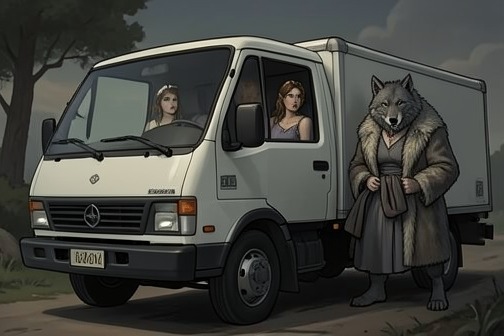
[Adrienne and Mena are abducted by Bane's werewolves](entity:event-recall-event-adrienne-mena-bane-da9839d209a1) in a turning-point event that converts pursuit into organized captivity. A large white Ford pickup follows their car after they turn toward the Samsa compound, and the apparent uncertainty of the road becomes a trap: a blond werewolf reaches the vehicle, enters through the rear door, produces fur coats, and orders the women into the truck. The abduction is significant because [Adrienne](entity:character-recall-character-adrienne-05958df8fb72) is not merely a traveler seized at random. She is Wilder's mate and therefore a political and familial target, while [Mena](entity:character-recall-character-mena-7ebb9c08e2d9) is valuable as both a member of a rival line and a pregnant female whose safety is temporarily used as part of the bargain with her father.
## Causes and Opportunity
Adrienne and Mena are vulnerable because they are traveling through an isolated landscape in a vehicle that can be stopped and watched without immediate human intervention. Adrienne recognizes that the old white truck is following them but tells Mena not to turn around, hoping to conceal their awareness. Her attempt at composure delays open resistance while the pursuers remain close enough to act. The surrounding roads, forests, mud, and limited exits create an opportunity structure in which the women cannot easily summon help or identify a safe route back to the Samsa compound.
The danger is intensified by the hidden society in which the pursuit occurs. Adrienne has already learned that human morality and werewolf law do not coincide, yet she does not fully understand the rules governing female protection, reproduction, and retaliation. She recalls the hunter's principle that females and their offspring should not be killed, but she also knows that hostile werewolves may kill newborns not bearing their own lineage and may treat fertile females as resources for pack expansion. The abduction therefore unfolds under competing legal orders: human ideas of consent and criminality, the [Samsa family](entity:character-recall-character-samsa-f981681df2c6)'s authority over its mates, and the violent customs practiced by [Bane](entity:character-recall-character-bane-a83632627baa)'s followers.
## The Abduction and Transport
The immediate seizure begins when the pursuing man appears beside the car after Adrienne has apparently struck or evaded him. Before Mena can warn her, the driver's window lowers and he reaches in to open the rear door. He is inside the vehicle almost at once, presenting concern through his blue eyes before the situation reveals itself as coercion. The apparent intimacy of the encounter is part of its menace: the women are still in their own car, but control of the space has already shifted to the werewolf who has entered it.
The kidnappers then bring out two fur coats and order Adrienne and Mena to put them on. Adrienne notices that the coats are Russian lynx and registers the object with bitter irony, observing that she had always wanted such a coat, but not under these circumstances. The coats are practical protection against the cold, yet they also mark the transformation of the women from travelers into captives being equipped for transport through hostile terrain. The material detail makes the abduction physical: thick fur, a truck, winter roads, and the bodily vulnerability of two women being moved by armed or physically superior pursuers.
The blond werewolf states that Mena will be sent home to [Alaska](entity:location-recall-location-b2c21cbab16e) and will not be harmed, while Adrienne is declared fair game because of her defiance and her connection to the [Samsa brothers](entity:character-recall-character-samsa-brothers-9327f0c7f4ea). Mena remains beside Adrienne in the back seat as the blond joins them and two dark-haired, bearded men occupy the front. Adrienne warns that her husbands will not allow her killers to rest, but the warning does not restore her agency. The werewolves control the vehicle, the route, and the terms of survival, while the women can only use speech, concealment, and the hope that the Samsa family is tracking them.
The kidnappers deliberately exploit the distinction between the two women. When Mena says that she is pregnant, Adrienne hopes the disclosure will persuade the werewolves to spare her and give Wilder, [Lycell](entity:character-recall-character-lycell-d904ab5d4e13), Drayton, and [Robert](entity:character-recall-character-robert-dcc9e88f1178) time to find them. The claim invokes the hunter's law protecting females and offspring, but it also exposes how precarious that protection is. Adrienne fears that the kidnappers may kill the children because they hate the Samsas, or kill her if they discover that she is not pregnant as she believes. Reproduction is thus both a shield and a source of danger.
The truck turns off [Interstate 5](entity:location-recall-location-interstate-5-26eb8d4e7451) toward [Oakridge](entity:location-recall-location-oakridge-459ebdae510f), [Oregon](entity:location-recall-location-7505992ba56d), and the women are taken along bumpy roads through green forest dotted with snow. They are not blindfolded, allowing Adrienne to memorize landmarks, but the concession is limited: the road leads into a wooded compound with one narrow entrance and one narrow exit, surrounded by pine trees and reached through mud-covered gravel. Her effort to observe the route becomes an attempt to preserve future escape possibilities, even as the geography is arranged to prevent them.
## Conflicting Laws and Mate Claims
The event cannot be separated from Wilder's earlier declaration that he is the Alpha male of his pack, that Adrienne is his mate, and that he will marry her. In the Samsa order, her relationship with Wilder gives the abduction the character of an attack on an Alpha's household and authority. Wilder has also explained that a pregnant mate cannot simply leave with her child because the pup may be endangered and because an heir can become a target of the [Ari Kara clan](entity:organization-recall-organization-ari-kara-clan-cc6ab5933c8c). His language presents protection and possession as inseparable, a tension that becomes stark when Bane's followers exercise the same logic through outright captivity.
The conflict is also visible in [Ramsey](entity:character-recall-character-ramsey-a48448732611)'s complaint that Wilder broke a promise concerning Mena's marriage and allowed a human woman to influence werewolf law. Ramsey asks when the Samsa brothers began allowing a human to dictate their customs, while Wilder answers that Ramsey has no authority to dictate to him and has spoken disrespectfully about his mate. Against that background, the kidnapping is a contest over who may define a woman's mate, movement, marriage, and reproductive future. Mena's return to Alaska and Adrienne's designation as fair game are not private decisions; they are acts in an inter-pack struggle over women, succession, and legitimacy.
The narrative makes the legal conflict especially stark by setting the kidnappers' practices against the protective principles invoked by Adrienne. Bane's followers believe fertile females can be passed among young and old werewolves in the hope of impregnating them, after which the practice continues until the female is physically exhausted. That practice reduces female bodies to pack infrastructure. Adrienne's fear that the hostile werewolves may kill pups not belonging to them reveals the limit of any universal rule against harming mothers: protection depends on lineage, power, and enforcement rather than on a shared moral principle.
## Captivity, Resistance, and Consequences
The abduction carries the women toward Bane's sphere of control and initiates a longer pattern of confinement, threats, and attempted escape. At one stage Bane ties Adrienne's hands behind her back, binds her ankles, and fastens her waist to a crude chair made from tree branches. He refuses to gag her, not as an act of mercy, but because he claims he will hear her scream if an animal enters the cave and can then decide whether to rescue her or allow the animals to consume her. The threat joins imprisonment to the wilderness itself, making the natural environment an extension of the captor's power.
Adrienne nevertheless repeatedly converts small openings into resistance. Later, when Bane leaves a suite after cutting the telephone cords and insisting that Wilder can no longer track them, she dresses in soiled leather clothing and Ugg boots, takes food and a coat, and steals the truck keys. Her shaking hands and fear that Bane will smell her do not prevent her from reaching the elevator and attempting to leave through the lobby. The escape is the direct consequence of the earlier captivity: once the kidnappers turn mobility into control, possession of a key, a vehicle, or an unguarded exit becomes a meaningful form of agency.
The abduction also activates the Samsa family's rescue and retaliation logic. Wilder understands that Bane has kidnapped an Alpha's mate and taken another wolf's woman, an offense that must be punished under werewolf law. As head of a pack extending across the Americas to [Russia](entity:location-recall-location-e36341713c23), Wilder sees enforcement as his responsibility. His pursuit is framed as a hunt: Bane is the pursuer who must be hunted, and Wilder must kill or be killed. The event therefore expands from a roadside crime into a struggle over whether the Samsa legal order can protect its members and whether Bane's fixation on Adrienne will be stopped before it reaches the Alaskan wilderness.
## Narrative Significance
Adrienne and Mena's abduction concentrates the book's recurring contradiction between protection and control. Wilder calls Adrienne his mate and claims a duty to protect her, but the same werewolf world that promises protection also treats marriage, fertility, and mate status as grounds for restricting a woman's choices. Bane's followers strip away even the protective vocabulary and display the coercive underside directly: Mena is conditionally spared because of her identity and pregnancy, while Adrienne is made available for punishment, exploitation, and forced mating.
The episode also links human trauma to supernatural politics. Before the abduction, Adrienne recognizes the voice of one of the men who raped her in college, an experience that confirms how vulnerable she has been within supposedly human institutions as well as among werewolves. Her flight from [Paul](entity:character-recall-character-paul-6e5f3b48f63d) began in part because Paul and her parents tried to keep that assault secret. The later kidnapping does not create her distrust of male authority; it repeats and magnifies an older pattern in which men decide what may be concealed, whom a woman must marry, and whether her body can be claimed.
At the same time, the women are not passive symbols within the conflict. Adrienne notices the truck, controls what she tells Mena, uses pregnancy as a tactical claim, studies the route, remembers landmarks, and later takes the keys when an opportunity appears. Mena remains physically beside her, contributes the disclosure of her pregnancy, and shares the danger of being transported to Alaska. Their abduction is therefore both an act of domination and the beginning of a counter-movement in which observation, solidarity, and escape challenge the kidnappers' attempt to make the women interchangeable reproductive property.
Event 21
Bane separates Adrienne and Mena
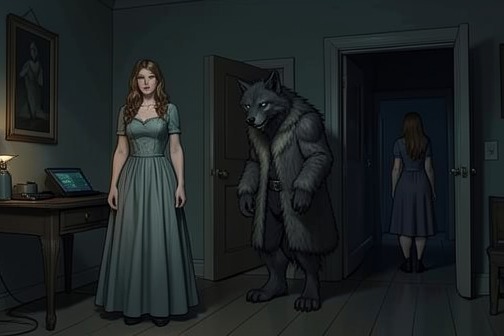
[Bane separates Adrienne and Mena](entity:event-recall-event-bane-adrienne-mena-d25d62a65888) at the point when their shared captivity could still provide mutual support. He announces a change of plans, sends [Adrienne](entity:character-recall-character-adrienne-05958df8fb72) to collect her coat, and explains that [Mena](entity:character-recall-character-mena-7ebb9c08e2d9)’s father’s pack has arrived and taken Mena back to [Alaska](entity:location-recall-location-b2c21cbab16e). Mena is therefore removed from the immediate scene while Adrienne remains under [Bane](entity:character-recall-character-bane-a83632627baa)’s control, a reversal that makes the abduction more personal, dangerous, and difficult to resist.
## Causes and Circumstances
Bane’s decision follows the capture of both Adrienne and Mena by his wolves. The two women had been brought in together, but their situations were not equivalent: Mena belonged to a werewolf family whose pack could reclaim her, while Adrienne was the human mate claimed by Wilder. Bane treats that distinction as decisive. He tells Adrienne that Mena’s father’s pack had been waiting and had taken her during the night, while he had kept Adrienne for himself.
The separation also grows out of the competing legal and kinship systems governing the werewolves. Wilder identifies Adrienne as his mate and, as the Alpha male, asserts that he will marry her. [Ramsey](entity:character-recall-character-ramsey-a48448732611), Mena’s father, objects that Wilder has broken a promise concerning Mena and returned her at the insistence of a human woman, challenging the authority of Adrienne’s choice. Bane’s seizure of Adrienne escalates that dispute from an argument over marriage and pack law into a direct challenge to Wilder’s mate bond and leadership.
## What Happens
Bane presents the removal as a transfer to a safe place, but his language and conduct reveal that it is another stage of coercion. He orders Adrienne to get dressed and refuses to answer her questions. When she asks about Mena, he confirms that she is gone and traveling back to Alaska, leaving Adrienne without the companion who shared the ordeal and understood the werewolf world more closely than a human outsider could.
Bane’s admission that he could have assaulted Adrienne while she slept but preferred her awake, biting, and scratching exposes the predatory logic behind the separation. He does not frame Adrienne as a free participant in a relationship; he treats her resistance as part of the possession he wants. His fixation is especially threatening because Adrienne is already recognized by Wilder as a mate who may bear an heir, making her body central to succession, pack continuity, and rivalry between Alphas.
After Mena’s removal, Bane takes Adrienne onward alone. He later binds her hands behind her back, ties her ankles, and fastens her waist to a crude chair in a cave. He leaves her ungagged only so that she can scream if an animal approaches, while warning that she may become food for both wild animals and himself. The physical restraints make explicit what the earlier command had concealed: the promised safe place is confinement, and the separation has stripped Adrienne of both companionship and practical protection.
## Consequences for Adrienne and Mena
Mena’s return to her father’s pack removes her from Bane’s immediate custody, but it does not restore the freedom associated with human choice. Mena observes that human women are regarded as independent and free, whereas werefemales traditionally serve male members of the pack and are valued according to their ability to bear pups. Her relationship with [Robert](entity:character-recall-character-robert-dcc9e88f1178) has already begun to challenge that order: although her father intended a political marriage with Drayton, Mena fell in love with Robert and became valued as Robert’s wife. Her removal thus reconnects her with her family’s political world while separating her from Adrienne’s disruptive example of open refusal.
For Adrienne, the consequences are harsher. She loses the only other abducted woman beside her and becomes the sole focus of Bane’s movement and desire. Earlier, she had asserted that she could choose where to go and whom to marry, insisting that her name was [Adrienne Ward](entity:character-recall-character-adrienne-ward-1adffe8ce2f3) rather than merely “female” and demanding marriage to Wilder, [Lycell](entity:character-recall-character-lycell-d904ab5d4e13), and Drayton. Bane’s separation counters that assertion with commands, isolation, and restraint. The event therefore converts a conflict over marital choice into a struggle over whether Adrienne can retain any power over her own movement, identity, and reproductive future.
## Pack Law and Escalating Conflict
The event matters because werewolf law gives the separation consequences beyond personal cruelty. Wilder’s system requires him to protect his mate and enforce rules inherited through generations of werewolves. The text presents him as the head of a pack extending from the Americas to [Russia](entity:location-recall-location-e36341713c23), responsible for maintaining an order in which an Alpha’s mate cannot simply be taken without consequence. Bane’s capture of Adrienne is consequently understood as an offense against both Wilder and the law of the pack.
The conflict is complicated by the [Samsa brothers](entity:character-recall-character-samsa-brothers-9327f0c7f4ea)’ shared-mate arrangement. Wilder had planned for a fertile female who could be accepted by all three inseparable Alpha brothers, and the brothers had sworn to remain together and control their inherited territory jointly. Their arrangement includes the possibility that the next brother would take and marry the mate if Wilder died. Adrienne’s separation from Mena therefore does not merely isolate a vulnerable woman; it places the contested center of a reproductive and succession system in Bane’s hands.
## Narrative Significance
Bane separates Adrienne and Mena as a decisive value shift from collective endurance to solitary captivity. Before the separation, their presence together offers witness, comparison, and the possibility of shared resistance. After it, Bane can define Adrienne’s circumstances without another captive woman present to challenge his account, and Wilder’s effort to recover her becomes more urgent. The scene also sharpens the contrast between human consent and werewolf custom: Adrienne’s repeated refusals and demands for marriage by her own terms confront a world that explains mating through law, inheritance, fertility, and Alpha authority.
The separation prepares the larger pursuit between Bane and Wilder. Bane’s single-minded desire is to mate with Adrienne, while Wilder understands his duty as the protection of a lifelong mate and the enforcement of werewolf law. Their rivalry is therefore not only romantic or territorial. It joins bodily autonomy, pack governance, succession, and the conflict between human moral expectations and werewolf social rules. Mena’s removal narrows the immediate confrontation to Adrienne, Bane, and the absent claim of Wilder, making the abduction a turning point in the struggle over who may decide Adrienne’s future.
Event 22
The Samsa brothers launch a rescue mission for Adrienne and Mena
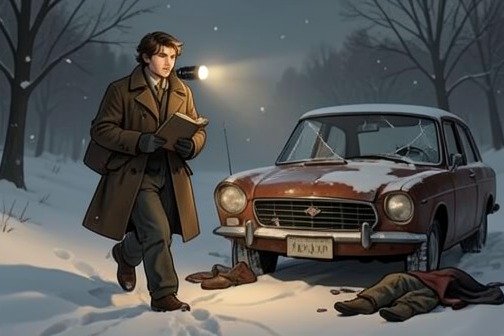
[The Samsa brothers launch a rescue mission for Adrienne and Mena](entity:event-recall-event-samsa-adrienne-mena-65754075f24e) when the disappearance of the two women turns from a frightening absence into an immediate threat to the [Samsa family](entity:character-recall-character-samsa-f981681df2c6) and its authority. The operation is driven by love, fear, responsibility, and werewolf law at once: the brothers must locate the captives, determine whether they are alive, survive the wilderness, and confront [Bane](entity:character-recall-character-bane-a83632627baa), who has taken [Adrienne](entity:character-recall-character-adrienne-05958df8fb72) as the mate of an Alpha. What begins with a phone call and hurried preparations develops into a calculated expedition through snow, forest, uncertain terrain, and enemy territory.
## Causes and Stakes
The rescue is prompted by the discovery that the Mercedes carrying Adrienne and [Mena](entity:character-recall-character-mena-7ebb9c08e2d9) has been located through its GPS, roughly ten minutes outside Samsaville. The police found the vehicle abandoned, its occupants’ clothes and shoes left behind, and evidence that someone had tried to burn the car. The captors had stripped the women in order to conceal their scent, but [Lycell](entity:character-recall-character-lycell-d904ab5d4e13) insists that he could still smell Adrienne from a mile away. The physical evidence therefore provides both an alarming sign of deliberate abduction and a narrow basis for hope: the women’s location is unknown, but their trail has not been erased completely.
The stakes are heightened by Adrienne’s status within the Samsa family. Wilder has publicly declared himself the Alpha male of the pack and Adrienne his mate, while Adrienne is also bound by the family’s shared marital and reproductive expectations. Wilder has told her that pregnancy makes departure dangerous and that an enemy clan might assassinate the child because the pup would be his heir. Within that system, Bane’s act is not treated as an ordinary disappearance. He has kidnapped an Alpha’s mate, violated the authority of the Samsa family, and placed a potential heir in danger.
The mission also follows an older pattern of coercion surrounding Adrienne. She originally fled [Paul](entity:character-recall-character-paul-6e5f3b48f63d) after enduring his emotional coldness and after Paul, together with her parents, tried to keep secret the rape committed by Paul’s frat brothers. Later, in a hotel, Adrienne recognizes one of the men by his voice when he mentions a party at [Lake Tahoe](entity:location-recall-location-lake-tahoe-0c9f9ca14c7e). That recognition shows why the rescue cannot be separated from her history of silencing and control: the danger comes not only from an external enemy, but from the repeated attempt by men and institutions to define what she must endure and what must remain hidden.
## Mobilization and Preparation
Lycell takes command of the immediate preparations. He first reaches for his phone to contact Wilder and Wilder’s sons, although the remote location makes reception difficult. He then orders [Robert](entity:character-recall-character-robert-dcc9e88f1178) to pack water and food and instructs Drayton to gather supplies for an expedition into the wilderness. Because the [spring thaw](entity:time-recall-time-e64ff8c42320) has made the weather dangerous, Lycell insists that Robert receive boots and survival equipment; he searches for flashlights and LED lamps and throws Robert a ski suit. The rescue is therefore presented as an arduous field operation rather than a simple pursuit by scent or strength.
The preparations carry an emotional cost. Lycell asks a nurse to remain with the babies while the men leave, acknowledging that one of them may be absent for a long time. He needs to say goodbye to his sons before departing, and Drayton recognizes that Lycell is delaying because he fears Adrienne may already be dead and cannot bear to leave the children while that possibility remains unresolved. The mission thus begins with a separation inside the family: the men must abandon immediate domestic safety in order to recover the women whose absence threatens the family’s future.
Drayton soon becomes impatient with the delay. He reports that the car is loaded with food and water and that Robert is waiting, insisting that it is time to go. His firmness contrasts with Lycell’s hesitation, but it does not indicate indifference. The two men are both on edge, and Drayton understands that Lycell’s reluctance is grief held in suspension. Lycell finally turns that grief into direction, while Drayton supplies the pressure needed to move the expedition forward.
## The Expedition into the Wilderness
Wilder leads the group to the [Range Rover](entity:object-recall-object-range-rover-c882bf55ea94), arriving before the others with a deliberate, purposeful resolve. Drayton feels responsible for the danger because he allowed Adrienne to have her way in earlier decisions, and he wonders whether his willingness to respect her wishes has made him too civilized for the violence demanded by their circumstances. The question of responsibility is shared across the group: each man imagines what Adrienne and Mena may be suffering, and the possibility that they have been molested or terrified becomes almost unbearable.
[Hunter](entity:character-recall-character-hunter-4082dbfba065) and [Devin](entity:character-recall-character-devin-703dbf4d2cb0) are the only members who can keep pace with Wilder as the party gathers. They load backpacks into the SUV, followed by Robert, Drayton, and Lycell, then drive rapidly across ice and snow on snow tires. For Hunter and Devin, the journey also marks a stage in their rapid maturation. Looking through the sunroof as the vehicle enters the forest, they experience the deep woods with newly sharpened werewolf senses; the rescue is simultaneously a family emergency and an initiation into the adult obligations of their kind.
The group does not charge blindly into Bane’s territory. About a mile from the compound, Lycell proposes making camp while he and Wilder scout the area and study its layout. They need to know whether dogs guard the compound, whether Bane has recruited rogue werewolves, and who else may have joined him. The plan separates reconnaissance from attack and recognizes that the enemy’s strength is uncertain. Drayton is assigned to protect Robert from wild animals, a grimly practical role that exposes the danger of the terrain even before the brothers confront [Bane’s pack](entity:organization-recall-organization-bane-s-pack-2455dd85db32).
The wilderness itself repeatedly works against human control. Adrienne’s earlier flight from Paul had already placed her on a dark, snowy road near Lake Tahoe, where a two-hour journey from [Sacramento](entity:location-recall-location-0fe1c0701977) became three hours at an elevation of six thousand feet. Her car later tumbled into the earth, leaving her to cross dense forest, freezing temperatures, and animal sounds without adequate clothing. The rescue mission retraces that broader opposition between family determination and an environment that conceals tracks, breaks vehicles, and turns delay into mortal risk.
## Bane, Captivity, and the Enemy’s Law
The brothers’ preparations are shaped by their knowledge of Bane’s brutality. In the cave, Bane ties Adrienne’s hands behind her back, binds her ankles, and fastens her waist to a crude chair made from tree branches. He refuses to gag her, but only because he wants her screams to serve as an alarm if an animal enters. He tells her that she may be eaten by wild animals while he consumes them afterward, presenting her possible death as both a threat and a twisted form of vengeance. The scene establishes the conditions the rescuers must imagine: Adrienne is not merely hidden but physically restrained in a hostile landscape where Bane treats the wilderness as another weapon.
Bane’s objective is not concealment alone. He tells Adrienne that Wilder can no longer track them and that he intends to take her into the Alaskan wilderness, where she will have no choice but to accept him or one of the other wild werewolves. His language converts captivity into a forced selection among predators. Adrienne nevertheless finds an opening when Bane leaves the hotel suite: she dresses quickly, takes food and a coat, discovers the truck keys, and attempts to escape. Her hands shake, her legs weaken, and the elevator’s pauses make her fear that Bane will discover her, but she continues toward the lobby. The rescue mission follows a woman who is already attempting to rescue herself.
The legal and customary conflict is as important as the physical pursuit. Adrienne does not fully understand werewolf law, including the inherited rules that have governed Wilder since childhood. Wilder, however, now leads a pack extending from the Americas to [Russia](entity:location-recall-location-e36341713c23) and is responsible for enforcing that law. From his perspective, Bane has not merely taken a vulnerable woman; he has seized an Alpha’s mate. The resulting obligation is expressed through the stark logic of the hunter: Wilder must pursue the pursuer, and the conflict becomes a matter of killing or being killed.
## Significance and Consequences
The rescue mission shifts the emotional value of the situation from helplessness toward collective purpose, without removing the threat. The abandoned Mercedes initially suggests that Adrienne and Mena have been stripped of every trace and perhaps killed, but the GPS location, the physical evidence, and the brothers’ ability to track provide a route forward. Lycell’s declaration that he will never love another woman and must recover Adrienne if she is alive gives the expedition its emotional center; Wilder’s authority gives it legal force; Drayton’s logistics and impatience give it momentum; and Hunter and Devin’s participation extends the family’s future into the dangerous present.
The mission also reveals the contradiction at the heart of the Samsa order. The family protects Adrienne through a system that calls her Wilder’s mate and treats her removal as an offense against pack law, yet that same system has repeatedly described her movement, pregnancy, marriage, and departure in terms of male authority. Her own escape from Paul, her decision to resist Bane, and her attempt to obtain the truck keys complicate any account in which she is only a protected possession. The brothers’ expedition is therefore both a rescue from genuine captivity and an assertion of a rival patriarchal order over the man who has taken her.
At the mission’s deepest level, the brothers are defending more than two missing women. They are defending family continuity, the authority of the Alpha, the safety of potential offspring, and the fragile boundary between werewolf custom and human law. The snow-covered road, the abandoned vehicle, the hidden compound, and the cave all turn that conflict into material form. Against Bane’s attempt to make Adrienne’s future a forced choice, the [Samsa brothers](entity:character-recall-character-samsa-brothers-9327f0c7f4ea) assemble a counterforce whose purpose is to find her, recover Mena, and restore their own contested order.
Event 23
Lycell is attacked by a black bear
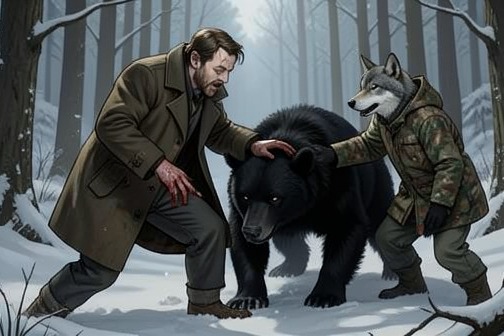
[Lycell is attacked by a black bear](entity:event-recall-event-lycell-90002d2d7b19) during the pursuit of [Bane](entity:character-recall-character-bane-a83632627baa) and [Adrienne](entity:character-recall-character-adrienne-05958df8fb72), a reversal that turns one brother’s emotional distraction into a threat to the rescue effort. The bear’s sudden strike exploits the danger of the forest rather than any lack of strength: [Lycell](entity:character-recall-character-lycell-d904ab5d4e13) has been thinking about Adrienne, fails to detect the animal, and must rely on Drayton to drive it away and [Robert](entity:character-recall-character-robert-dcc9e88f1178) to treat his wounds.
## Pursuit and Vulnerability
Lycell and Drayton are still behind Wilder, [Hunter](entity:character-recall-character-hunter-4082dbfba065), and [Devin](entity:character-recall-character-devin-703dbf4d2cb0) as the group moves through the winter forest toward Bane’s cabin. The delay matters: Lycell expects to meet Wilder on the trail, but Wilder is already miles ahead. Lycell also faces a disadvantage as daylight rises. His black fur offers little concealment against snow, unlike the camouflage provided by Wilder and Drayton’s coats, and the pale, gray, or brown wolves in [Bane’s pack](entity:organization-recall-organization-bane-s-pack-2455dd85db32) make his appearance especially conspicuous.
The immediate danger, however, comes from Lycell’s attention turning inward. His thoughts are fixed on Adrienne, whom the group is trying to recover, and that preoccupation dulls the senses on which a werewolf depends in the forest. He neither smells nor hears the bear approaching. The animal, hunting for food for its young, detects him and does not retreat. In the wilderness, that imbalance—Lycell unaware, the bear unafraid—makes the encounter dangerous before either has time to choose a safer course.
## The Attack and Counterattack
The bear strikes before Lycell can react. One paw sweeps across his chest from shoulder to shoulder and knocks him down; Drayton is too far behind to warn him before the first blow lands. Lycell’s distraction has become a physical disadvantage: the same thoughts of Adrienne that kept him from noticing the bear leave him exposed at close range.
Lycell answers with the strength he has left. As he falls, he swipes at the bear’s hind legs, then charges again and opens the same leg to the bone. The bear whimpers and collapses inches away. Lycell’s muzzle recedes, baring his fangs, but the display is a bluff: he knows that if the bear attacks again, he may not be able to hold it off. Drayton reaches them in time to frighten the wounded animal into turning away and limping back into the forest. The encounter is not a clean victory; both fierce creatures have been badly tested, and Lycell’s apparent dominance rests on a dangerous exchange of wounds followed by his brother’s intervention.
## Treatment and the Rescue's Cost
Lycell understands the cost of his distraction before the others can name it. Though weak, he insists that Drayton cannot afford to worry about him: he had been thinking about Adrienne instead of concentrating on the mission to bring her back, and now he believes he is of no use to anyone. His admission makes the mauling more than an interruption. It exposes how personal fear has compromised the attention the rescue demands, leaving Lycell wounded while the people they seek remain in danger.
Drayton refuses to leave him for dead. He tells Lycell that Adrienne would never forgive him if he let his brother die, then carries him until they meet Robert on the trail. Lycell has shifted back into human form by the time Drayton sets him down; naked and collapsing, he has to be caught before he hits the icy ground. The change of form makes his vulnerability unmistakable, while Drayton’s insistence on carrying him turns their brotherhood into immediate care rather than a matter of rank or rivalry.
Robert examines Lycell and fears that vital organs may have been severed, although the visible wounds do not appear deep. His more immediate concern is that Lycell is bleeding heavily, and he says he has something in his backpack that can stop it. Robert knows that werewolves heal faster than humans, but that advantage does not make them invulnerable: bear attacks have killed werewolves, including an entire village in [Alaska](entity:location-recall-location-b2c21cbab16e) when Kodiak bears struck while the inhabitants slept and game was scarce. The account places Lycell’s injuries within a wider history of lethal encounters between wolves and bears, not outside the ordinary risks of the wilderness.
Robert orders Drayton to leave Lycell with him and continue after [Mena](entity:character-recall-character-mena-7ebb9c08e2d9), promising to keep Lycell alive. Drayton promises to do everything he can to bring her back, though he doubts he can guarantee that outcome. The rescue therefore divides its care: Robert stays with the badly injured Lycell, while Drayton resumes the pursuit. Lycell’s attack slows the brothers and makes the mission more precarious, but it does not end it; the injured brother himself urges the others onward.
## Territory and the Bear's Role
The bear’s motive is not presented as simple predation. It first appears to be seeking food for its young, but the pattern of Lycell’s wounds suggests a territorial defense: if the bear had been hungry and hunting him as prey, it would likely have struck at the top of his head. Lycell may have surprised it, and the bear’s response turns the forest into contested ground rather than a passive backdrop to the rescue. That distinction does not lessen the danger; it clarifies that the mauling arises from an encounter between animals with their own needs and territory, at a moment when Lycell is too distracted to recognize the threat.
Event 24
Bane rescues Adrienne from a bear in the cave
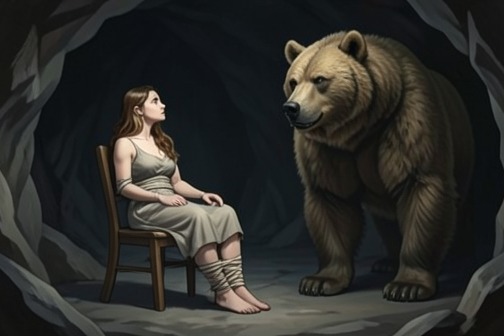
[Bane rescues Adrienne from a bear in the cave](entity:event-recall-event-bane-adrienne-8c5d1e1689a4) after leaving her bound and helpless inside his mountain refuge. The episode is a stark reversal: [Adrienne](entity:character-recall-character-adrienne-05958df8fb72) expects the bear to kill her, but [Bane](entity:character-recall-character-bane-a83632627baa) intervenes at great physical risk, making himself her protector for the moment without ceasing to be the captor who placed her in danger.
## Captivity and Imminent Death
Adrienne enters the scene tied to a chair, with her hands bound behind her back and her ankles fastened tightly. Bane has dismissed her questions and told her to sleep despite knowing that she is restrained and facing another uncertain day in the cave. To endure the helplessness, she recalls her life with Wilder, [Lycell](entity:character-recall-character-lycell-d904ab5d4e13), and Drayton, her honeymoon with Drayton, and the children she once believed she would never have. Her thoughts turn toward the abundance of children she now has and the additional pups still to be born, making survival an urgent hope rather than an abstract desire.
The threat arrives as an ear-numbing thunder that seems to shake the cave floor. Adrienne sees what appears to be the largest bear she has ever encountered. Unable to flee or even wave her arms, she tries to remember Wilder’s instructions: avoid the bear’s eyes, determine whether it is a female with nearby cubs, and make noise. Her rocking, shouting, cursing, and grunting do not frighten the animal; instead, the bear rises on two feet and becomes more threatening. Adrienne concludes that Bane may have left her as bait, just as he supposedly uses rabbits for food, and the fear of being treated as prey collapses into a conviction that her life is ending.
## Bane’s Intervention
Adrienne closes her eyes and waits for the death blow, believing that the life she shared with her werewolf companions was over. When she opens one eye, she sees Bane in werewolf form. His white fur initially makes her wonder whether Wilder has returned, but the glowing amber-and-red eyes identify him as Bane rather than Wilder, whose eyes are blue. The recognition disappoints her, yet Bane becomes her hero in that immediate crisis because he is the only figure present who might oppose the bear.
Bane first appears uncertain, standing as though he might run rather than fight. The bear is enormous, and Adrienne sees no obvious reason for him to risk his life on her behalf. His hesitation preserves the scene’s moral tension: the rescue is not presented as a simple transformation of Bane into a benevolent protector. He is still the man who bound Adrienne and left her in the cave, and the bear’s arrival exposes how completely her captivity has stripped away her ability to defend herself.
When the bear continues toward Adrienne, however, Bane acts. His fur bristles, he snarls, displays his fangs, and calls fiercely in an attempt to redirect the animal’s attention. The bear remains focused on Adrienne, who is sitting immobilized in the chair, and treats Bane as little more than an oversized wolf. Bane then drops the handful of rabbits he had been carrying near the cave entrance, picks up a log, and rushes the bear from behind. He strikes it repeatedly, hits its nose, and leaps onto it, biting a piece from its shoulder before spitting the flesh onto the ground.
## The Reversal of the Scene
The injured bear falls onto all fours, and Bane prepares for a charge by stepping aside and adopting a threatening stance. Instead, the bear retreats toward the cave opening, pausing only to seize the rabbits in its teeth before leaving. Bane knows how narrow the escape has been: he has fought a bear before, but bringing one down required a pack of ten wolves. Had the animal continued the attack, both he and Adrienne might have become food. The rescue therefore shifts the value at stake from life to death and back again, but it does not restore freedom; Adrienne survives inside the same captivity that made her defenseless.
After taking time to return to human form, Bane asks whether Adrienne is all right. She is still shivering and trembling from fright and cold, and her recognition that she has survived turns quickly into anger rather than gratitude. When she challenges his concern, Bane uses his sharp incisors to rip the rope from her arms and body, then unties her feet while sitting naked near her legs. The ropes are removed, but the power imbalance remains. Adrienne attempts to slap him, and Bane catches her hand before it reaches his cheek, warning her not to confuse him with Wilder or Drayton and reminding her that he has punished werefemales for lesser acts. The bear has made Bane Adrienne’s rescuer, but the aftermath makes clear that the rescue does not make him safe.
## The Meaning of the Rescue
The episode’s central reversal lies in the collision between physical rescue and continued domination. Adrienne’s life is preserved not by escape, law, or the return of her trusted partners, but by the intervention of the captor who left her tied inside the cave. Bane’s actions are therefore both protective and coercive: he confronts an animal capable of killing them both, yet once the danger passes he immediately reasserts control over Adrienne. Freeing her wrists and ankles removes the immediate restraints, but his response to her attempted slap makes clear that he still regards her resistance as subject to punishment. The bear changes Bane’s role without redeeming him. For a brief interval he is the only barrier between Adrienne and death; afterward, he remains the dangerous authority from whom she has reason to fear further harm.
## The Rescue’s Moral Reversal
The episode’s decisive reversal is that Adrienne’s survival depends on the intervention of the very captor who created her helplessness. Bane does not discover her by accident as an uninvolved passerby; he has left her tied in the cave, has dismissed her distress, and has arrived carrying rabbits, apparently intending to return to his pack and his meal. Yet when the bear ignores his warning display and continues toward Adrienne, Bane abandons the rabbits, takes up a log, attacks from behind, strikes the animal’s nose, and tears flesh from its shoulder with his teeth. His intervention is therefore protective without becoming redemptive. He risks death because the bear might have consumed both of them, but the rescue does not restore Adrienne’s freedom or place her under the protection of a lawful community. The immediate value of the scene moves from captivity and near-certain death to physical survival, while the underlying structure of domination remains intact. Bane removes the ropes from Adrienne’s arms, body, and feet, but when she tries to strike him, he catches her hand and invokes his punishments of werefemales, making the aftermath as threatening as the rescue itself. The bear temporarily transforms Bane from captor into protector, yet his warning reasserts that he still claims the power to discipline her; the scene’s irony lies in Adrienne being saved from an animal’s violence only to remain exposed to the deliberate authority of the man who saved her.
## Narrative Significance
The rescue belongs to the book’s recurring pattern in which protection and possession become dangerously indistinguishable. Adrienne’s immediate peril is represented by the bear, but the scene refuses to make the animal the only source of violence: Bane has already reduced her to helplessness by binding her, dismissing her questions, and leaving her within reach of a predator. His courage is real—he knows that a single werewolf is badly outmatched, since a previous bear required a pack of ten wolves to defeat—yet that courage produces only survival, not liberation. The episode therefore functions as a rescue plot turned inside out. Bane becomes Adrienne’s shield against death while remaining the authority from whom she must protect her dignity, and the contrast between Wilder’s remembered instruction about bears and Bane’s later threat against werefemales places trusted care beside coercive control. Even after the ropes are removed, Adrienne’s agency is not restored: her attempt to reject Bane physically is intercepted, and his warning confirms that the danger has changed form rather than ended. The cave thus becomes a compressed image of her captivity, where an external beast can be driven away but the human-shaped power that imprisons her remains.
Event 25
The Samsa brothers raid Bane's stronghold
[The Samsa brothers raid Bane's stronghold](entity:event-recall-event-samsa-bane-39f7f8e66e23) during their pursuit of [Adrienne](entity:character-recall-character-adrienne-05958df8fb72), whom [Bane](entity:character-recall-character-bane-a83632627baa) has abducted and taken into the wilderness. The raid is not merely an assault on a building: it is the moment when Wilder’s search for his mate collides with the organized force protecting Bane. The brothers enter under winter conditions, disguise their scents, and confront a group of werewolves while trying to recover Adrienne without losing the larger mission.
## Objective and Approach
Wilder leads [Hunter](entity:character-recall-character-hunter-4082dbfba065), [Devin](entity:character-recall-character-devin-703dbf4d2cb0), and Drayton toward Bane’s cabin through deep snow. They jump a newly built log fence that would be difficult for a human to scale without a ladder and preparation, but is easily cleared by werewolves. The fence marks the boundary between ordinary human defenses and the physical capabilities of the pack, while the snow has erased Wilder’s earlier tracks and made the approach harder to read.
The group first finds the cabin dark and cold. Wilder judges that no one could be inside, but the apparent emptiness conceals a larger force gathered around a fire at the front of the building. The [Samsa brothers](entity:character-recall-character-samsa-brothers-9327f0c7f4ea) have disguised their scents as those of the forest, including pine trees, squirrels, and bears, allowing them to approach werewolves without being detected. Their wealth and domestic comfort have not made them helpless; the narrative contrasts their polished appearance with the inherited cunning and combat training passed down through generations of their family.
## Confrontation at the Cabin
Ten large werewolves are waiting around the fire when Wilder and his companions reveal themselves. Wilder addresses them in a commanding voice and demands to know whether they were waiting for him. Bane is absent, having left the blond werewolf in charge, but the substitute leader has not legitimately earned the title of Alpha. The encounter therefore becomes both a rescue operation and a contest over authority: Wilder enters as the recognized leader of the Samsa pack, while the blond werewolf attempts to establish power through defiance.
The blond werewolf identifies Wilder and admits that Bane left with Adrienne after the blond wolf kidnapped her for him. Wilder has not detected either Bane’s or Adrienne’s scent, although he believes he can smell Adrienne from hundreds of miles away because she is his [one true mate](entity:expression-recall-expression-one-true-mate-c40cfc42d27f). The failure to locate her immediately intensifies the danger of the raid. Wilder must obtain information from hostile wolves while preventing Hunter and Devin from provoking a battle that could stop the pursuit altogether.
Wilder orders Hunter and Devin to move to the rear and keeps Drayton beside him. His restraint is deliberate. The blond werewolf tries to inflame him by claiming that Bane intends to impregnate Adrienne and that the blond wolf will have his own turn afterward. Wilder closes his eyes and controls himself rather than accepting the invitation to fight. The raid thus turns on a sharp contrast between emotional provocation and strategic purpose: Wilder’s desire to rescue Adrienne is extreme, but his immediate priority is to discover Bane’s location.
## Drayton’s Intervention and the Change in Power
Drayton does not maintain Wilder’s restraint. Taking responsibility for Adrienne’s danger, he shifts into a fierce wolf and attacks the blond werewolf before the other wolves can organize. The surrounding werewolves lower themselves in fear when they see Drayton, establishing that his violence is not an equal exchange between ordinary fighters but a demonstration of superior Alpha power.
The fight is direct and physical. Drayton tears into the blond wolf’s shoulder and continues through the opponent’s attempts to dodge and counterattack. The blond wolf circles while bleeding and searches for an opening, but Drayton uses the scent of blood to seize him, bites near the jugular and shoulder, and finally snaps his neck with his hands and teeth. The blond wolf’s attempt to provoke Wilder therefore produces the opposite result from the one intended: it removes Bane’s temporary lieutenant and leaves the surviving werewolves subdued before Drayton.
After the killing, Drayton stands bloodied and shocked. Wilder orders that he be taken back to camp and prevented from following, because Wilder still has a mission to complete. Wilder then turns to the remaining members of [Bane’s pack](entity:organization-recall-organization-bane-s-pack-2455dd85db32), who are lying flat on the ground, and begins questioning them. The raid ends this stage with a tactical victory but not with Adrienne’s recovery. Bane remains at large, and the information needed for the next pursuit must be extracted from the defeated pack.
## Legal and Relational Stakes
The raid is driven by more than territorial conflict because Adrienne’s status is interpreted through competing systems of law and obligation. Wilder states that Adrienne is his mate and that he must marry her, while the surrounding dispute treats her marriage, pregnancy, and movement as matters affecting the pack’s future. He tells her that she may come and go, yet cannot safely leave while carrying, or expected to carry, his pup; if she leaves, he says, she cannot take the child because an opposing clan might discover the pregnancy and send an assassin against his heir. The claim presents protection and control as inseparable: Wilder frames restriction as a duty created by danger, while Adrienne experiences the arrangement as a form of captivity even when he denies that she is captive.
That conflict continues when Wilder’s authority is challenged inside his own community. Drayton proposes that Adrienne should decide whom she wishes to marry, with her husband then determining what is best for the pack, but Wilder answers that he is the Alpha male and that Adrienne is his mate, so he will marry her. [Lycell](entity:character-recall-character-lycell-d904ab5d4e13) immediately asserts that Adrienne is carrying his pups and that he should therefore be the one to marry her. The raid later gives this domestic dispute a military consequence: Bane has abducted an Alpha’s mate, and Wilder’s inherited werewolf law requires punishment. Adrienne recognizes that she does not fully understand either human morality or werewolf custom, while Wilder, now responsible for a pack extending from the Americas to [Russia](entity:location-recall-location-e36341713c23), treats the pursuit as an obligation that permits no retreat. His search consequently becomes both a rescue mission and an enforcement of the order that defines his authority.
## Aftermath and Narrative Significance
The raid produces a decisive but incomplete reversal. Bane’s temporary lieutenant is dead, the ten werewolves around the fire are reduced to submission, and Drayton’s attack proves that the Samsa brothers possess a level of inherited combat authority their opponents cannot easily match. Yet the central objective remains unresolved: Adrienne is still with Bane, and Wilder has not recovered her or learned enough to end the pursuit. The surviving wolves therefore become the next instrument of the mission. While Drayton is ordered back to camp under protection, Wilder remains behind to question the defeated pack, separating immediate rescue from the larger reckoning demanded by werewolf law. The scene’s value shift runs from confidence to danger and then to tactical control: the Samsas enter as hunters, confront an ambush-like concentration of hostile power, and emerge dominant, but the absence of Bane and Adrienne prevents victory from becoming closure. Wilder’s pursuit is also shaped by a severe code of responsibility. He regards Adrienne as his lifelong mate and believes that an Alpha must protect her, while Bane’s abduction of another Alpha’s mate makes the chase an act of legal enforcement as well as personal recovery. The raid thus exposes the tension within that protection: werewolf custom promises defense, but it also treats Adrienne’s pregnancy, movement, marriage, and child as matters governed by male pack authority. Wilder’s restraint at the cabin and his insistence on continuing after Drayton’s intervention show a leader attempting to control both the enemy and his own family, even as the pursuit reduces the world to a stark imperative—he must hunt Bane before Bane’s fixation on Adrienne becomes irreversible.
Event 26
Bane takes Adrienne north to Alaska
[Bane takes Adrienne north to Alaska](entity:event-recall-event-bane-adrienne-baa7e5051c0b) as both captor and would-be mate, converting her abduction into a flight from the [Samsa brothers](entity:character-recall-character-samsa-brothers-9327f0c7f4ea) and a direct test of their power. The journey begins after [Bane](entity:character-recall-character-bane-a83632627baa) separates [Adrienne](entity:character-recall-character-adrienne-05958df8fb72) from [Mena](entity:character-recall-character-mena-7ebb9c08e2d9) and announces a change of plans: Mena has been taken back toward [Alaska](entity:location-recall-location-b2c21cbab16e) by her father’s pack, while Adrienne will be moved to a place Bane calls safe. The word conceals the central fact of the episode. Adrienne is not being escorted to safety; she is being removed from the people who might recover her.
## Causes and Background
Bane’s decision grows out of his fixation on Adrienne and his hostility toward the [Samsa family](entity:character-recall-character-samsa-f981681df2c6). He knows that Wilder, [Lycell](entity:character-recall-character-lycell-d904ab5d4e13), and Drayton will pursue her, and he deliberately presents that pursuit as a contest in which the Samsas’ settled, luxurious way of life will become a weakness. He believes they have been softened by sleeping and eating in comfort and no longer know how to survive in the wild. Taking Adrienne therefore serves two purposes: it hides her from the Samsas and lures them into terrain where Bane considers himself strongest.
The stakes are heightened by Adrienne’s pregnancy. Wilder has already declared her his mate and insisted that he will marry her, while Lycell has argued that her pregnancy with his pups gives him a claim. Wilder’s account of werewolf custom is even more absolute: because Adrienne is pregnant or will be pregnant with his pup, he says she may leave him but cannot take the child, since the child could be targeted as his heir. Bane’s seizure of her thus challenges not only a personal relationship but a system of inheritance, mating, pack authority, and protection.
Adrienne’s earlier encounter with Wilder establishes the contrast that governs the journey. In the wilderness, Wilder risked his life against a female bear to protect her, carrying her unconscious body back to the cave as he would carry a wolf pup. Bane, by contrast, repeatedly makes protection conditional on obedience. He claims that Adrienne must live as he lives or die, and he threatens to abandon her to wolves if she cannot keep walking. His version of safety is inseparable from captivity.
## The Abduction and Departure
Bane first announces that the two of them will travel alone. When Adrienne asks whether anyone else will accompany them, he answers that it will be “Just you and I,” making isolation part of his plan. He then frames the journey as a test of the Samsas: they will have to find Adrienne and take her from him, and that will not be easy. The imagined rescue becomes, in Bane’s mind, evidence of his own strength rather than proof that Adrienne has been deprived of her freedom.
His treatment of Adrienne makes the coercion explicit. In the cave he ties her hands behind her back, binds her ankles, and fastens her waist to a crude chair made from branches. He refuses to gag her only because her screams might alert him if a wild animal approaches. The threat is calculated: if he fails to return, he says, the animals may eat her while he eats them, turning her possible death into a grotesque expression of possessive revenge. Even when he later allows her to move, the underlying arrangement has not changed; she remains under physical and psychological compulsion.
The immediate vehicle is a rusty, battered Chevrolet truck with remnants of red paint. Adrienne resists, backing into deep snow and saying that she cannot go. Bane orders her into the truck and tells her that resistance is useless. His anger at her refusal is presented as an injury to his authority: he believes that, as a werewolf feared by the forest, he is being mocked when a human woman does not obey him.
Adrienne finally enters the truck not because she accepts Bane’s claim but because his threats awaken memories of the sexual assault she suffered during college, when [Paul](entity:character-recall-character-paul-6e5f3b48f63d)’s intoxicated friends overpowered her while Paul lay unconscious nearby. Their earlier command that she remain still and silent echoes through Bane’s warning that he could force her. Faced with the possibility of renewed violence, she chooses outward compliance as a means of avoiding immediate danger. Bane misreads that survival decision as evidence that she can be broken and may eventually love him.
## The Road North
Bane starts the truck with a loud bang from the exhaust, startling Adrienne, and drives north. The journey is precarious from the beginning: the old vehicle jerks and sputters, making it doubtful that it can reach Alaska quickly. Yet Bane’s destination is not tentative. He intends to carry Adrienne toward the far north, close to the end of the continent, where the Samsas will struggle to locate her and where he can attempt to convince her that she has no alternative but to accept him and bear his pups.
Bane’s private calculations reveal the scale of his rebellion. He knows that taking a pregnant woman will bring three werewolves and her children after him, and he understands that the pursuit could continue to the ends of his days. He also recognizes that he may be cast out of the werewolf community if he does not destroy or kill the Samsas. Nevertheless, his desire for Adrienne overrides the cost to his pack. The destination is chosen not merely as a hiding place but as a geography of exclusion, a northern refuge where distance, snow, and isolation can replace legitimate consent.
The trip also exposes the contradiction in Bane’s self-conception. He insists that he does not normally force a female and prefers her to be receptive and willing, yet his conduct has already involved abduction, restraint, threats, and compelled travel. He imagines that careful treatment for a short time might lead Adrienne to love him, while admitting that such restraint is not his nature. His nature, as the narration presents it, is wild and uncontrollable; his fantasy of voluntary affection rests on the very coercion that makes genuine choice impossible.
## Pursuit and Competing Laws
Wilder responds as an Alpha whose mate has been taken. He abandons concern over sentiment and follows Bane’s trail, shifting into wolf form after running through the woods so that he can travel faster, conserve strength, and use his thick white fur as camouflage in the snow. He follows frozen riverbanks because game is plentiful there and because Bane may use rivers to confuse pursuit. Wilder recognizes the tactic and continues tracking Adrienne’s scent despite exhaustion and lack of sleep.
The pursuit is dangerous for every participant. Lycell, distracted by thoughts of Adrienne, fails to smell or hear a black bear before it attacks him; the bear is defending its territory rather than simply hunting him, and it strikes him across the chest before Drayton can warn him. The wilderness is therefore not an empty backdrop to Bane’s escape. Its animals possess territory, hunger, speed, and sensory advantages that repeatedly redirect the human-werewolf struggle.
Wilder eventually realizes that Bane is heading for Alaska, where rumors suggest he has been building a compound. He had dismissed the possibility because he believed only werewolves born and raised in the far north could endure its severe winters. That earlier mistake gives Bane a temporary advantage, but it also confirms the extremity of his plan. Wilder describes the conflict through the laws inherited from generations of werewolves: Bane has kidnapped an Alpha’s mate, and under werewolf law he must be punished. The chase consequently becomes a legal as well as physical contest, governed by the principle that Wilder must hunt the pursuer and that survival may require killing or being killed.
## Consequences and Significance
Bane’s northern flight shifts the value at the heart of the story from unstable attachment to open captivity. Before the departure, Adrienne is already entangled in the Samsa brothers’ claims, marriages, pregnancies, and shared family arrangement. Once Bane takes her toward Alaska, those competing claims become an interstate-style pursuit between packs, with Adrienne’s body and unborn children treated as the ground on which authority is measured.
The event also exposes the conflict between several normative systems. Adrienne is subject to human ideas of consent and personal freedom, the Samsa brothers’ rules concerning mates and heirs, Bane’s law of the wild, and the broader werewolf laws that require an Alpha’s mate to be protected and an abductor to be punished. No single system gives her uncomplicated security. Wilder’s protection is tied to mate ownership and inheritance, while Bane’s supposed protection is inseparable from threats. The journey makes visible how a rule can claim to safeguard a woman while simultaneously restricting her power to decide.
Its final consequence is the escalation of the [Wilder–Bane rivalry](entity:relation-recall-relation-wilder-bane-rivalry-7d8e8518dc47). Bane intends to carry Adrienne beyond the Samsas’ reach, persuade her to submit, and have his own pups, while Wilder follows her scent through snow, rivers, hunger, and exhaustion. Adrienne remains the immediate target of rescue, but the journey also makes her the symbolic center of a struggle over Alpha legitimacy, pack law, reproduction, and the boundary between human and werewolf morality. Alaska is therefore not simply the destination of an escape. It is the remote stage on which Bane attempts to remake captivity as courtship and on which Wilder’s duty to pursue, protect, and punish is transformed into a near-total confrontation.
Event 27
Adrienne becomes pregnant with Drayton's child
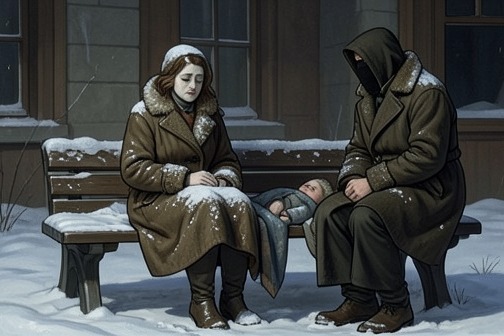
[Adrienne becomes pregnant with Drayton's child](entity:event-recall-event-adrienne-drayton-ce2ae940f550) at a decisive point in her struggle to reclaim intimacy, family, and control over a life previously organized by other people's decisions. The pregnancy is not merely a biological development. It reverses the diagnosis that she could never have children, intensifies the political value assigned to her body within the [Samsa family](entity:character-recall-character-samsa-f981681df2c6), and gives Drayton a direct stake in protecting her and the unborn pups. It also makes her later captivity by [Bane](entity:character-recall-character-bane-a83632627baa) more dangerous, because [Adrienne](entity:character-recall-character-adrienne-05958df8fb72) must survive not only for herself but for the children she carries.
## Causes and Background
[Adrienne's pregnancy](entity:state-recall-state-adrienne-db41934e80a6) gains its full meaning against the trauma that preceded it. A year earlier, [Paul](entity:character-recall-character-paul-6e5f3b48f63d)’s frat brothers entered her bedroom while Paul was unconscious after drinking. Adrienne could not remember the attackers' faces or names, but she retained their voices. After a delayed trip to the hospital, a doctor told Adrienne and her parents that she would never have children. Paul then urged her never to discuss the assault and promised to marry her that June, while Paul and her parents suppressed the investigation to protect wealthy and politically connected men. The proposed marriage therefore offered concealment rather than care: Adrienne was expected to enter a loveless, childless future constructed around the perpetrators' reputations.
Her later pregnancy overturns that imposed future. By the time she returns toward her parents' home with Drayton, she understands that her parents and Paul no longer control the terms of her life. She is pregnant again, has the [Samsa brothers](entity:character-recall-character-samsa-brothers-9327f0c7f4ea)' support and power behind her, and imagines building a family on her own terms. The contrast is stark: a medical declaration had defined her as infertile and socially useful only as Paul's silent fiancée, whereas pregnancy restores reproductive possibility while also making her vulnerable to renewed claims over her body.
## Conception and Recognition
The conception follows Drayton's patient declaration that he would wait until Adrienne was ready before mating with her. His restraint contrasts with the coercive history surrounding her earlier sexual assault and with the controlling arrangements made by Paul, her parents, and Wilder. When Adrienne reaches for Drayton, his touch and kiss awaken a sense of being desired and loved rather than treated as a problem to be hidden. Their intimacy becomes the immediate setting in which she chooses closeness and the possibility of another child.
Adrienne later tells Drayton about the assault and explains why she had believed herself unable to bear children. She identifies one attacker by his voice after hearing him in a hotel elevator and names the connection to Drayton, Wilder, and [Lycell](entity:character-recall-character-lycell-d904ab5d4e13). This disclosure links the pregnancy to an act of testimony: the body once made evidence of violence becomes the body carrying a future that the earlier medical verdict had declared impossible. The revelation also helps explain why questions of consent and choice remain central to her relationships, even when affection and desire are genuine.
The pregnancy is realized during Adrienne and Drayton's sexual encounter after Adrienne tells him that [Mena](entity:character-recall-character-mena-7ebb9c08e2d9), once thought sterile, has conceived after receiving [Robert](entity:character-recall-character-robert-dcc9e88f1178)'s experimental serum. Adrienne does not know whether the treatment can affect males or werewolves, but she reassures Drayton that love may cure what is wrong with him. Their encounter ends with Drayton filling her and expressing his certainty that this time he will make her pregnant. The scene joins reproductive hope to intense physical immediacy, but its emotional force comes from Adrienne's movement from medical hopelessness toward chosen attachment.
## Family Politics and Reproductive Claims
Once Adrienne's fertility is established, her pregnancy becomes entangled with the Samsa family's reproductive strategy. Wilder tells her that he had promised her father she would marry Lycell or Drayton and reveals that Mena is sterile, expecting Adrienne to give her pups to Mena and Drayton. Adrienne rejects the idea that a mother should surrender her children merely because the family needs them elsewhere. Her pregnancy therefore exposes the ethical cost of treating one fertile woman as a resource for preserving the pack.
Wilder admits that he acted deliberately because he could not bear to share Adrienne and believed she did not want Lycell. Adrienne answers that his attempt to control the arrangement has created another problem and insists that he speak with Drayton and Lycell about what they themselves want. Her pregnancy thus becomes a test of the Samsa brothers' shared-mate system. It can strengthen the family's continuity, but it cannot erase Adrienne's authority over her own relationships, consent, or children.
The same family structure later produces a formal consequence. Wilder sanctions the marriage between Drayton and Adrienne and tells Robert that Robert may marry Mena when Drayton and Adrienne marry. He also offers to keep Robert as the family's doctor while preparing to travel with [Hunter](entity:character-recall-character-hunter-4082dbfba065) and [Devin](entity:character-recall-character-devin-703dbf4d2cb0) to stop an uprising. Adrienne's pregnancy consequently participates in a broader reorganization of kinship: Drayton's expected marriage to Adrienne and Robert's relationship with Mena are placed within a negotiated family and political settlement rather than left as private romances.
## Danger, Captivity, and Medical Stakes
Pregnancy changes the terms of Adrienne's vulnerability when Bane's werewolves abduct her and Mena. Adrienne awakens in a sparse room with an uncured-lumber bed, a chair, a fire, a leather covering, and an oversized pair of leather pants. She realizes that she has been taken to Bane's compound and checks herself, relieved that she has not yet been violated. Her hunger and the familiar bodily sensations remind her of the earlier pregnancy with Wilder's twins, and she discovers that her abdomen has begun to swell into a small rounded shape.
Adrienne initially lies about being pregnant in the hope that the claim will win sympathy from the blond werewolf and give her a chance to escape. The deception does not remove the danger. She has no shoes, the ground outside is frozen, and she understands that attempting to flee could kill both her and the unborn pups. Bane's presence turns the pregnancy into a hostage condition: he implies that her only hope is for Wilder to come for her, while Adrienne fears that the brothers may not return after obtaining the pups they wanted for the strength of their pack. Her immediate objective becomes survival and protection of Drayton's children, even while she doubts whether anyone values her beyond reproduction.
The pregnancy later reaches a medical crisis during Adrienne's emergency admission. [Dr. Wells](entity:character-recall-character-dr-wells-7e8c60e0cc6e) tells Drayton that Adrienne will die unless he performs an immediate cesarean section and warns that the babies may not survive because they are small, though their small size is expected for werewolf pups. Drayton authorizes the operation and remains at the hospital while thinking about Lycell's possible reaction if Adrienne or the pups die. The scene makes reproductive success inseparable from surgical risk, emergency consent, and the survival of both mother and children.
## Significance and Consequences
Adrienne's pregnancy with Drayton's child is a reversal of the hospital verdict and of the social script imposed after her rape. It confirms that the earlier promise of a childless marriage to Paul was not her destiny, yet the reversal is not presented as simple liberation. Pregnancy restores possibility while attracting claims from Wilder, the Samsa family, Bane, and the pack's reproductive politics. Adrienne must repeatedly insist that fertility does not cancel personhood and that motherhood does not require surrendering her children or her right to refuse.
The pregnancy also deepens the contrast among the relationships surrounding Adrienne. Drayton waits for her readiness and openly expresses love; Wilder attempts to arrange her future and later confronts her anger over control; Bane uses her isolation and pregnancy to intensify her dependence on rescue. Against the memory of Paul and the men who assaulted her, these differences make consent a continuing measure of intimacy rather than a single resolved issue.
Its final importance lies in the way the pregnancy binds private desire to collective survival. The unborn pups matter to Drayton, Lycell, Wilder, and the future of the Samsa pack, but Adrienne's body is the place where that collective future is carried, endangered, and contested. The event therefore advances both the family plot and the book's recurring conflict between reproductive necessity and individual choice: the pregnancy promises continuity, yet its ethical meaning depends on whether Adrienne remains the person who decides what that continuity will become.
Event 28
Bane abducts Adrienne and takes her to Alaska
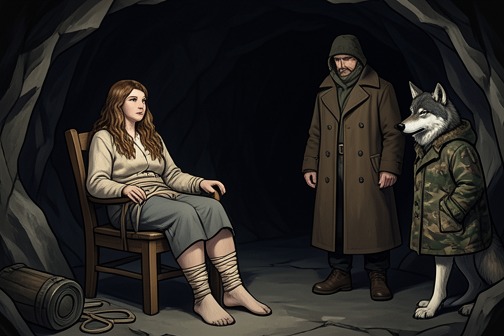
[Bane abducts Adrienne and takes her to Alaska](entity:event-recall-event-bane-adrienne-2b67139cd61e) in a sequence that converts physical confinement into a struggle over matehood, law, pregnancy, and choice. [Adrienne](entity:character-recall-character-adrienne-05958df8fb72) is already carrying Wilder’s pups when [Bane](entity:character-recall-character-bane-a83632627baa) captures her, and that fact prevents him from treating her as an ordinary enemy. His journey north is therefore both an act of revenge against the [Samsa family](entity:character-recall-character-samsa-f981681df2c6) and an attempt to make Adrienne part of his own sterile, isolated werewolf pack.
## Causes and Initial Captivity
Bane’s conduct grows out of the hostility between his pack and the Samsa family. Wilder identifies Adrienne as his mate and declares that he will marry her, while the [Samsa brothers](entity:character-recall-character-samsa-brothers-9327f0c7f4ea)’ authority rests on the expectation that the Alpha’s mate must be protected. [Ramsey](entity:character-recall-character-ramsey-a48448732611)’s anger over [Mena](entity:character-recall-character-mena-7ebb9c08e2d9)’s rejected marriage arrangement shows how werewolf relationships are governed by competing customs of mating, honor, and pack authority. Against that background, Bane’s seizure of Adrienne is not merely a personal crime: it is an assault on Wilder’s position and on the Samsa family’s legal order.
The immediate circumstances of captivity are deliberately isolated. Bane binds Adrienne’s hands and ankles, ties her to a crude branch chair, and tells her that she will be helpless if an animal enters the cave. He refuses to gag her, but frames her ability to scream as another part of his control, promising that he will hear her only if he returns in time. The cave consequently operates as both refuge and prison: the wilderness supplies the threats Bane claims to protect her from, while his presence makes him the most immediate threat within it.
Bane’s intentions change when Adrienne reveals that she is pregnant. He had planned to kill her, but the hunter’s law forbids killing a female, especially one who is pregnant. The rule protects her life without restoring her freedom. Instead, pregnancy gives Bane a reason to keep her alive, and his recognition that she might bear his pups transforms captivity into a possessive claim. His sterile werefemales have never produced pups for his pack, so Adrienne becomes, in his imagination, a possible mate and the source of a future he had previously rejected.
## The Flight North
The abduction becomes mobile when Bane takes Adrienne from the cave and carries her into the woods at a sprint. To frighten her into dependence, he describes a landscape in which ordinary wolves, exiled lone werewolves, and hostile males could all prey upon her. He presents himself as the lesser danger, even while making clear that her alternatives are controlled by him. He tells her that a lone werewolf lives outside [Portland](entity:location-recall-location-portland-1d591afddc1c) and may provide food or transportation, establishing the route as a chain of improvised shelters rather than a settled homeward journey.
Bane and Adrienne then spend three days driving with almost no meaningful rest, stopping mainly for restroom breaks. Bane gives her meat but does not understand why a pregnant human needs fruit and vegetables as well. Adrienne protests that her growing pups require nourishment and accuses him of torturing her. His answer reveals the central contradiction of the journey: he says that he does not care about the Samsas’ pups, only about Adrienne, although the pups are inseparable from her identity and survival. When she tells him that rejecting the pups means rejecting her, she forces him to confront the consequences of wanting her as a mate.
The journey also exposes Bane’s limited ability to care for the human woman he claims to desire. He is accustomed to werefemales who accept the food and treatment he provides after mating, but Adrienne demands conditions he has never prepared to meet. He recognizes that he has treated her differently, allowed her to affect him, and failed to plan for her needs. His possessiveness thus produces practical obligations that his customary werewolf behavior cannot satisfy.
When Adrienne demands a hotel and refuses to continue in the truck, Bane gives her a handful of hundreds and follows her because he does not trust her. She mocks his lack of a credit card and says that she wants a new [Range Rover](entity:object-recall-object-range-rover-c882bf55ea94), using sarcasm to provoke him while testing how much influence she has acquired. The exchange marks a small reversal in the balance of power: although Bane still controls transportation and movement, Adrienne begins directing the immediate terms of their travel, and he finds himself indulging rather than simply commanding her.
## Attachment, Threat, and Competing Laws
Bane’s fixation deepens during the drive. He admits neither love nor vulnerability openly, but the narration presents him as changed by sleeping beside Adrienne and becoming attached to her. He sees himself as a creature driven by instinct rather than human passion, yet his behavior increasingly contradicts that self-image. He stops because of her discomfort, gives her money, considers her food and lodging, and wants to please her even while insisting that she remains under his authority.
Adrienne’s response is neither simple submission nor uncomplicated affection. She remains angry at his treatment of her, tells him that she wants to go home, and proposes that she could tell Wilder Bane had not intended to harm her and could ask Wilder to restore him as Alpha. At the same time, she notices the difference between what Bane does and what he refrains from doing, and that distinction troubles her feelings. Her reaction creates a pursuit-and-withdrawal pattern: Bane tightens control when he fears losing her, while Adrienne uses defiance, negotiation, and calculated provocation to create space within captivity.
Several legal systems collide in the event. Human morality condemns abduction and coercion; the Samsa family’s rules define Adrienne as Wilder’s mate and require her protection; werewolf law governs pregnancy, mating, inheritance, and punishment; and the hunter’s law prevents Bane from killing a pregnant female. None of these systems gives Adrienne complete autonomy. Wilder explains that werewolf law has been internalized across generations and that, as head of a pack extending from the Americas to [Russia](entity:location-recall-location-e36341713c23), he must enforce it. Bane’s seizure of an Alpha’s mate therefore becomes an offense demanding punishment, even though the law’s language of protection still treats Adrienne as someone claimed by competing male authorities.
The danger becomes especially acute around the full moon. Adrienne expects Bane to be unable to restrain himself during the period of mating compulsion and contrasts him with Wilder and the other Samsas, whom she regards as more disciplined. Her fear is intensified by Bane’s upbringing among bloodthirsty werewolves in the woods, where the boundary between human reason and predatory instinct is less stable. The event consequently places not only her bodily safety but also her pregnancy and her status as Wilder’s mate under threat.
## Escape and the Road to [Alaska](entity:location-recall-location-b2c21cbab16e)
Bane eventually tells Adrienne that Wilder cannot track them and that he intends to take her into the Alaskan wilderness, where she will have no choice but to become his. He presents forced mating or exposure to other wild werewolves as the alternatives, then leaves the hotel suite after disconnecting the telephone cords. The removal of the cords makes his control literal: Adrienne cannot call for help, and Bane can speak harshly because he believes distance and isolation have already defeated her.
Adrienne nevertheless acts at the first opening. She dresses hurriedly, takes food and a coat, finds the truck keys, and leaves while uncertain whether Bane will smell her escape and punish her. Her shaking hands, weakened legs, difficult breathing, and instinctive protection of her stomach register the physical cost of captivity and pregnancy. The lobby becomes a threshold between confinement and uncertain freedom; even when the desk clerk has changed and no one immediately stops her, Adrienne imagines that every movement may alert Bane.
The escape is part of a larger recurring pattern of danger on the road. Adrienne’s earlier flight from [Paul](entity:character-recall-character-paul-6e5f3b48f63d) began with a winter drive from [Sacramento](entity:location-recall-location-0fe1c0701977) toward [Lake Tahoe](entity:location-recall-location-lake-tahoe-0c9f9ca14c7e) along a snow-covered, high-elevation road. Her poor tires, falling snow, darkness, and isolation turned a decision for freedom into wilderness exposure, and her car eventually tumbled into the earth after she escaped it. Later, after leaving Bane, she sees an old white Ford pickup following her and warns Mena not to turn around. These repetitions connect the abduction to a broader structure in which transportation promises release but repeatedly becomes a site of pursuit, concealment, and vulnerability.
Bane’s route toward Alaska is therefore never secure. He worries that Wilder is following and wonders whether his pack has slowed the Samsa brothers. He also blames himself for failing to account for Adrienne’s needs, because his emotional attachment has made him less like the solitary predator he wants to be. The farther north he travels, the more clearly the journey becomes a contest between his desire to possess Adrienne and her continuing capacity to resist, negotiate, and escape.
## Consequences and Narrative Significance
For Adrienne, the abduction produces captivity without erasing agency. She is restrained, transported, threatened with wolves, deprived of reliable communication, and pressured to accept Bane as the only protection available in the wilderness. Yet she also confronts him, insists on adequate food, demands a hotel, mocks his assumptions, proposes a political solution, and ultimately takes the truck keys and attempts to flee. Her resistance changes Bane’s conduct even when it does not immediately end his power over her.
For Bane, the event exposes the fracture between the Alpha he wants to be and the manlike attachment he fears. He begins with an intention to kill Adrienne, is stopped by the hunter’s law, and then becomes captivated by the pregnant woman he had regarded as an enemy. He imagines her bearing his pups despite the sterility of his werefemales, but he cannot translate that desire into humane care without being forced to learn from her demands. His stated indifference to the Samsa pups coexists with an intense concern for Adrienne, whose pregnancy makes the two concerns inseparable.
For Wilder and the Samsa family, the abduction initiates a hunt governed by pack law. Wilder understands that Bane has taken another Alpha’s mate and that the offense cannot be ignored. He describes the conflict in stark terms: he must hunt the pursuer, and the struggle has become a matter of killing or being killed. The chase therefore joins intimate rivalry to institutional enforcement, turning Adrienne’s body and pregnancy into the ground on which rival werewolf orders contest authority.
The event’s decisive value shift moves from Adrienne’s precarious freedom to enforced dependence, then toward conditional resistance. Bane’s control appears absolute in the cave and during the northward drive, but his attachment creates an opening: he begins making concessions, stopping for her, giving her money, and allowing her influence over the journey. That opening enables her hotel escape and keeps the conflict unresolved. The abduction thus functions not as a static imprisonment but as a moving confrontation in which every attempt at possession generates another opportunity for defiance, pursuit, and reversal.
Event 29
Bane and Adrienne obtain a new truck while fleeing
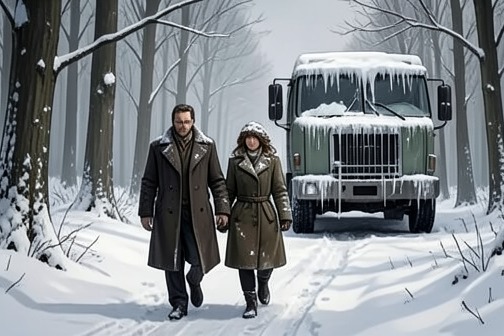
[Bane and Adrienne obtain a new truck while fleeing](entity:event-recall-event-bane-adrienne-6cf070432ccd) in an episode where transportation is never merely practical. The first vehicle fails at the moment their escape route depends on it: after [Adrienne](entity:character-recall-character-adrienne-05958df8fb72) estimates that their destination is roughly twenty-five hundred miles away, the truck is revealed to be empty of fuel, coughs, sputters, and dies. The breakdown strips away the illusion that [Bane](entity:character-recall-character-bane-a83632627baa) can simply carry her north, forcing them onto footpaths and into a chain of increasingly coercive choices. Their eventual replacement vehicle offers mobility, but not freedom, because Bane acquires it by using his authority and Adrienne’s vulnerable position within the hidden werewolf world.
## Breakdown and the Pressure of Distance
The immediate cause of the truck change is material failure. Adrienne recognizes that the journey is impossibly long for a vehicle already in poor condition, while Bane insists that it will make the distance. The argument ends when the fuel gauge confirms her judgment and the engine dies. The scene changes the value of the truck from an instrument of escape into an obstruction: instead of carrying them toward [Alaska](entity:location-recall-location-b2c21cbab16e), it leaves them stranded and requires them to walk.
This failure also exposes the asymmetry between Bane’s confidence and Adrienne’s practical awareness. He controls the destination and threatens to take her into the Alaskan wilderness, but she understands the vehicle’s limits more clearly than he does. Her observation that the truck is useless on empty does not release her from his control; it only changes the form that control must take. Bane responds by moving her physically rather than solving the problem through ordinary cooperation.
## Forced Movement Through the Woods
After the truck stops, Bane tells Adrienne that they must get out and walk. He has already tried to make himself appear preferable by describing the dangers of the surrounding country: lone werewolves might seize and use a human woman, while ordinary wolf packs wait for weakness. The warning is not neutral information. It frightens Adrienne into seeing Bane as the lesser danger, even though he is the person already holding her captive and threatening to force her into becoming his mate.
When Bane extends his hands, Adrienne reaches for him, and he takes her into his arms and sprints into the woods. The movement is therefore both rescue-like in appearance and coercive in substance. She is transported because she cannot safely continue alone, but the decision and direction remain his. He says that a lone werewolf living about fifty miles from [Portland](entity:location-recall-location-portland-1d591afddc1c) may have food and transportation, establishing the next destination as a survival necessity rather than a freely chosen stop.
## The Werewolf Compound and the Seized Vehicle
The contact is Bane’s uncle, a huge, white-haired werewolf who stands taller than Bane and is immediately recognized by Adrienne as a Beta rather than an Alpha. His size and status make the stop feel like entry into another layer of the werewolf hierarchy, but the exchange is also bluntly transactional. The uncle identifies Adrienne as a human female and suspects that Bane has stolen her in order to mate with her, revealing that the abduction of human women is understood within this marginal world as a recurring practice rather than an unimaginable violation.
Bane asks his uncle for food and for the use of his truck. The uncle refuses to give up the vehicle without compensation and proposes taking Adrienne in exchange. Bane rejects that bargain, but his refusal does not restore Adrienne’s personhood; throughout the exchange, the men discuss access to her as though she were property. The episode thus makes the truck’s acquisition inseparable from the larger struggle over whether Adrienne will be transferred, retained, or used.
Adrienne resists the uncle in the only immediate way available to her. When confronted with rancid meat, she eats two large pieces despite the smell, holding her nose and swallowing them to prove that she can endure what is placed before her. Her act impresses the old werewolf and gives her a small tactical advantage. It is not a complete escape, but it turns bodily endurance into leverage: she demonstrates that fear and disgust will not make her entirely passive.
The uncle ultimately advises Bane to get rid of the human, calling her trouble. Bane leaves in a different truck, one that is less old and more reliable than the vehicle that failed, though it does not appear especially sturdy. The replacement therefore solves the immediate logistical problem while preserving the danger of the journey. Bane has gained the means to continue toward Alaska, but the vehicle remains another instrument in an abduction rather than a path to Adrienne’s independent safety.
## Adrienne’s Resistance and the Recurring Vehicle Motif
Once back on the road, Adrienne tries to alter the terms of the captivity. She tells Bane that she will not be responsible for her actions unless he gets her real food, recognizing that he wants something from her and deciding that this desire can become a source of control. Her demand marks a shift from mere endurance toward calculated resistance. She cannot command the route, but she can withhold cooperation and force Bane to respond to her physical needs.
The truck also connects this episode to the wider pattern of Adrienne’s dangerous travel. Her earlier departure from [Paul](entity:character-recall-character-paul-6e5f3b48f63d) begins with a night drive from the [Sacramento](entity:location-recall-location-0fe1c0701977) area toward [Lake Tahoe](entity:location-recall-location-lake-tahoe-0c9f9ca14c7e) through heavy snow, high elevation, a slippery road, and inadequate tires. After that car disappears into the earth, she is left in the wilderness and must walk through cold, darkness, and forest. Later, while traveling with [Mena](entity:character-recall-character-mena-7ebb9c08e2d9) toward the [Samsa family](entity:character-recall-character-samsa-f981681df2c6)’s compound, Adrienne sees a large white Ford pickup following them and immediately distinguishes it from [Lycell](entity:character-recall-character-lycell-d904ab5d4e13)’s newer silver truck. Vehicles repeatedly signal whether movement means escape, pursuit, or renewed captivity; their condition and appearance become practical clues in a life governed by flight.
The same pattern continues when Adrienne later attempts to escape Bane from a hotel suite. She takes food, a coat, and the truck keys, then leaves while fearing that Bane will smell her absence and punish her. The earlier replacement truck has enabled continued flight, but it has not ended the pursuit. Across these connected episodes, transportation creates temporary openings without guaranteeing autonomy: a car can fail, a truck can be seized, and keys can become the difference between confinement and a possible getaway.
## Consequences and Narrative Significance
The new truck carries Bane and Adrienne farther, but it also extends the period during which Bane can isolate and threaten her. Its acquisition follows a failed vehicle, a forced crossing of the woods, an encounter with a Beta werewolf, and a negotiation in which Adrienne’s body is treated as a possible exchange item. The sequence therefore converts a practical problem into a compressed demonstration of the social order surrounding her captivity: distance, weather, wilderness, hierarchy, and secrecy combine to reduce her available choices.
At the same time, Adrienne is not rendered wholly powerless. She correctly diagnoses the fuel crisis, survives the forced passage through the forest, eats the uncle’s rancid meat to establish toughness, and begins bargaining over food. The event’s decisive reversal is consequently double-edged. Bane obtains the reliable vehicle he needs, but Adrienne acquires a clearer understanding that survival will depend on exploiting every weakness in his plans. Mobility returns to the fugitives, yet freedom remains unresolved; the truck carries the conflict onward rather than bringing it to safety.
Event 30
Drayton battles one of Bane's werewolf followers
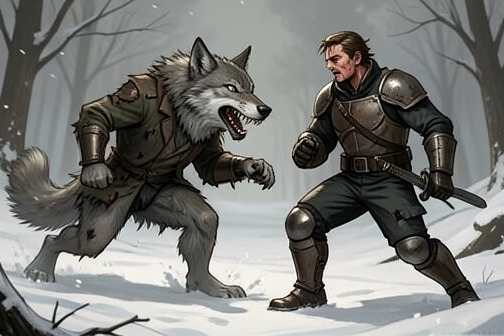
[Drayton battles one of Bane's werewolf followers](entity:event-recall-event-drayton-bane-73532e840cf2) at the point where the rescue of [Adrienne](entity:character-recall-character-adrienne-05958df8fb72) and [Mena](entity:character-recall-character-mena-7ebb9c08e2d9) collapses into a desperate rear-guard action. [Bane](entity:character-recall-character-bane-a83632627baa) has taken Adrienne and Mena, and one of his werewolf followers is left to fight Drayton while the others are absent. The encounter does not rescue the captives, but it exposes the cost of defending them: Drayton returns to the camp limping, bleeding, and unable to continue, yet still determined to bring Adrienne home and fulfill his promise to [Robert](entity:character-recall-character-robert-dcc9e88f1178) to recover Mena.
## Causes and Stakes
The fight grows out of the [Samsa brothers](entity:character-recall-character-samsa-brothers-9327f0c7f4ea)' attempt to counter Bane's abductions. Wilder is the Alpha male of the pack and openly treats Adrienne as his mate, insisting that he will marry her, while [Lycell](entity:character-recall-character-lycell-d904ab5d4e13) also claims that Adrienne is carrying his pups and that he should have the right to her. These competing claims make Adrienne central to both family succession and pack authority. Wilder's position is reinforced by the rule that no Alpha may take another's mate without permission, while [Ramsey](entity:character-recall-character-ramsey-a48448732611)'s anger shows that older werewolf customs can also treat marriage and female status as matters governed by pack law rather than individual choice.
Bane's conduct violates that order even more directly. He has kidnapped an Alpha's mate and is pursuing Adrienne as an object of fixation, while his treatment of her in captivity reveals the brutal logic of his faction. He ties her hands, ankles, and waist to a crude chair in a cave, refuses to gag her, and tells her to scream if an animal approaches because he may otherwise return too late to prevent her from becoming food. Against this background, Drayton's fight is not merely a physical contest. It is an attempt to defend family, recover captives, preserve the pack's laws, and assert a husband's right to protect Adrienne.
## Course of the Battle
Bane leaves Drayton to fight the blond werewolf follower because Bane apparently knows that he could not prevail against all of the rescuers together. [Devin](entity:character-recall-character-devin-703dbf4d2cb0) later explains that Bane had taken his mother and left Drayton behind to fight his battle, judging the arrangement in a way that accidentally benefited Bane and disadvantaged the rescuers. Drayton is badly outmatched: the text states that he is no match for Bane himself, but he is able to remain in combat against the follower until he is the last werewolf standing.
The result is therefore both victory and defeat. Drayton has not recovered Adrienne or Mena, and the fight leaves him in excruciating pain. He rejects the offered help of [Hunter](entity:character-recall-character-hunter-4082dbfba065) and Devin, refusing to appear weak before his nephews and treating the acceptance of assistance as inconsistent with the image of a true warrior. He takes each painful step toward camp while blood falls onto the snow in a steady stream, and he eventually has to be carried when his feet drag beneath him.
Drayton's physical endurance is matched by a moral refusal to relinquish responsibility. Before entering the forest, he turns back toward Wilder with barely open eyes and a sense of hopelessness because he wanted to be the one who brought Adrienne home and challenged Bane. To him, confronting Bane is a matter of respect and a husband's right to defend his wife. He also remembers his promise to Robert to bring Mena back to him. His wounds thus represent more than battlefield damage: they mark the point at which his personal honor and his obligations to two families become impossible for him to discharge alone.
## Immediate Consequences
When Drayton and the twins reach the campsite, Robert is treating Lycell, who is already near death from a bear mauling. Robert stops administering pain medication to Lycell and rushes toward Drayton, recognizing from his limp and the blood on the snow that the situation has become critical. Drayton collapses shortly afterward, and Hunter states that he needs urgent care. Lycell, still weakened by his own injuries, says that he will go after the abductors, but Robert understands that both injured brothers could die if they do not return to the ranch.
The battle also produces a limited political result. After the fight, Wilder interrogates the beta werewolves who remain alive and makes them agree to obey the laws in exchange for being spared. Drayton's combat therefore helps create the conditions under which Wilder can impose legal authority on Bane's followers, even though Drayton himself cannot continue the pursuit. The surviving opposition is not simply destroyed; it is forced into submission under the werewolf laws Wilder claims the right to enforce.
## Transfer of the Rescue Mission
Drayton's defeat changes the emotional and strategic center of the rescue. He tells Wilder to bring Adrienne home regardless of what must be done, but stops short of reducing her return to his own possession. Looking into Wilder's eyes, he recognizes that Wilder loves her as deeply as he does and asks him to bring her back to them. Drayton needs Adrienne, but his appeal acknowledges the shared bond among the Samsa brothers and the fact that Wilder was the first to see and mate with her.
The contrast between the brothers matters. Drayton believes that his status as Adrienne's husband gives him the right to challenge Bane, yet Wilder has an older claim within the story's mate hierarchy and bears the authority of Alpha. Once Drayton falls, Wilder becomes the only brother able to pursue Bane alone. Drayton's final request therefore converts private frustration into collective duty: Adrienne must be brought back not merely to one man, but to the family whose shared arrangements have made her central to its future.
## Legal and Thematic Significance
The encounter dramatizes the conflict between several overlapping systems of obligation. Human morality, werewolf law, pack hierarchy, mate claims, marriage, and family promises do not assign the same meaning to captivity or protection. Adrienne herself accepts parts of werewolf custom without fully understanding either the werewolves' hunting practices or their inherited laws. Wilder, by contrast, has absorbed those laws since childhood and now leads a pack extending across the Americas to [Russia](entity:location-recall-location-e36341713c23); he sees Bane's kidnapping of an Alpha's mate as an offense that requires punishment.
Within that framework, Drayton's battle becomes a test of whether law can be enforced through violence without dissolving into personal vengeance. Drayton fights because he loves Adrienne, because he is her husband, and because he has promised Robert to recover Mena. Wilder continues the pursuit because he is both a man capable of reason and a wolf driven toward the singular imperative to hunt the pursuer. The event's decisive value shift is from confidence in a collective rescue to bodily ruin and desperate delegation: Drayton survives the confrontation as the last werewolf standing, but the captives remain in danger, the injured brothers require care, and Wilder must carry the hunt forward alone.
Event 31
Wilder tracks down Bane and Adrienne alone
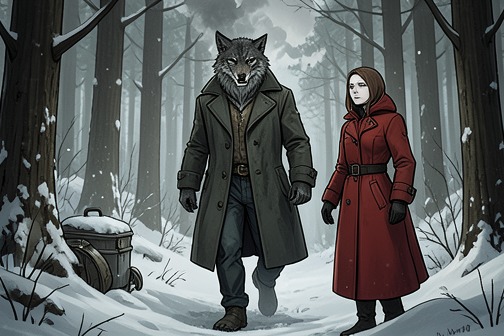
[Wilder tracks down Bane and Adrienne alone](entity:event-recall-event-wilder-bane-adrienne-908d811f5e83) at the point where pursuit becomes both a rescue mission and a test of emotional control. He leaves his family behind, follows their northward trail through deep winter, and eventually locates them at a remote motel. Yet the discovery does not immediately restore [Adrienne](entity:character-recall-character-adrienne-05958df8fb72) to him. The mingled scent on the motel bed triggers jealousy so powerful that Wilder mistakes the outward signs of captivity for proof of consent, turning the rescue into a dangerous conflict between devotion, instinct, and judgment.
## Causes and Background
Wilder’s pursuit begins after [Bane](entity:character-recall-character-bane-a83632627baa) abducts Adrienne and takes her north. The larger context is already marked by confinement and threat: Bane has removed Adrienne from safety, intends to carry her into the Alaskan wilderness, and presents forced mating as her only future. Adrienne’s earlier escape from an abusive human arrangement with [Paul](entity:character-recall-character-paul-6e5f3b48f63d) also matters to the stakes. She had left Paul after enduring his coldness and after his frat brothers raped her, while Paul and her parents tried to keep the assault secret. Her later flight from Bane therefore belongs to a continuing struggle against men who attempt to define, possess, or silence her.
The pursuit takes place in a landscape that repeatedly turns isolation into an instrument of danger. Adrienne’s original journey away from Paul had already shown how quickly a private act of rebellion could become a wilderness ordeal: a drive from [Sacramento](entity:location-recall-location-0fe1c0701977), [California](entity:location-recall-location-7255928c66a8), toward [Lake Tahoe](entity:location-recall-location-lake-tahoe-0c9f9ca14c7e) expanded from two hours to three under heavy snowfall, on a slippery road at an elevation of six thousand feet and with inadequate tires. After her car disappeared into the earth, she had to cross dense forest on foot, wearing clothing unsuited to the bitter cold. The same geography later favors Bane, who moves north through frozen country and attempts to use rivers and difficult terrain to confuse pursuit.
## The Pursuit Through [Winter](entity:time-recall-time-winter-d51e63751f76)
Wilder does not pause to comfort his brothers or sons before setting out. He disappears into the woods and continues tracking Bane and Adrienne, running for two miles before deciding that the wolf form will carry him faster. His thick white fur protects him from the cold and conceals him against the snow-covered fields. The transformation is therefore practical rather than ornamental: it converts the winter environment from an obstacle into a medium through which Wilder can hunt.
Maintaining that speed requires fresh raw meat. Wilder follows frozen riverbanks because game is plentiful there and because he expects Bane, as a hunted werewolf, to use the rivers to disrupt their scent trail. The tactic fails. Wilder knows Bane’s methods and continues to follow Adrienne’s scent, even while fatigue and hunger weaken him. Hours of running at top speed without sleep force him to stalk and eat before he can continue. The pursuit thus depends on a harsh bodily economy in which tracking, shifting, feeding, and resting are inseparable parts of the rescue effort.
Wilder eventually understands that Bane is traveling north toward [Alaska](entity:location-recall-location-b2c21cbab16e). He had heard rumors that Bane was building a compound there but had dismissed them, believing that Bane would not choose the severe existence of the far north. That mistaken assumption becomes a warning about the limits of Wilder’s confidence: he knows Bane’s habits well enough to read a false trail, but not well enough to anticipate the destination until the pursuit is already underway.
## Locating the Motel
After feeding, Wilder regains enough strength to continue. He emerges from the forest into a clearing and sees a motel on the edge of a small town beside a partially frozen lake. He shifts back into human form, retrieves a shirt, jeans, and boots from his backpack and animal pouch, and enters the motel to ask questions. The movement between forms allows him to pass from wilderness tracking into human investigation without abandoning the physical evidence supplied by his wolf senses.
A clerk remembers a woman wearing a large fur coat and Ugg boots, clothing distinctive enough to confirm that Adrienne and Bane had recently passed through. Wilder gives the clerk three hundred dollars and tells him to buy his daughter a pair of the expensive boots. The gesture briefly interrupts the pursuit’s violence with an act of generosity, but it also demonstrates how completely Wilder has subordinated ordinary concerns to the search: money becomes an immediate tool for information, and the information sends him directly to the motel’s last cabin.
At the cabin, Adrienne’s scent is strong. The door opens, and Wilder finds an uncleaned room that preserves the traces of the recent occupants. He knows they have not been gone long. The motel’s neglected state, the lingering odor, and the unmade bed form a crude forensic record, allowing Wilder to reconstruct their presence without seeing the scene occur. His tracking succeeds materially: he has found the place Bane used and arrived soon after their departure.
## Jealousy and Misinterpretation
The discovery of the bed changes the emotional value of the pursuit. Wilder smells Adrienne and Bane’s scents intermingling and has to hold on to a chair to control himself. He lifts the mattress close to his face to make certain, then concludes that they had lain together. The evidence establishes physical proximity, but Wilder converts proximity into consent. His human mind, overwhelmed by focused anger and chaos, becomes blind with jealousy.
This reaction is especially revealing because Wilder has instructed his sons about the very danger now overtaking him: emotions dictate his actions and thoughts instead of clear judgment. The scene therefore reverses his expected role. The disciplined tracker becomes the person unable to interpret evidence objectively, and the protector becomes vulnerable to the possessive assumptions associated with the threat he is pursuing.
Wilder imagines that Bane sexually abused Adrienne, but he also notices that the room appears not to contain signs of struggle and allows that absence to support the opposite conclusion. His reasoning is distorted by what he believes Bane would do and by the privacy he associates with Adrienne’s body. He tears the mattress to shreds because he cannot bear the thought that she was in Bane’s arms and that something once private between Adrienne and himself may have been taken. The destruction does not bring him closer to rescuing her; it materializes his inability to distinguish an imposed captivity from a chosen intimacy.
## Stakes and Narrative Significance
The pursuit’s decisive value shift runs from hope to emotional crisis. Wilder begins with the certainty that speed, scent, and knowledge of Bane’s habits will lead him to Adrienne. He succeeds in locating the motel, but the success produces a new wound: the bed seems to confirm the loss he most fears. The rescue plot is consequently delayed by interpretation. Physical tracking brings Wilder to the truth’s threshold, while jealousy prevents him from recognizing what the evidence actually means.
The event also clarifies the structural contrast between Bane’s coercive pursuit and Wilder’s protective claim. Bane threatens Adrienne with a future in which she will have no choice but to submit either to him or to other wild werewolves. Adrienne escapes when Bane leaves the suite, taking food, a coat, and the truck keys while fearing that he will smell her absence and punish her. Wilder’s pursuit is directed against that captivity, but his reaction at the motel reveals how easily protective attachment can become possessive fantasy when fear overrides consent and communication.
The motel therefore becomes more than a waypoint. It is the place where Wilder reaches Adrienne’s trail but not yet Adrienne herself, where scent preserves what sight cannot verify, and where the abandoned bed becomes an instrument of misunderstanding. His pursuit has demonstrated extraordinary endurance—running through snow, shifting for speed and camouflage, feeding to recover strength, and paying for information—but the episode ends with the central danger unresolved: Wilder is close enough to find Bane and Adrienne, yet emotionally disoriented enough to mistake the circumstances of her captivity for betrayal.
Event 32
Adrienne escapes the hotel and reunites with Wilder
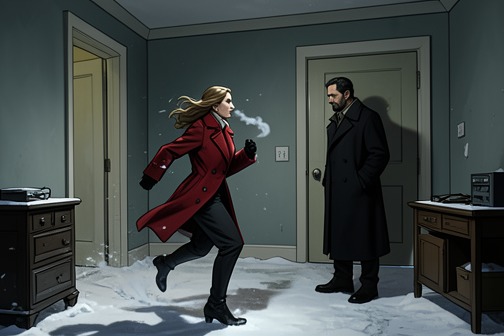
[Adrienne escapes the hotel and reunites with Wilder](entity:event-recall-event-adrienne-wilder-9cd1e87d0233) in a sequence where freedom is won through immediate risk but cannot yet become safety. [Bane](entity:character-recall-character-bane-a83632627baa) leaves her alone after declaring that he intends to find another woman and warning that he will eventually take [Adrienne](entity:character-recall-character-adrienne-05958df8fb72) into the Alaskan wilderness, where he believes she will have no choice but to accept him or other wild werewolves. His departure creates the opening she needs, yet his control remains materially present: he has removed every cord from the room’s telephone, preventing her from calling for help, and has made escape dependent on speed, secrecy, and access to his truck.
## Causes and Background
Adrienne’s flight grows out of a larger pattern of coercion and isolation. Bane has abducted her and is pursuing her as a mate, while Adrienne is trying to return to the [Samsa family](entity:character-recall-character-samsa-f981681df2c6) compound and to the protection associated with Wilder. Her earlier escape from [Paul](entity:character-recall-character-paul-6e5f3b48f63d) had also begun with a reckless nighttime drive through dangerous conditions. She left because she could no longer endure Paul’s cold attitude after his frat brothers raped her and he, together with her parents, treated the assault as a secret. That earlier decision carried her into the snowy wilderness, where a road accident and the disappearance of her car left her isolated and forced her to walk through the forest. The hotel escape therefore repeats a pattern in which Adrienne’s resistance begins in confinement and proceeds through hazardous movement rather than through institutional protection.
The immediate situation is even more restrictive because Bane controls both communication and transportation. When Adrienne considers calling someone after he leaves, she discovers that the telephone has been stripped of its cords. His indifferent manner is consequently backed by practical power: he can leave the room while assuming that she cannot summon assistance. The hotel becomes a temporary private territory in which ordinary safeguards are suspended, and the truck outside represents both the means of escape and the possibility that Bane can pursue her again.
## The Escape from the Hotel
Adrienne recognizes that Bane’s absence has produced a narrow opportunity and acts before fear can close it. She dresses hurriedly in soiled leather clothing and Ugg boots, takes food and a coat, and notices the truck keys in the living area. Her hands shake as she takes them. The details make the escape physical rather than abstract: clothing is pulled on under pressure, supplies are gathered for survival, and the keys become the decisive object that converts a locked room into a possible route away.
The journey through the hotel is marked by repeated interruptions and imagined danger. Adrienne expects Bane to smell her and come after her. The elevator stops on the third floor, weakening her knees until its empty doorway closes and carries her downward again. In the lobby, the blond desk clerk has been replaced by a young man who raises his head and makes a call as Adrienne passes. She cannot know whether he is contacting Bane, so the absence of certainty becomes another instrument of fear. Outside, melting ice makes her slip and slide, and the first truck she reaches is the wrong one. Only after searching in panic does she find the correct vehicle under a light.
At the truck, the possibility of freedom reaches its most dangerous point. Adrienne’s hands tremble as she puts the key into the door and opens it. Just as she climbs into the front seat, she hears heavy footsteps and sees a shadow behind her. The escape has carried her out of the suite but not beyond the reach of pursuit; the threshold between captivity and freedom is occupied by an unknown figure.
## The Reunion with Wilder
The figure is Wilder, whose voice Adrienne recognizes before she turns. His question about where she is going identifies him as the pursuer she has longed to find, and her response is immediate: she turns with tears in her eyes, embraces him around the neck, and holds his face, relieved that he has located her. The reunion reverses the emotional expectation of rescue. Adrienne anticipates warmth, but Wilder does not return the embrace. His arms remain at his sides, and his manner is cold rather than welcoming.
Wilder’s reaction changes the meaning of the reunion. He asks why Adrienne doubted that he would find her, then raises his nose to the wind and smells Bane’s presence on her. His disbelief is directed not only at the danger surrounding her but at the possibility that her account is incomplete. Adrienne tells him that Bane left her in the room and that she escaped at the first opportunity, yet Wilder’s blue eyes remain icy and unconvinced. She is shivering, and the bodily vulnerability that should call forth his protection instead meets his restraint.
The scene thus places two forms of pursuit against each other. Bane pursues Adrienne as an object of possession and threatens to remove her farther from human society; Wilder tracks her in order to recover her, but his recovery is complicated by jealousy, scent, and suspicion. Adrienne has escaped Bane’s immediate control, yet she has not recovered unquestioned security with Wilder. Her reunion is real, but it is emotionally fractured from the moment it occurs.
## Consequences and Narrative Significance
Wilder orders Adrienne into the truck and says that he has a score to settle with Bane, but cannot kill him immediately because the police would become involved. His priority is to get Adrienne home quickly. This response establishes a conflict between personal retaliation and legal consequence: Wilder’s anger demands action, while the need to avoid police involvement forces him to postpone violence. Adrienne tries to reduce the crisis by insisting that Bane did nothing to her, but Wilder does not hear her; his attention remains fixed on Bane and on what must be done with Adrienne.
The value shift is therefore incomplete. Adrienne moves from direct confinement to physical escape, but freedom changes into dependence on Wilder’s judgment, and reunion changes into suspicion. The sequence also gains force from its recurrence of earlier escape imagery. Her first flight from Paul placed her on I-80 near [Lake Tahoe](entity:location-recall-location-lake-tahoe-0c9f9ca14c7e) in falling snow, where poor tires, a slippery road, and a six-thousand-foot elevation turned a two-hour drive from [Sacramento](entity:location-recall-location-0fe1c0701977), [California](entity:location-recall-location-7255928c66a8), into three hours before the car tumbled into the earth. In the hotel, the threats are different but structurally related: surveillance, blocked communication, uncertain transport, and a pursuer who may appear at any moment.
The event also deepens the history Adrienne carries into the reunion. At the Lake Tahoe Hilton, she once recognized the voice of one of the men who had raped her, identifying him to Drayton while the men laughed and drank on the fifth floor. That memory makes the act of fleeing male-controlled spaces more than a simple change of location. Adrienne repeatedly attempts to reclaim movement and speech from men who have concealed violence, controlled access, or claimed authority over her body. Her escape from the hotel gives her movement again, but Wilder’s cold disbelief shows that even rescue can reproduce the instability of captivity when trust has been damaged.
The event ends not with a settled return but with an enforced departure. Wilder has found Adrienne, and Bane is no longer physically beside her, yet the danger remains active: Bane is alive, the threat of pursuit continues, and Wilder’s suspicion separates emotional reunion from complete reconciliation. Adrienne reaches the truck, but the larger struggle over her safety, credibility, and freedom is only entering its next phase.
Event 33
Wilder wrongly believes Bane assaulted Adrienne and breaks with her
[Wilder wrongly believes Bane assaulted Adrienne and breaks with her](entity:event-recall-event-wilder-adrienne-bane-13b8b11b0f5b) at the very moment their rescue should restore their bond. His suspicion converts reunion into accusation: instead of receiving [Adrienne](entity:character-recall-character-adrienne-05958df8fb72)’s return, he treats [Bane](entity:character-recall-character-bane-a83632627baa)’s scent on her body as proof that she has been violated and no longer belongs within the [Samsa family](entity:character-recall-character-samsa-f981681df2c6). [Adrienne’s pregnancy with Drayton’s pups](entity:state-recall-state-adrienne-s-pregnancy-wi-110e09e10cc3), her insistence that Bane did not touch her, and Wilder’s refusal to trust her produce a rupture that she declares she will neither forget nor forgive.
## Reunion Turned Into Accusation
Wilder finds Adrienne after she escapes the room where Bane left her. She recognizes his voice before turning and reaches for him with tears in her eyes, expecting the warmth normally associated with their relationship. Wilder remains cold, keeps his arms at his sides, raises his nose to the wind, and immediately demands to know where Bane is. His senses register Bane’s smell on Adrienne, and that physical trace overwhelms her verbal account of what happened.
Adrienne tells Wilder that Bane did nothing to her and that she escaped at the first opportunity. Wilder does not answer her appeal for belief. Instead, he says that the matter is larger than her and claims that Bane has ruined her, making her no longer the Samsas’ mate. The statement transforms captivity into a question of sexual and social status: Adrienne is forced to defend not only what happened to her, but also her right to remain recognized as Wilder’s mate.
## Jealousy and the Pregnancy Dispute
Wilder assumes that Bane must have assaulted Adrienne unless he impregnated her with her willing participation. When Adrienne reveals that she is pregnant, Wilder initially interprets the pregnancy as evidence that the child belongs to Bane. His jealousy leads him toward an accusation so extreme that Adrienne identifies its implied logic herself: that she should have allowed Bane to kill her rather than return marked by another male.
Adrienne corrects him sharply. She states that the pregnancy is Drayton’s, not Bane’s, and contrasts Bane’s treatment of her with Wilder’s present cruelty. She tells Wilder that Bane appears to be a better choice than he is at that moment and suggests that, if Drayton and [Lycell](entity:character-recall-character-lycell-d904ab5d4e13) also reject her, Wilder should leave her with Bane. Her response reverses the power of the accusation. Wilder had tried to define her through scent and presumed violation; Adrienne answers by asserting that she, not Wilder, will judge the meaning of her captivity and decide where she belongs.
The dispute also exposes the instability of the Samsa arrangement. Adrienne had agreed to mate with Wilder, Drayton, and Lycell and to bear their pups, while Drayton’s pregnancy represents an acknowledged continuation of that shared family structure. Wilder’s suspicion therefore threatens more than one romantic bond. It challenges the trust, legitimacy, and collective future that Adrienne’s earlier sacrifices helped create.
## Failed Apology and Separation
Wilder later admits that the [Samsa brothers](entity:character-recall-character-samsa-brothers-9327f0c7f4ea) tracked Adrienne to [Bane’s pack](entity:organization-recall-organization-bane-s-pack-2455dd85db32) and found her with Bane. He asks her to forget his words and forgive him, explaining that he was distressed and out of his mind with worry. Adrienne refuses. She says she will never forget and never forgive what he told her, then announces that after giving birth to Drayton’s pups she thinks she wants to leave.
Her proposed departure is not merely a reaction to one insult. Adrienne says that Wilder has become too possessive and that she cannot live with someone who would rather see her dead than imagine Bane touching her. She will remain long enough to ensure that Lycell and Drayton are all right, but insists that what happens afterward will be her decision. The rescue thus ends without reconciliation: physical recovery from Bane’s control is followed by an emotional and relational separation from Wilder.
## Conflicting Laws of Matehood
The rupture takes place within a world where werewolf law treats a mate as a protected, enduring bond. Wilder is the Alpha male of the Samsa pack and publicly claims that Adrienne is his mate and that he will marry her. When Bane abducts her, Wilder understands the act as an offense against an Alpha that requires pursuit and punishment. The werewolf order has been internalized through generations, and Wilder has been taught since childhood to enforce it.
Yet Adrienne does not fully understand the laws that govern the werewolves. She has accepted parts of their world while remaining uncertain about their hunting practices, their morality, and their rules concerning mates, pregnancy, and protection. Wilder’s conduct reveals the danger of applying those rules without translating them into trust or consent. He treats possession, scent, protection, and punishment as connected obligations; Adrienne experiences the same framework as a denial of her testimony and choice.
The episode therefore stages a conflict between two forms of authority. Wilder invokes the inherited law of the werewolves and the duties of an Alpha, while Adrienne invokes her direct knowledge of what happened and her right to determine her own future. His role as protector cannot erase the injury caused by disbelief. The same system that commands him to hunt Bane also encourages him to regard Adrienne as a mate whose status can be judged by another male’s scent.
## Narrative Significance
This event changes the meaning of Wilder’s pursuit. Bane’s captivity is overtly coercive: he ties Adrienne’s hands, ankles, and waist to a crude chair and tells her that an animal might eat her if he is absent, while promising to hear her scream. Wilder’s authority appears to stand against that threat, but his reunion with Adrienne shows a different form of control. He does not physically bind her in the encounter; instead, he tries to determine her identity and loyalty through suspicion.
The contrast is especially sharp because Bane’s restraint does not result in the assault Wilder imagines. Bane wants Adrienne as his mate and is driven by the full-moon demands he associates with werewolf nature, yet he controls himself when the moon is not full. Wilder’s failure is not that he lacks devotion. It is that devotion has fused with jealousy and ownership so completely that he cannot hear Adrienne’s account. The event leaves Adrienne caught between human expectations of personal autonomy and werewolf customs that define protection, reproduction, and matehood collectively.
By the end of the episode, Wilder remains committed to finding and stopping Bane, who has abducted an Alpha’s mate and become fixated on possessing her. Wilder sees himself as both man and wolf: capable of reason but driven toward a single purpose, while Bane is similarly reduced to the desire to mate with Adrienne. Their rivalry therefore becomes more than a contest between two males. It becomes a contest over whether Adrienne will be treated as a person with a decision to make or as the central object of competing claims. Her refusal to forgive and her declaration that she will decide whether to stay mark the event’s decisive consequence: the rescued woman reclaims judgment even as the men around her continue to frame her through werewolf law and possession.
Event 34
Wilder brings Adrienne back to the new forest home
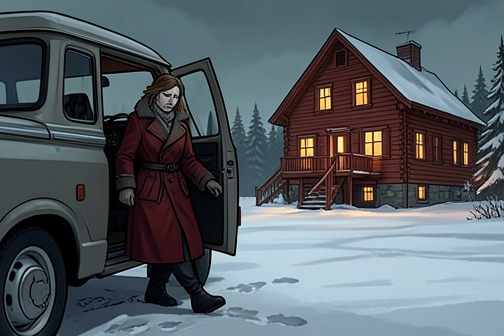
Wilder brings [Adrienne](entity:character-recall-character-adrienne-05958df8fb72) back to a new forest home after her captivity by [Bane](entity:character-recall-character-bane-a83632627baa), but the return does not restore domestic security. He delivers her to an impressive cabin in a snowy clearing and calls it their home, while Adrienne, exhausted, hungry, pregnant, separated from her children, and angry at his jealousy, rejects the claim that a place built for her without her consent can become hers. The event therefore converts shelter into a contested symbol: for Wilder it is an offering and the physical form of a permanent bond; for Adrienne it is another decision made about her life by someone else.
## Arrival at the Forest Cabin
Wilder slows the truck, leaves the main road, and drives into pitch-dark woods before reaching a gravel road lit by LED lamps. The lamps surround a large cabin standing in a clearing amid falling snow. Pine trees ring the property, and the quiet winter landscape is further emptied by the presence of a werewolf, whose scent keeps smaller animals away. Adrienne wakes as the truck hits a bump and sees the cabin, its redwood timber, second-floor balcony, and broad panoramic windows. The setting is secluded, substantial, and carefully prepared, yet its remoteness also recalls the wilderness from which she has repeatedly needed escape and rescue.
Wilder greets the destination with the uncomplicated declaration that they are home. Adrienne answers that it is not her home. His next revelation explains the emotional and legal conflict at the center of the event: he built the cabin for the two of them, without consulting her, Drayton, or [Lycell](entity:character-recall-character-lycell-d904ab5d4e13). The structure is thus both material proof of intention and evidence of unilateral authority. Its impressive scale cannot settle the question of belonging, because Wilder has constructed a future before Adrienne has agreed to inhabit it.
## Adrienne’s Refusal and Material Vulnerability
Adrienne agrees to look around only because she is hungry and exposed to the cold, and she explicitly says that she is not staying. She has been away from her children for more than a week, has not eaten decent food, and now doubts the man or werewolf she once believed she loved. Her condition makes the apparent welcome materially coercive even though Wilder presents the cabin as protection. Hunger, pregnancy, snow, and exhaustion narrow her immediate choices; cooperation becomes a practical necessity rather than an acceptance of Wilder’s plan.
The threshold dramatizes that refusal. Wilder opens the door and offers to carry her over it, imagining the gesture associated with a bride entering a husband’s house. Adrienne walks inside instead and reminds him that the custom belongs to married couples. She is married to Drayton, she says, and Wilder is not exactly a man or a husband. Her words wound Wilder because the cabin was meant to make his desired domestic role visible, while her response exposes the gap between his werewolf claim and her human understanding of marriage.
## Matehood, Marriage, and Conflicting Law
Wilder answers that he is Adrienne’s true mate and therefore has more rights to her than Drayton or Lycell. His certainty rests on the werewolf system of matehood, reproduction, and protection. Earlier, he had told Adrienne that she could come and go and was not his captive, but also that pregnancy made departure dangerous: she could not take the pup with her because the [Ari Kara clan](entity:organization-recall-organization-ari-kara-clan-cc6ab5933c8c) might discover the child and assassinate it as his heir. The language of protection consequently carries a restriction. Adrienne is declared free in principle while her pregnancy, the child’s political value, and Wilder’s authority limit what leaving can mean.
The cabin also follows an earlier dispute within the [Samsa family](entity:character-recall-character-samsa-f981681df2c6). Wilder had asserted that he was the Alpha male and that Adrienne was his mate, so he would marry her. Lycell objected that Adrienne was carrying his pups and that he should be the one to marry her, while Drayton had proposed allowing Adrienne to choose whom she preferred. These competing claims show why the new home cannot be treated as a private romantic gesture alone. Adrienne’s body, marriage, children, succession, and protection are being interpreted through overlapping human and werewolf systems.
[Ramsey](entity:character-recall-character-ramsey-a48448732611)’s confrontation with Wilder makes the cultural conflict explicit. Ramsey accused the [Samsa brothers](entity:character-recall-character-samsa-brothers-9327f0c7f4ea) of breaking a promise to his daughter and allowing a human female to dictate their laws. Wilder rejected Ramsey’s authority and defended Adrienne, insisting that she had not been defiled. In Wilder’s view, however, Adrienne remains subject to the werewolf order in which he must protect his mate and enforce inherited laws. Adrienne herself accepts some werewolf customs without fully understanding them: she does not comprehend their hunting practices, their morality, or the laws internalized through generations and taught to Wilder by his father. The forest home is therefore built at the intersection of protection, possession, family governance, and cultural translation.
## The Unresolved Homecoming
Adrienne’s challenge to Wilder is not merely that he failed to ask permission. She reminds him that he once promised the brothers would share her equally and that he would not become jealous. She has taken her position as their mate seriously after that arrangement came to fruition, but Wilder now admits that his earlier promise belonged to a time before he loved her as he does now. His feelings have changed from a principle of shared partnership into a claim of emotional priority. The new cabin gives that change a permanent architecture, while Adrienne’s resistance prevents the architecture from becoming a settled household.
Wilder’s attachment is inseparable from the danger surrounding Adrienne. Bane has abducted an Alpha’s mate and continues to desire Adrienne as his own mate; under the werewolves’ inherited law, Wilder must hunt the pursuer and risk being killed. He understands himself as both man and wolf, capable of reason but driven toward a single purpose. Bringing Adrienne to the secluded cabin is therefore part of a larger effort to secure her and prepare for conflict, not simply a peaceful return. Yet the more fiercely Wilder treats her as the center of his legal and biological obligations, the more sharply Adrienne experiences his certainty as jealousy and control.
The event ends without reconciliation. Adrienne enters the cabin, but she does not consent to remain in it or accept Wilder’s definition of their relationship. She walks on in search of the kitchen because pregnancy and hunger have overcome her strength, while Wilder’s declaration of love and mate-right fails to erase her anger. The cabin stands as an unfinished promise: a home physically completed by Wilder but emotionally and politically unratified by Adrienne.
## Narrative Significance
The episode reverses the expected meaning of rescue and return. After surviving Bane’s captivity, Adrienne reaches safety, but safety is not identical with freedom. Bane’s methods are openly brutal: he ties her hands, ankles, and waist to a crude chair and tells her that an attacking animal might eat her if he failed to return. Wilder’s forest home is radically different in physical purpose, yet Adrienne’s suspicion remains understandable because Wilder also makes decisions about her movement, pregnancy, marriage, and children without securing her agreement. The contrast distinguishes forms of domination without pretending that protection automatically satisfies autonomy.
At the same time, the cabin gives material form to Wilder’s transformation. He had moved among packs without choosing a female, but after mating with Adrienne, seeing her return his love, and witnessing her give him sons while mating with his brothers for the family’s good, he believes he has found his one true love and lifelong mate. His building project is the concrete expression of that conviction. Its significance lies in the value shift it produces: what Wilder experiences as home, permanence, and devotion becomes for Adrienne another contested threshold where love must answer to consent, prior marriage, family law, and the right to choose a future.
Event 35
Wilder and Adrienne reconcile and resume intimacy
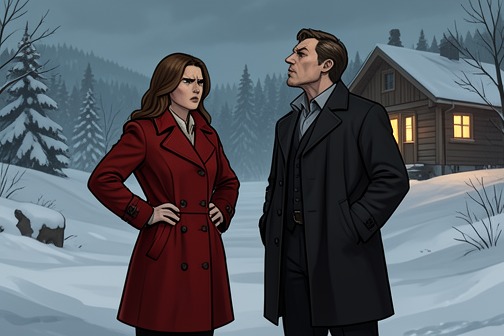
Wilder and [Adrienne](entity:character-recall-character-adrienne-05958df8fb72) reconcile after a confrontation in which Wilder’s jealousy makes him speak and behave in ways that recall the coercion Adrienne has already survived. The scene does not erase the injury between them: Adrienne names the danger of treating her as an object, Wilder recognizes the cruelty of his suspicion, and their return to intimacy becomes conditional on his willingness to hear her and accept her authority over her own body and relationships.
## Causes and Background
The reconciliation follows the long shadow of Adrienne’s earlier trauma. A year before, [Paul](entity:character-recall-character-paul-6e5f3b48f63d) and his fraternity friends were involved in the assault that left her hospitalized and believing that she could never have children. Paul and her parents suppressed the investigation, arranged a marriage, and treated the violence as something that should remain unspoken. Adrienne later identifies one attacker by his voice in a hotel, tells Drayton what happened, and explains to Wilder that she had not disclosed the truth earlier because Wilder had left her and returned emotionally distant. Her history makes disbelief and sexual suspicion especially destructive rather than merely possessive quarrels between lovers.
The immediate rupture is also connected to [Bane](entity:character-recall-character-bane-a83632627baa)’s abduction of Adrienne. After she returns, Wilder imagines what may have happened between her and Bane and demands reassurance in a hostile, humiliating manner. Adrienne answers that his behavior resembles that of the men who raped her, a comparison that shocks him because he sees himself as her protector, true mate, and loving partner. The accusation forces the conflict beyond jealousy: Wilder must confront the possibility that his wolf’s possessiveness can reproduce the very domination he claims to oppose.
## The Reconciliation
Wilder’s turn begins when he stops defending his jealousy and apologizes. He admits that he has been desperate since Bane took Adrienne and that he thought he would die if anything happened to her. Instead of claiming that his fear excuses his conduct, he asks her to forgive him and to reassure him that she still considers him hers. Adrienne does forgive him, but she refuses to forgive the jealousy itself or his failure to believe her. She makes clear that she would not willingly belong to anyone outside her family and her other werewolf partners, placing trust and choice at the center of the renewed relationship.
The physical reconciliation proceeds only after this emotional exchange. Wilder tells Adrienne that he wants to kiss her and hold her close, while she initially insists that they no longer want the same things. His uncertainty and his attempt to approach her gently allow the scene to shift from estrangement toward mutual desire. Adrienne responds to his kiss, embraces him, and tells him that she loves him and does not want him to let her go. Their intimacy therefore functions as a restoration of attachment, but it is framed by the preceding demand that Wilder recognize the difference between being loved and being entitled to control.
## Pregnancy and Family Consequences
During their renewed intimacy, Wilder discovers that Adrienne is pregnant and that Drayton will also have pups. The discovery links reconciliation to the expanding [Samsa family](entity:character-recall-character-samsa-f981681df2c6) rather than reducing the encounter to private passion. Adrienne had already become pregnant by Wilder after he told her that she could not leave while carrying his heir, while Wilder had also tried to arrange for her future children to be given to [Lycell](entity:character-recall-character-lycell-d904ab5d4e13) and Drayton because he believed Adrienne was sterile and feared sharing her. Adrienne rejected that plan and demanded that Wilder ask his brothers what they wanted instead of controlling their lives.
Her relationship with Drayton develops alongside her bond with Wilder. Drayton tells Adrienne that he loves her and wants her to have his child, and their intimacy makes her feel desired and cared for. When Drayton later brings her home, she faces the parents who helped silence her assault, but she now understands herself as capable of building a family with the [Samsa brothers](entity:character-recall-character-samsa-brothers-9327f0c7f4ea) rather than returning to the loveless, childless marriage once planned for her. Wilder’s reconciliation thus occurs within a contested shared-mate arrangement in which affection, reproduction, consent, and family authority repeatedly collide.
## Aftermath and Renewed Threat
The reconciliation does not produce safety. Adrienne’s declaration of love carries through the empty house and into the surrounding forest, where Bane hears her voice while standing on a snow-covered mountain and searching for her scent. He recognizes her voice among countless humans and understands that Wilder possesses what Bane wants. The scene’s private restoration consequently becomes a public danger: Wilder and Adrienne recover their closeness, but Bane’s fixation converts their happiness into evidence that his rival still has Adrienne.
The event’s decisive significance lies in this double movement. Wilder and Adrienne regain physical and emotional intimacy, yet their bond can endure only if Wilder restrains the possessive violence associated with his werewolf nature and respects Adrienne’s ability to refuse. At the same time, the renewed union intensifies the external conflict because it confirms to Bane that Adrienne remains bound to Wilder and that the family he seeks to break is still intact.
## Pregnancy and Family Consequences
During their renewed intimacy, Wilder discovers that Adrienne is pregnant and that Drayton will also have pups. The discovery links reconciliation to the expanding Samsa family rather than reducing the encounter to private passion. Adrienne had already become pregnant by Wilder after he told her that she could not leave while carrying his heir, while Wilder had also tried to arrange for her future children to be given to Lycell and Drayton because he believed Adrienne was sterile and feared sharing her. Adrienne rejected that plan and demanded that Wilder ask his brothers what they wanted instead of controlling their lives.
Her relationship with Drayton develops alongside her bond with Wilder. Drayton tells Adrienne that he loves her and wants her to have his child, and their intimacy makes her feel desired and cared for. When Drayton later brings her home, she faces the parents who helped silence her assault, but she now understands herself as capable of building a family with the Samsa brothers rather than returning to the loveless, childless marriage once planned for her. Wilder’s reconciliation thus occurs within a contested shared-mate arrangement in which affection, reproduction, consent, and family authority repeatedly collide.
## The [Shared-Mate Arrangement](entity:concept-recall-concept-shared-mate-arrangeme-0ac5cdfd350b)
Wilder’s reconciliation with Adrienne cannot be separated from the disputed structure of their family. He had earlier insisted that pregnancy made departure too dangerous because the child would be his heir, and he had treated the unborn pups as part of a political and dynastic problem involving the [Ari Kara clan](entity:organization-recall-organization-ari-kara-clan-cc6ab5933c8c). He later went further, deciding without Adrienne’s consent that her children should be given to Lycell and Drayton because he believed she was sterile and wanted to avoid sharing her. Adrienne rejects this logic outright, telling Wilder that a mother does not simply surrender her children and ordering him to ask his brothers what they themselves want. Her response converts the family arrangement from Wilder’s unilateral plan into a question of choice, responsibility, and recognition of Adrienne as the person entitled to determine her own relationships and children.
Adrienne’s bond with Drayton develops within that same contested household. Drayton tells her that he is willing to wait until she is ready before mating with her, then expresses his love and desire to have a child with her. His tenderness makes her feel wanted rather than merely useful to the werewolves’ fertility crisis, even as the larger arrangement places extraordinary reproductive expectations on her. The contrast matters when Adrienne returns to the history of her assault: Paul and her parents had once arranged her marriage and accepted a future in which she would be both unloved and childless, while the Samsa brothers offer her a powerful, fertile family whose promises are also capable of limiting her freedom. Wilder and Adrienne’s restored intimacy therefore settles neither the ethical tensions nor the practical burdens of the shared-mate system; it renews affection inside a family order that must still learn to distinguish protection from possession.
## Consent, Trauma, and Relational Repair
The reconciliation is shaped by Adrienne’s insistence that love cannot substitute for consent. When Wilder’s jealousy leads him to question her conduct during her captivity by Bane, she tells him that his behavior places him alongside the men who raped her, a judgment that wounds him precisely because he believes himself fundamentally different from them. The comparison is grounded in a history that has never stopped governing her sense of safety: Paul and his friends assaulted her, Paul delayed her hospital treatment, and Paul and her parents suppressed the investigation while arranging a marriage that would protect the attackers’ reputations. Adrienne later identifies one of the perpetrators by his voice at a hotel and explains the assault to Drayton and, eventually, to Wilder. Her accusation therefore functions not as a casual insult but as a demand that Wilder understand how suspicion, sexual interrogation, and possessive authority can reproduce the conditions of domination she has already endured.
Wilder’s response marks a partial ethical reversal. Rather than continuing to justify his jealousy, he recognizes that he has hurt Adrienne and apologizes, admitting that Bane’s abduction left him desperate and afraid that he would lose everything important to him. Adrienne forgives Wilder as a person but refuses to excuse the jealousy or his failure to believe her. She also reasserts the structure of her chosen family, explaining that she would not willingly allow anyone outside Wilder and her other werewolf partners to possess her. The distinction is crucial: her declaration of loyalty does not surrender her authority, and forgiveness does not erase the requirement that Wilder respect her ability to refuse.
The scene’s physical intimacy follows this verbal renegotiation rather than replacing it. Wilder asks to kiss Adrienne and hold her, while she initially says that their desires no longer coincide. His hesitation and uncertainty create room for her response, and she eventually returns his kiss, embraces him, and declares her love while asking him never to let her go. During their renewed closeness, Wilder realizes that Adrienne is pregnant and that Drayton will also have pups, tying emotional repair to the continuing expansion of the Samsa family. Yet the moment remains unstable: Adrienne’s pleasure and declaration of love are overheard by Bane from a snow-covered mountain, where he recognizes her voice and understands that Wilder still possesses the relationship he wants. Reconciliation thus restores intimacy without ending danger; it becomes a fragile achievement maintained against both external pursuit and the internal temptation to confuse devotion with ownership.
## The Shared-Mate Arrangement
Wilder’s reconciliation with Adrienne cannot be separated from the disputed structure of their family. He had earlier insisted that pregnancy made departure too dangerous because the child would be his heir, and he had treated the unborn pups as part of a political and dynastic problem involving the Ari Kara clan. He later went further, deciding without Adrienne’s consent that her children should be given to Lycell and Drayton because he believed she was sterile and wanted to avoid sharing her. Adrienne rejects this logic outright, telling Wilder that a mother does not simply surrender her children and ordering him to ask his brothers what they themselves want. Her response converts the family arrangement from Wilder’s unilateral plan into a question of choice, responsibility, and recognition of Adrienne as the person entitled to determine her own relationships and children.
Adrienne’s bond with Drayton develops within that same contested household. Drayton tells her that he is willing to wait until she is ready before mating with her, then expresses his love and desire to have a child with her. His tenderness makes her feel wanted rather than merely useful to the werewolves’ fertility crisis, even as the larger arrangement places extraordinary reproductive expectations on her. The contrast matters when Adrienne returns to the history of her assault: Paul and her parents had once arranged her marriage and accepted a future in which she would be both unloved and childless, while the Samsa brothers offer her a powerful, fertile family whose promises are also capable of limiting her freedom. Wilder and Adrienne’s restored intimacy therefore settles neither the ethical tensions nor the practical burdens of the shared-mate system; it renews affection inside a family order that must still learn to distinguish protection from possession.
## The Shared-Mate Arrangement
Wilder’s reconciliation with Adrienne cannot be separated from the disputed structure of their family. He had earlier insisted that pregnancy made departure too dangerous because the child would be his heir, and he had treated the unborn pups as part of a dynastic problem involving the Ari Kara clan. He later decided without Adrienne’s consent that her children should be given to Lycell and Drayton because he believed she was sterile and wanted to avoid sharing her. Adrienne rejects this logic, insisting that a mother does not simply surrender her children and demanding that Wilder ask his brothers what they themselves want. Her response transforms the family arrangement from Wilder’s unilateral plan into a question of choice, responsibility, and recognition of Adrienne as the person entitled to determine her own relationships and children.
## The Shared-Mate Arrangement
Wilder’s reconciliation with Adrienne cannot be separated from the disputed structure of their family. He had earlier insisted that pregnancy made departure too dangerous because the child would be his heir and feared that the Ari Kara clan might send an assassin. He later decided without Adrienne’s consent that her children should be given to Lycell and Drayton because he believed she was sterile and wanted to avoid sharing her. Adrienne rejects this logic, insisting that a mother does not simply surrender her children and demanding that Wilder ask his brothers what they themselves want. Her response transforms the family arrangement from Wilder’s unilateral plan into a question of choice, responsibility, and recognition of Adrienne as the person entitled to determine her own relationships and children.